Intense efforts are under way to bring Iran and the US together in Pakistan for a new round of talks a day before the end of the two-week ceasefire that has paused the conflict in the Middle East.
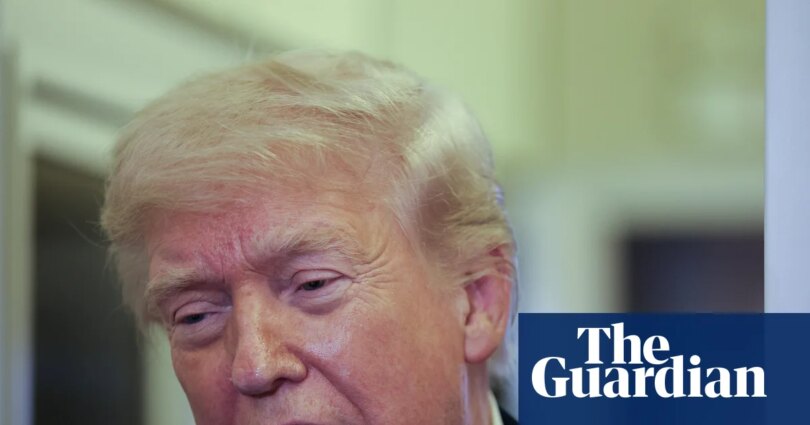
Donald Trump said on Tuesday he was ready to renew attacks against Iran if progress was not made at any talks, with the US military “raring to go”.
The US president told the US business news network CNBC that he did not want to extend the ceasefire with Tehran, insisting the US was in a strong position and was “going to end up with a great deal”. Trump has previously said that targets for new US attacks would include power stations and other civilian infrastructure.
Iran appears unwilling to bend to Trump’s threats, though analysts say there is fierce disagreement among its leaders over how to respond to US pressure and whether to risk a potentially devastating new wave of bombing.
Iranian state television on Tuesday broadcast a message confirming that “no delegation from Iran has visited Islamabad … so far” and Iran’s chief negotiator, the parliamentary speaker Mohammad Bagher Ghalibaf, accused the US president of seeking to turn the negotiating table into a “table of surrender”.
“We do not accept negotiations under the shadow of threats,” he wrote in a social media post, and said Iran was preparing “to reveal new cards on the battlefield”.
There were also differences over when the ceasefire expires, with Iran saying it was in the early hours of Wednesday in Iran, and Trump putting it at the end of Wednesday in Washington. Tehran is 7.5 hours ahead of Washington.
A first round of talks in Islamabad 10 days ago ended with no sign of agreement on the future of the strait of Hormuz, the key waterway which was closed to shipping by Iran in the early days of the conflict, cutting the supply of around a fifth of the world’s oil and gas.
Fatih Birol, the head of the International Energy Agency, said the combined impact of the conflict’s effects on oil, alongside the effects of Russia’s war with Ukraine on gas supplies, was “the biggest crisis in history” in global energy markets.
The US last week imposed a blockade on Iranian ports to pressure Tehran into reopening the strait, and on Sunday it seized an Iranian cargo vessel.
US forces then escalated the campaign on Tuesday, boarding an oil tanker previously under sanctions for smuggling Iranian crude oil in Asia. Ship-tracking data showed the vessel in the Indian Ocean between Sri Lanka and Indonesia around the time it was intercepted.
Iran’s foreign ministry spokesperson Esmaeil Baghaei said on Iranian state TV that US moves against the two vessels amounted to “piracy at sea and state terrorism” and questioned Washington’s seriousness in negotiating.
The closure of the strait by Iran threatens a global recession and has given Tehran a powerful strategic weapon to counter the overwhelming conventional military superiority of its enemies. The war began in February with a first wave of bombing by the US and Israel, which killed the then supreme leader of Iran, Ayatollah Ali Khamenei.
Yvette Cooper, the UK’s foreign secretary, who has been holding discussions with counterparts aimed at safeguarding the strait, has described it as “a critical diplomatic moment” in the crisis.
Hopes that negotiations were to go ahead rose early on Monday after Trump told the New York Post that JD Vance, the US vice-president, was on his way to Pakistan, a statement later corrected by officials.
Vance, who led the US delegation in talks earlier this month, has not yet left Washington and had meetings scheduled for Wednesday morning, a White House official said on Tuesday at about 5pm GMT.
In Islamabad, Pakistani officials have expressed confidence that Iran will resume talks in what are the highest-level negotiations between the two countries since the 1979 Islamic Revolution.
A spokesperson said the Pakistani foreign minister, Ishaq Dar, met on Tuesday with the acting US ambassador in Islamabad to urge a ceasefire extension. Dar also met the ambassador from China, which is a key trading partner with Iran.
“Pakistan has made sincere efforts to convince the Iranian leadership to participate in the second round of talks, and these efforts continue,” Pakistan’s information minister, Attaullah Tarar, said on X.
Security has been tightened across Pakistan’s capital, where authorities have deployed thousands of personnel and increased patrols along routes leading to the airport. Government offices, schools and colleges in the city have been shut down and much of the centre barred to civilians.
“If they don’t come to Islamabad, or the second round does not take place, it will be an embarrassing situation for Pakistan as well,” Nusrat Javed, a political analyst and columnist, said.
Over the weekend, Iran said it had received new proposals from Washington, but also suggested a wide gap remains between the sides. Issues that derailed the last round of negotiations included Iran’s nuclear enrichment programme, its support for a series of militant movements that act as regional proxies, and the strait of Hormuz.
Trump said Iran had no choice and would take part in talks. “We’ve taken out their navy, we’ve taken out their air force, we’ve taken out their leaders.”
The US president again claimed “regime change” and said those now in charge were “much more rational”.
Many experts say the conflict has led to a radicalisation of Iran’s regime, with more pragmatic figures having been killed or sidelined, allowing senior officials in the Islamic Revolutionary Guard Corps to increase their hold on power.
In a social media post on Tuesday, Trump called on Iran’s leaders to free eight women he said faced execution.
“I would greatly appreciate the release of these women,” Trump posted on Truth Social. “Would be a great start to our negotiations!”
Trump’s statement accompanied a reposting of a claim on X by a pro-Israel youth activist in the US that eight women faced death by hanging. That claim, which did not give names but posted photographs of eight women, could not be immediately verified.
The Iranian judiciary’s official Mizan Online website claimed Trump had been “misled once again by fake news” and that some of the women had been released while others faced charges that would lead to imprisonment.
According to Iran Human Rights (IHR), a Norway-based NGO, Iranian authorities have arrested more than 3,600 people on charges related to the ongoing war, ranging from sharing videos with overseas media outlets to possessing Starlink internet terminals.
IHR said the figure, based on state media reports and its own research, represented a minimum given the current internet restrictions in Iran, and that the actual number of arrests was probably much higher.
At least 767 of the cases were reported after the start of the current ceasefire on 8 April.
Iranian authorities say at least 3,375 people have been killed since the war began. Additionally, 23 people have died in Israel and more than a dozen in Gulf Arab states. Fifteen Israeli soldiers in Lebanon and 13 US service members throughout the region have been killed.
In Lebanon, authorities on Tuesday raised the death toll from six weeks of war between Israel and Hezbollah to 2,454. A fragile 10-day ceasefire began on Friday in Lebanon, allowing rescuers to recover and identify bodies in previously inaccessible areas targeted by the Israeli offensive.
The Israeli and Lebanese ambassadors met last week for the first direct diplomatic talks in decades.