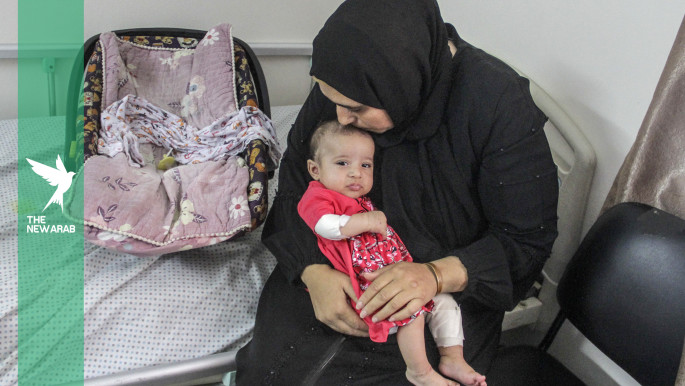
Birth rates are falling in Gaza due to the effects of Israel’s genocidal war on the enclave [Getty]
New data from Gaza has revealed that Israel’s war on the enclave has caused a sharp decline in birth rates and a rise in abortions, with experts decrying this as “reproductive genocide”.
Gaza’s Ministry of Health revealed that only 2,004 births were registered in April 2026, compared to 6,076 births in November 2025, a decrease of around 67 per cent.
Further data obtained by The New Arab shows that the number of births has been gradually declining since the start of this year, with each month showing a marked decrease.
In January, 5,210 births were recorded; 3,433 in February; 3,233 in March; and 2,004 in April. In May, 1,701 births were recorded.
There has also been a marked increase in abortions, with 921 documented in April alone, equating to one abortion for every two births.
According to Palestinian estimates, the number of abortions in Gaza is expected to reach 600 by the end of the year, or a 225 per cent increase compared to normal rates.
The staggering figures have prompted concerns that population growth in the enclave is on the decline.
Rise in abortions, stillbirths
Many women in war-battered Gaza have reported facing health issues related to toxic fumes from the heavy Israeli bombardment, while others said they were unable to get access to screenings and medical appointments early on due to the shelling and damage to healthcare centres.
Shaimaa Mohammed, a 26-year-old from the Sheikh Radwan neighbourhood, told The New Arab that when she was three months pregnant, she started experiencing unusual symptoms that prompted her to speak to a specialist.
The specialist told her that the foetus had stopped developing at week seven, and the doctor recommended she get an abortion. Further testing showed that Mohammed was exposed to toxic substances and dust from the shelling.
Another woman, 36-year-old Ayat Qahman, from northern Gaza said she lost her baby at four months pregnant after the doctor informed her there was an abnormality in the foetus’ head and the baby had already died days earlier.
Qahman said that since the start of the war in 2023, she has started experiencing blood clots and has also become malnourished due to the constant displacement and restrictions on aid.
Other women in Gaza report facing numerous health issues related to breathing in smoke and dust from bombings and having no access to medication.
Widespread malnutrition caused by famine and restrictions on food entering the enclave have also resulted in a higher number of stillbirths, miscarriages and infant mortality rates.
Falling birth rates
Zaher al-Wahidi, the director of the Health Information Centre at the Ministry of Health, called the phenomenon an “unprecedented setback” when it comes to reproductive health in Gaza.
He noted that many pregnant women are living in unsafe conditions in makeshift tents and only have access to polluted water. The toll of the constant displacement, high death toll and the separation of families has also contributed to mental health issues in women, and in turn, a decline in births.
Other factors contributing to the decline in births are overcrowding and a lack of privacy in displacement shelters, the spread of disease, and the lack of sanitation.
“The most dangerous factor is the dust and other substances coming from the bombardment and missiles, as well as toxic gases used by the occupation army, which have led to birth defects and a significant increase in miscarriages,” al-Wahidi said.
Dr Nabil Abu Diya, a consultant in gynaecology and infertility, also told The New Arab that there has been an increase in premature births and impaired foetal growth in utero, which he attributes to the pollutants from the war.
Earlier this year, Amnesty International issued a stark warning over the war’s impact on women. The organisation noted that despite a so-called ceasefire in place since October, around 46% of essential medicines remain at zero stock, including drugs for inducing/managing contractions, labour and postpartum haemorrhage, anaesthesia and pain management, infections and respiratory conditions.
Mothers interviewed by Amnesty International also said they had suffered from significant weight loss amid the war, with some diagnosed with anaemia and malnutrition.