
“I have closed.”
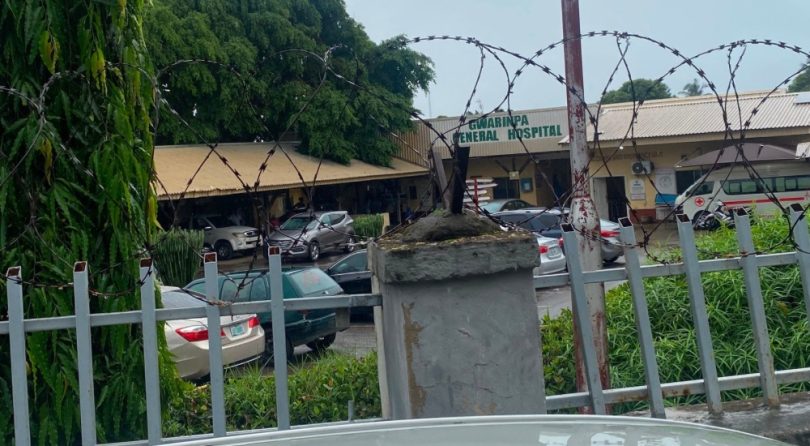
Those were the doctor’s words when my sister and I returned to Gwarimpa General Hospital at about 3 p.m. with the laboratory result the doctor had requested for my six-month-old niece.
The hospital was still open, and patients were still arriving.
But the doctor who was supposed to review the result refused to see us.
I did not go to the hospital looking for a story.
My niece, Kendra, had been battling a persistent cough. She had developed a cold, rashes had spread across parts of her neck, and she was struggling to eat food. Concerned about her condition, my sister and I visited Gwarimpa General Hospital at about 8 a.m., hoping she would receive treatment without delay.
Our first stop was the card section.
While my sister paid for a patient card, I joined the queue of people waiting to see a doctor.
Only one staff member attended to patients while other officials had yet to resume work. Those waiting looked repeatedly toward nearby offices, expecting more staff to emerge.
After registration, we proceeded to the General Out-Patient Department (GOPD).
Things moved much faster there.
Kendra was weighed, her vital signs were taken, and we were directed to the consulting section.
That momentum quickly disappeared.
The consulting section had three rooms, Rooms 4, 5 and 6.
Only Room 6 was in use.
Although fewer than seven patients were waiting, it took more than 40 minutes before our turn came.
When we eventually entered, another problem emerged.
The hospital’s digital system had failed to transmit Kendra’s information from the GOPD to the doctor’s computer.
We were sent back.
“It is the network,” we were told.
We returned to the consulting room.
Still nothing.
Eventually, my sister walked back into the doctor’s office. This time, he refreshed the system and Kendra’s details finally appeared.
After examining her, he requested a Full Blood Count (FBC) test and prescribed two medications pending the laboratory result.
The consultation lasted only a few minutes.
The laboratory was busier than other parts of the hospital.
Patients queued to make payments, submit samples and collect results.
At one registration desk, it took more than 15 minutes to enter a single patient’s details into the system while dozens of others waited.
“Why is only one person attending to everybody?” one patient asked.
No one responded.
Eventually, Kendra’s blood sample was taken after we paid N5,000 for the Full Blood Count test.
Since it was only one laboratory investigation, we asked whether the result could be ready within a few hours.
The answer was no.
We were told it would only be available later that evening.
“Come Back Tomorrow”