
National

Reproductive Health Gets $715m Funding Boost At UNGA81

Governments and philanthropic organisations have pledged more than $715 million to expand access to reproductive health services, infrastructure and supplies amid declining international funding for the sector, the United Nations Population Fund (UNFPA) said.

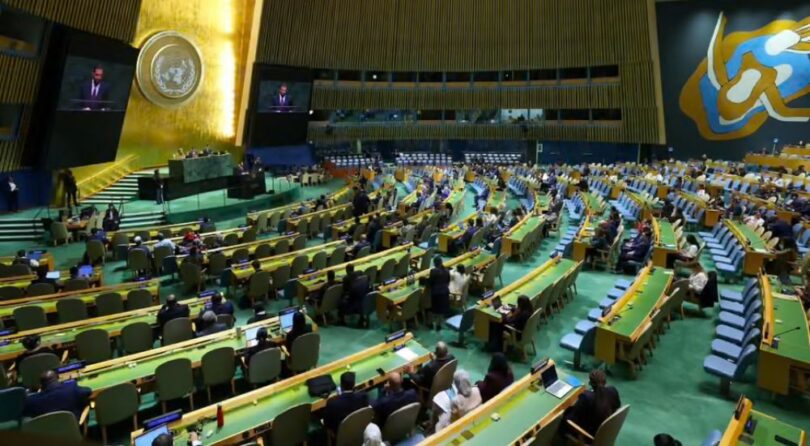
The commitments were announced at a high-level event on the sidelines of the 81st Session of the United Nations General Assembly (UNGA81) in New York.

The United Kingdom announced £254 million ($337.8 million), including £204 million for the UNFPA Supplies Partnership and £50 million for other organisations working to expand access to reproductive health services and supplies.

The European Investment Bank also provided a $232 million grant, while GiveWell, an independent non-profit research organisation, announced a $10 million grant to the UNFPA Supplies Partnership.

UNFPA said the commitments came as cuts in international funding threatened access to essential reproductive health services, particularly in low- and middle-income countries.

It said the UK funding could enable more than 15 million women annually to access voluntary family planning and help prevent 14 million unintended pregnancies and more than 35,000 maternal deaths by 2028.

The agency said governments in the 54 low- and middle-income countries participating in the UNFPA Supplies Partnership were also increasing domestic funding for family planning and maternal health.

Burundi, Madagascar, Mozambique and Zimbabwe announced combined commitments of more than $292 million from domestic resources for health infrastructure, services and supplies, according to UNFPA.

Government spending on contraceptives and maternal health supplies across the 54 participating countries increased more than sixfold between 2020 and 2025, reaching a record $68 million in 2025, the agency said.

The UNFPA Supplies Partnership is UNFPA’s programme for providing contraceptives and maternal health medicines to low- and middle-income countries.

The Partnership will match eligible domestic commitments dollar-for-dollar through its Match Fund, subject to a predetermined limit, allowing participating countries to extend their resources for reproductive health.

UNFPA said the UK contribution was the largest single government investment in reproductive health supplies worldwide in 2026.

GiveWell said its $10 million grant was its first investment in UNFPA and its largest investment in family planning. According to GiveWell’s modelling, the grant is expected to achieve about 19 times more impact than providing cash directly to people.

UNFPA said longstanding donor governments, including Denmark and Norway, had also announced new and multi-year support for the Partnership.

“Today’s commitments send a powerful message: investing in women and girls is the foundation for a prosperous and equitable future.

“Enabling their rights and choices is one of the smartest investments in development.

“Longstanding partners are standing firm, new ones are stepping up, and together we are changing lives,” UNFPA Executive Director, Diene Keita, said.

The event was co-hosted by UNFPA, FP2030 and the Gates Foundation, in partnership with the governments of Madagascar, Mozambique, Norway, Spain and Zimbabwe.

Ms Elsebeth Søndergaard Krone, State Secretary for Development Policy, Denmark, said lack of access to safe and affordable reproductive health commodities remained a major barrier to health equity globally.

“It has a negative impact on women’s right to decide over their own bodies. This is why UNFPA’s core mandate – to promote sexual and reproductive health and rights — continues to be not only relevant but increasingly essential,” she said.

Ms Kirsty McNeill, Minister for Development, United Kingdom, said women and girls should have the fundamental right to make informed choices about their bodies, free from coercion, discrimination and violence.

“Every woman and girl should be able to make decisions about her own future. That choice can mean staying in school, finding work or surviving childbirth.

“The funding I have announced today will help give millions more women and girls across the world autonomy over their bodies, control over their futures, and the chance to fulfil their full potential,” the statement quoted McNeill as saying.


National

Reproductive Health Gets $715m Funding Boost At UNGA81

Governments and philanthropic organisations have pledged more than $715 million to expand access to reproductive health services, infrastructure and supplies amid declining international funding for the sector, the United Nations Population Fund (UNFPA) said.

The commitments were announced at a high-level event on the sidelines of the 81st Session of the United Nations General Assembly (UNGA81) in New York.

The United Kingdom announced £254 million ($337.8 million), including £204 million for the UNFPA Supplies Partnership and £50 million for other organisations working to expand access to reproductive health services and supplies.

The European Investment Bank also provided a $232 million grant, while GiveWell, an independent non-profit research organisation, announced a $10 million grant to the UNFPA Supplies Partnership.

UNFPA said the commitments came as cuts in international funding threatened access to essential reproductive health services, particularly in low- and middle-income countries.

It said the UK funding could enable more than 15 million women annually to access voluntary family planning and help prevent 14 million unintended pregnancies and more than 35,000 maternal deaths by 2028.

The agency said governments in the 54 low- and middle-income countries participating in the UNFPA Supplies Partnership were also increasing domestic funding for family planning and maternal health.

Burundi, Madagascar, Mozambique and Zimbabwe announced combined commitments of more than $292 million from domestic resources for health infrastructure, services and supplies, according to UNFPA.

Government spending on contraceptives and maternal health supplies across the 54 participating countries increased more than sixfold between 2020 and 2025, reaching a record $68 million in 2025, the agency said.

The UNFPA Supplies Partnership is UNFPA’s programme for providing contraceptives and maternal health medicines to low- and middle-income countries.

The Partnership will match eligible domestic commitments dollar-for-dollar through its Match Fund, subject to a predetermined limit, allowing participating countries to extend their resources for reproductive health.

UNFPA said the UK contribution was the largest single government investment in reproductive health supplies worldwide in 2026.

GiveWell said its $10 million grant was its first investment in UNFPA and its largest investment in family planning. According to GiveWell’s modelling, the grant is expected to achieve about 19 times more impact than providing cash directly to people.

UNFPA said longstanding donor governments, including Denmark and Norway, had also announced new and multi-year support for the Partnership.

“Today’s commitments send a powerful message: investing in women and girls is the foundation for a prosperous and equitable future.

“Enabling their rights and choices is one of the smartest investments in development.

“Longstanding partners are standing firm, new ones are stepping up, and together we are changing lives,” UNFPA Executive Director, Diene Keita, said.

The event was co-hosted by UNFPA, FP2030 and the Gates Foundation, in partnership with the governments of Madagascar, Mozambique, Norway, Spain and Zimbabwe.

Ms Elsebeth Søndergaard Krone, State Secretary for Development Policy, Denmark, said lack of access to safe and affordable reproductive health commodities remained a major barrier to health equity globally.

“It has a negative impact on women’s right to decide over their own bodies. This is why UNFPA’s core mandate – to promote sexual and reproductive health and rights — continues to be not only relevant but increasingly essential,” she said.

Ms Kirsty McNeill, Minister for Development, United Kingdom, said women and girls should have the fundamental right to make informed choices about their bodies, free from coercion, discrimination and violence.

“Every woman and girl should be able to make decisions about her own future. That choice can mean staying in school, finding work or surviving childbirth.

“The funding I have announced today will help give millions more women and girls across the world autonomy over their bodies, control over their futures, and the chance to fulfil their full potential,” the statement quoted McNeill as saying.