
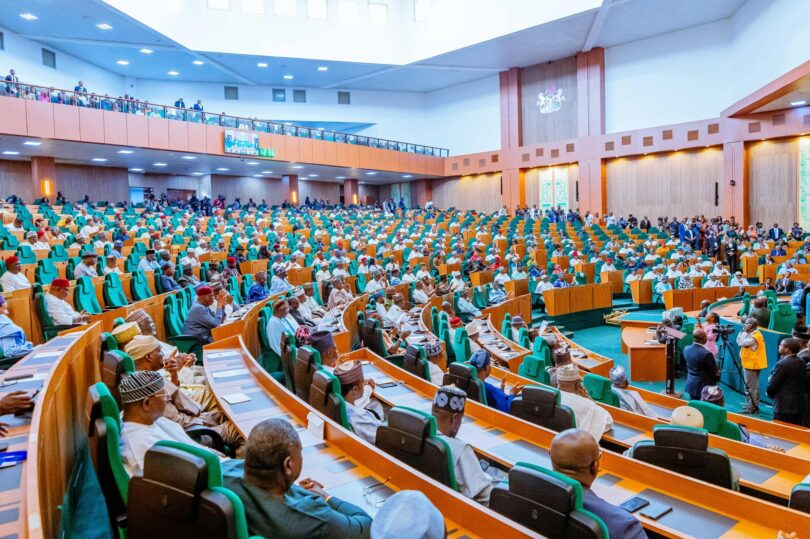
Lawmakers said some beneficiary institutions failed to administer NELFUND funds properly, warning that deliberate non-compliance could lead to suspension from the scheme, fund recovery, and referral to law enforcement agencies.
The House of Representatives Committee on Student Loans, Scholarships and Higher Education Financing has warned universities and other beneficiary institutions against withholding funds disbursed under the Federal Government’s student loan scheme.
The committee chairman, Ifeoluwa Ehindero (APC, Ondo), disclosed this in a statement on Thursday, following the committee’s recent monitoring activities and engagements with beneficiary institutions.
According to Mr Ehindero, the committee identified instances of institutions withholding NELFUND funds meant for students, delaying refunds to students who had already paid their tuition before the fund’s disbursement, or refunding only part of the amount due to eligible beneficiaries.
He said these practices raised serious concerns about compliance with the rules governing the loan scheme’s administration.
“It is important to state that such practices constitute serious compliance concerns, undermine transparency and accountability, erode students’ confidence in the system and may threaten equitable access to funding for higher education,” Mr Ehindero said.
He also warned that prolonged delays in processing payment notifications and refunds “may also disrupt academic progress and compound the financial hardship faced by affected students.”
Mr Ehindero urged heads of beneficiary institutions to ensure bursars, directors of ICT, and NELFUND desk officers strictly comply with the financial and administrative requirements for managing funds released under the scheme.
He said institutions must ensure that funds received from NELFUND on behalf of students are promptly and fully applied for the purposes for which they were released.
The committee also directed institutions to refund students who had already paid their fees before NELFUND disbursed funds.
It warned that institutions found deliberately refusing to comply with the scheme’s requirements could face sanctions.
According to the committee, Section 5.6 of the NELFUND Guidelines provides for measures including the suspension of non-compliant institutions from the scheme, recovery of funds and referral of cases to relevant law enforcement and regulatory agencies.
The committee said it would intensify oversight of beneficiary institutions to strengthen enforcement, improve transparency in handling student loan funds, and ensure greater accountability within the scheme.
It said its oversight was aimed at ensuring that the Federal Government’s efforts to make higher education more accessible and affordable were not undermined by administrative failures at the institutional level.
The committee’s warning comes against the backdrop of student complaints about delays in receiving refunds for tuition fees they paid before NELFUND disbursements.
In May, Premium Times reported that some University of Calabar students raised concerns over delayed refunds, although the institution said the process was ongoing.
The university’s NELFUND desk officer said refunds were being made in batches and that, at the time, about 3,000 students had been refunded.
NELFUND is the Federal Government’s student financing scheme, established to provide eligible Nigerian students with zero-interest loans to support their education.
The corporate body was established under the Students Loans (Access to Higher Education) Act, 2024, to manage and disburse interest-free student loans to eligible Nigerian students.
It replaced the former Nigerian Education Bank Act and is a core initiative of President Bola Tinubu’s administration, ensuring financial hurdles do not prevent young Nigerians from accessing tertiary education.
Under the scheme, funds are disbursed to beneficiary institutions to cover approved education-related costs for verified students.
Where a student has already paid the relevant fees before NELFUND makes the payment, the institution is expected to refund the student where applicable.
The scheme is intended to reduce the financial burden of higher education and enable more Nigerians to access tertiary education without being excluded because of their inability to pay upfront.