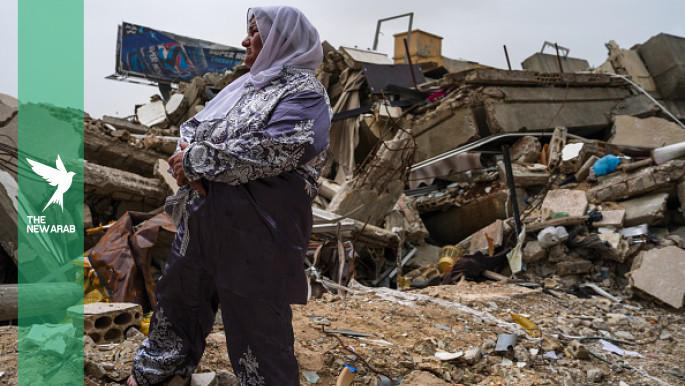
Israeli airstrikes killed and wounded dozens of civilians across southern Lebanon in the days before a temporary ceasefire took hold, as residents in multiple towns refused to flee despite mounting casualties and evacuation threats.
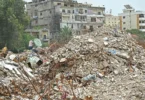
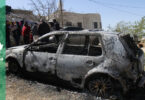
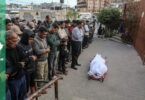
Strikes happened across areas north of the Litani River and east of Sidon, hitting towns including Zrariyeh, Tuffahta, Babliyeh and Saksakiyeh. An attack on Zrariyeh on 12 April killed 10 people, while a strike on Tuffahta a day earlier left nine dead and 13 injured, according to Lebanon’s health ministry.
Despite the deadly Israeli attacks, many residents chose to remain in their homes, citing financial hardship, previous experiences of displacement and a deep attachment to their land.
In Deir al-Zahrani, in the Nabatieh district, a young man named Hadi stayed behind under bombardment, relying on a neighbour’s solar-powered electricity to continue his university studies in marketing management.
“Leaving the town was not an option. I have a disabled sister and an elderly father, and I don’t have transport. We were displaced during the last war, and it was very difficult, so this time we decided to stay,” he told The New Arab.
“If we’re going to die, we’ll die in our home. We’ve entrusted ourselves to God.”
Hadi said he had only $600 when the war began, which he used to buy food rather than attempt to secure alternative accommodation, as basic services collapsed.
In Nabatieh al-Tahta, 62-year-old Suzanne Fakih said she and her two sons also refused to leave.
“Anyone who decides to leave their home needs to have a bag full of money. We can’t live in a school or a tent, and we don’t have transport, which is a big problem, so we preferred to stay at home – it’s more dignified and offers us more privacy,” she said.
Fakih added that her previous experience of displacement during the 2024 war had been marked by “different forms of humiliation”, reinforcing her decision to remain.
In Tyre, Nader Abu Sari is among those already displaced, now sheltering in a public school that has seen the number of families rise from 12 to 130 since the latest escalation.
“We keep saying we are fine, but in reality we are not,” he said. “There’s nowhere else to go. If I go to Sidon, I’ll be living in my car on the street.”
Abu Sari described soaring food prices and a lack of financial aid, noting that the cost of a gas cylinder had risen from $12 to $26. He also criticised the tensions that had risen up in Lebanon as a result of the war.
“Isn’t the Israeli war enough for us? This is shameful. The war is against all of us—we are all displaced,” he said.
In Saksakiyeh, 24-year-old Ruba Alloul said her family ignored Israeli evacuation warnings issued to 41 villages earlier this month.
“We are a people who do not break. We love our land and will not abandon it despite all the dangers and Israeli threats,” she said.
“Staying here angers the Israeli enemy. Most residents, even those with children, refused to leave.”
Fatima al-Akhdar, from Zrariyeh, said her family had also chosen to remain despite worsening shortages.
“We will not leave our land or our home. It became clear there is no safe place – the danger is everywhere,” she said, describing widespread shop closures and reliance on stored food.
“Leaving requires a lot of money, and finding a home in these conditions is very difficult, so we decided to stay and entrust ourselves to God.”
In Tuffahta, 19-year-old Hassan Saleh said local youth had stepped in to support those who remained after shops shut down.
“A group of us bring supplies from Sidon and distribute them to our people who remain,” he said.
In Babliyeh, journalist Hisham Hattit described staying as both a personal and collective act rooted in identity.
“I chose to remain as both a witness and an active participant. Our land is the source of our life and dignity,” he said.
“The decision to stay goes beyond a personal stance—it is a collective choice that reflects the identity of the town’s people.”