
In every society, certain occupations are celebrated while others are unfairly looked down upon. Unfortunately, Nigeria is no exception. For many people, success is still measured by the size of one’s office, the title on a business card, or the prestige associated with a white-collar job. As a result, countless legitimate occupations capable of generating wealth, creating employment, and building lasting family businesses are often dismissed as jobs for those who have “failed.”
Yet history tells a different story. Around the world, many of today’s largest corporations began with simple ideas, humble products, and entrepreneurs who refused to be ashamed of honest work. The difference was not the nature of the work itself, but the vision, innovation, discipline, and business strategy behind it.
Perhaps it is time for Nigerians to rethink how we define success and dignity in labour. Recent developments suggest that opportunities can be found in the most ordinary places even in businesses that many once ridiculed.
When Nigeria’s First Lady, Senator Oluremi Tinubu, encouraged Nigerians to consider businesses such as selling akara and kulikuli, many people dismissed her remarks. Some argued that the advice was too simplistic for a nation facing unemployment, inflation, and economic hardship. Others mocked the suggestion and even nicknamed her “Iya Alakara.”
Today, however, events appear to be telling a different story.
Lastweek, I saw a video clip for a drive-through akara and pap outlet at Lekki. It immediately reminded me of the drive-through models of international fast-food brands such as McDonald’s, KFC, and Pizza Hut. The idea was simple: take a traditional Nigerian meal and package it in a modern, convenient, and attractive way
A few days later, while visiting the Gudu Building Materials Market in Abuja, I noticed where akara businesses is being served hot. Workers and visitors lined up to buy it. Nearby, I also saw another modern food outlet under construction. It became clear that indigenous Nigerian foods are gradually being transformed into commercially viable brands.
I also recalled a domestic flight where passengers were served neatly packaged kulikuli as part of the onboard refreshments. It was hygienically packaged, professionally presented, and proudly Nigerian. It demonstrated that local products can compete successfully when they are processed, branded, and marketed properly.
Perhaps this should serve as an eye-opener for many Nigerians.
One of our greatest challenges is that we often judge the dignity of work by appearance rather than by its value. Some jobs are considered “too low” simply because they involve manual labour or traditional trades. Yet many of the same people who reject such work in Nigeria willingly perform similaror even more demanding jobs when they relocate abroad.
Many Nigerians living overseas work in restaurants, supermarkets, hotels, construction companies, cleaning services, factories, farms, and food chains. There is absolutely nothing wrong with those jobs. Honest work deserves respect wherever it is done.
The question, then, is this: if such work is respectable abroad, why should similar work be considered inferior at home?
It is time to change our mindset.
Not every path to success begins with a white-collar office. Income, dignity, and prosperity can also come from entrepreneurship, craftsmanship, agriculture, manufacturing, catering, and other skilled trades. Many successful family businesses around the world began with ordinary products and ordinary people who simply chose to work with excellence.
Last week, I witnessed something that reinforced this belief.
While inspecting a project, I met a young man, about 23 or 24 years old, who had graduated from Afe Babalola University with a degree in a social science discipline. Instead of remaining idle after completing his National Youth Service, he had joined his father, a respected electrician and artisan whom I have known for many years.
What struck me was not merely that he was assisting his father. He was actively breaking walls with a hammer, carrying out renovation work, and learning the practical side of the construction business. There was no sign of embarrassment or entitlement. He understood that there is dignity in honest labour and value in acquiring practical skills.
Many graduates in similar circumstances might have stayed at home waiting indefinitely for a government or corporate job. He chose a different path.
By learning the trade, he is acquiring something many people overlook: practical experience, entrepreneurial knowledge, customer relations, project management, and business skills. Whether he eventually works in his academic field or not, he is building an additional foundation that can sustain him throughout life.
Tomorrow, he may establish his own construction company, property maintenance firm, engineering services company, or even a real estate development business. He may employ other graduates instead of joining the growing queue of job seekers. He may expand the family business into a nationally recognized enterprise. What appears today to be manual labour could become the foundation of generational wealth.
This is the mindset Nigeria needs.
Education should not make us feel too important to work with our hands. Rather, it should equip us to improve traditional occupations through innovation, technology, better management, branding, and modern business practices.
The lesson extends beyond akara and kulikuli. It is about changing our perception of work. The global brands we admire today were built by people who saw opportunities in ordinary products. There is no reason Nigerian entrepreneurs cannot achieve similar success with indigenous foods, local crafts, agriculture, construction, and countless other sectors.
Government must, of course, continue to pursue sound economic policies that create jobs, encourage investment, and improve the business environment. That responsibility cannot be ignored. At the same time, citizens must also embrace entrepreneurship and recognize that wealth creation is not limited to office employment.
The First Lady’s comments may have been controversial, but they have also sparked a conversation about the dignity of labour and the possibilities hidden in Nigeria’s local economy. Whether one agreed with her or not, the emergence of modern akara businesses suggests that traditional products can be transformed into profitable enterprises through creativity, innovation, and proper branding.
Perhaps history will judge this debate differently from the way it was judged when it first began.
The real issue was never whether Nigerians should all become akara sellers. The real lesson is that no honest enterprise should be despised, and no legitimate opportunity should be ignored simply because it does not fit our traditional definition of success.
Every great business starts with an idea. Every global brand began with someone who saw value where others saw only the ordinary. The challenge before Nigeria is not merely to produce more job seekers but to nurture more job creators people who can transform indigenous products, local skills, and everyday services into sustainable businesses capable of creating wealth and employment.
If the emergence of drive-through akara outlets, professionally packaged kulikuli, and educated young Nigerians embracing entrepreneurship teaches us anything, it is that innovation can elevate even the simplest ideas into successful enterprises.
The young graduate I met breaking walls alongside his father may well represent the Nigeria of tomorrow a Nigeria where education complements practical skills, where graduates create jobs instead of waiting endlessly for them, and where dignity is measured not by the type of work we do but by the value we create.
Perhaps it is time we stopped asking, “What job is beneath me?” and started asking, “How can I build something valuable from what is already around me?”
That change in mindset may prove to be one of the most important ingredients in Nigeria’s journey toward economic growth, self-reliance, and sustainable prosperity.
The future belongs not only to those waiting for jobs, but also to those bold enough to create them.
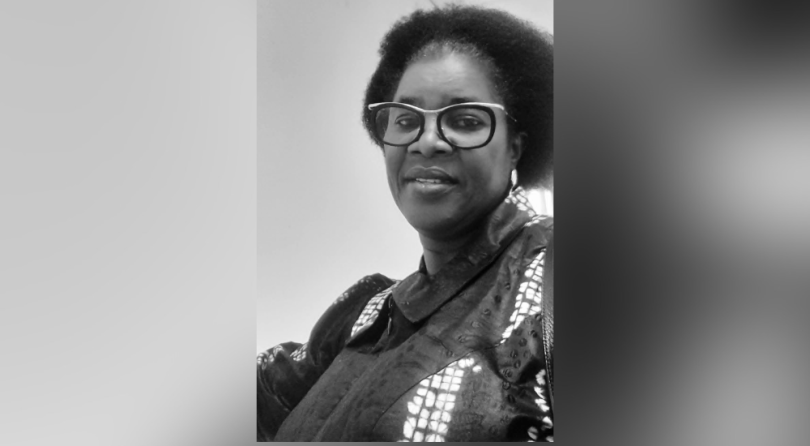
Sola Adeola is a governance analyst, legal researcher, and public affairs commentator based in Abuja.