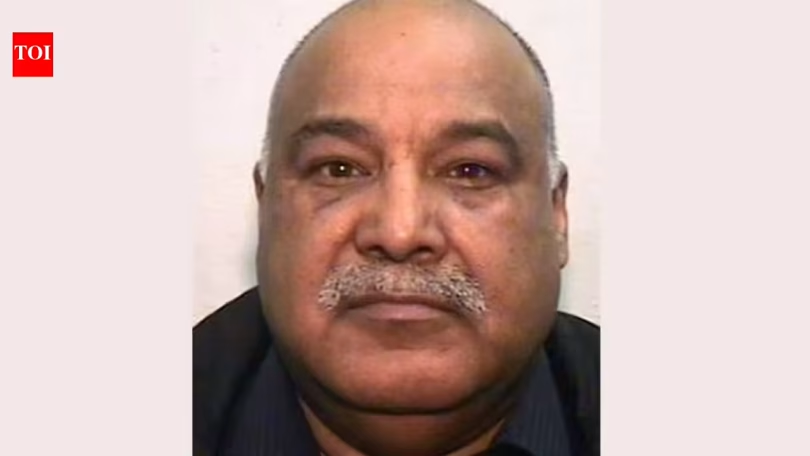
The release of Rochdale grooming gang leader Shabir Ahmed has reignited anger over a legal loophole that prevents his deportation despite serious sexual offence convictions.The release of Shabir Ahmed, the convicted leader of one of Britain’s most notorious child grooming gangs, has triggered widespread outrage across the UK. Ahmed walked out of prison on Thursday after serving 14 years behind bars for a string of horrific child sexual abuse offences that shocked the country and exposed major failures by public authorities.His release has become even more controversial because he will remain in the UK rather than being deported. The legal position has left victims, campaigners and politicians questioning how a man convicted of such serious crimes can avoid removal from the country, despite earlier expectations that he would be deported once his prison sentence ended.The case has once again placed the Rochdale grooming scandal back in the national spotlight, renewing calls for changes to immigration laws and greater protection for survivors.
Why Shabir Ahmed cannot be deported
Ahmed, now 73, was convicted in 2012 for multiple child sexual abuse offences, including numerous counts of rape involving vulnerable teenage girls. Following his conviction, he was stripped of his British citizenship. However, losing citizenship did not automatically make him eligible for deportation.The obstacle lies in long-standing provisions contained within the Immigration Act 1971. Under those rules, certain Commonwealth citizens who settled in the UK before 1973 and established lawful residence over several years are protected from deportation in most circumstances.Ahmed, who was born in Pakistan before moving to Britain decades ago, falls within that category. As a result, legal experts say the government currently has no straightforward route to remove him from the country despite the severity of his crimes.The issue has been further complicated by reports that Pakistan has not agreed to accept Ahmed, creating an additional diplomatic hurdle even if legal options were pursued.The situation has prompted fresh political debate, with ministers and opposition figures examining whether existing immigration legislation should be amended to prevent similar cases in the future.
What did the victims say?
For survivors of the Rochdale grooming gang, Ahmed’s release has reopened painful memories and renewed fears for their safety.One victim, identified publicly only by the pseudonym “Amber”, said she learned about Ahmed’s release through media coverage instead of being informed directly through victim support services. She described suffering sleepless nights and severe anxiety after hearing the news, saying the emotional impact had left her physically unwell.Former sexual health worker Sara Rowbotham, whose determination helped expose the organised abuse despite years of official inaction, also expressed concern about the consequences of Ahmed’s release. She warned that although he has completed his prison sentence, many survivors continue to live with the long-term trauma caused by the grooming network.Campaigners say the case highlights the continuing need to prioritise victims throughout the criminal justice process, particularly when dangerous offenders are released after lengthy prison terms.
UK’s strict licence conditions
Although Ahmed has been released from custody, he remains subject to some of the strictest supervision measures available for high-risk offenders.According to the Home Office, he will initially live in approved accommodation under close supervision and will be monitored through an electronic GPS tag. He has also been banned from entering the Rochdale area and is prohibited from contacting any of his victims.In addition, Ahmed will remain on the Sex Offenders Register for the rest of his life and will continue to be managed by probation and police authorities under strict licence conditions. Any breach of those conditions could result in him being recalled to prison.Officials say these restrictions are designed to reduce the risk to the public while ensuring that his movements remain closely monitored.
Pressure over immigration law reform
Ahmed’s release has intensified demands for changes to Britain’s immigration and deportation laws.Politicians from across the political spectrum have questioned whether legislation drafted more than five decades ago remains appropriate in cases involving offenders convicted of the most serious crimes. Some have called for amendments that would allow deportation powers to override historic protections in exceptional circumstances.Downing Street acknowledged the strength of public feeling, describing the Rochdale grooming scandal as one of the darkest chapters in recent British criminal history. Ministers have also indicated they are exploring every available legal option while continuing to review whether further legislative changes are necessary.For many survivors, however, the debate extends far beyond immigration law. They argue the case represents another painful reminder of the failures that allowed organised child sexual exploitation to continue for years before action was finally taken. While Ahmed’s prison sentence has ended, they say the impact of his crimes will remain with victims for the rest of their lives.