
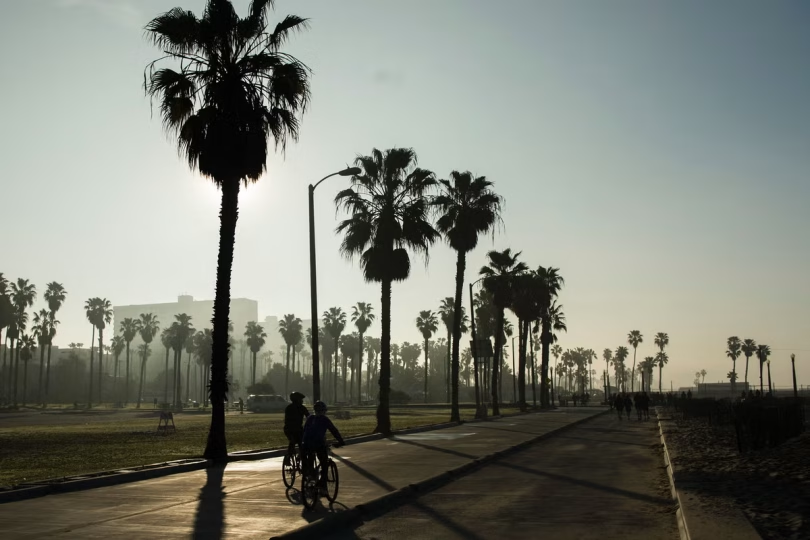
Santa Monica officials are identifying — and ticketing — drivers who park their cars in the city’s bike lanes using a new AI tracking program.
The Automated Bike Lane Enforcement Program uses data collected by camera-equipped city parking enforcement vehicles to determine if cars or trucks are illegally parked in a bike lane, CBS News reports.
Trevor Thomas, the program lead, told the broadcaster that using city vehicles already on patrol was an efficient method for collecting the bike lane data.
“There’s the issue of bandwidth, right? It takes time for a human to get out of their car to process the citation,” Thomas said. “This basically extends the bandwidth over existing officers.”
As of this report, seven of the city’s vehicles have been equipped with the AI-powered cameras. If the AI reviewing the image determines a vehicle is inappropriately parked in one of the city’s green bike lanes, it will mark the time and location of the potential infraction and send the relevant documentation to a human officer for review.
“It then gets reviewed by a human traffic safety enforcement officer, who then ensures that it’s a genuine violation and then it’s processed for a citation, for a ticket,” Thomas said.
If the human officer agrees that the car in question is parked in a bike lane, a fine of $93 is generated and sent to the driver.
The technology is built by a company called Hayden AI based in San Francisco, and is already in use in several U.S. cities.
Thomas said the driving motive behind the new enforcement method is to increase safety on the city’s roads. It’s part of a larger city initiative, Vision Zero, which hopes to eliminate deadly and serious injuries caused by crashes by the end of 2026.
When cars park in bike lanes, people riding bikes and scooters are forced into traffic, where the potential for a serious collision increases.
In 2024, Santa Monica ran a six-week test of the AI-enhanced enforcement technology using just two of its parking enforcement cars. The city racked up nearly 1,700 violations during the test period. Thomas told CBS News the program now averages approximately 150 violations per month.
Similar AI-backed enforcement programs may become the norm in American cities. The city of Chicago uses a nearly identical program — including the same Hayden AI tools — that Santa Monica does. The difference is that Chicago mounts its cameras on city buses.
In early July, Chicago officials announced they were scaling up the AI enforcement program from six AI camera-equipped buses to 52.
Officials in the Windy City are not just looking to crackdown on bike lane blockers, but also drivers who park in its bus lanes. Obstructed bus lanes not only make it difficult and potentially dangerous for buses on their routes, but it can limit access for people with mobility issues who rely on public transportation to get around.
“The ABLE program is making a real difference for our riders, especially riders with disabilities,” Chicago Transit Authority Acting President Nora Leerhsen said in a statement. “It’s exactly the kind of investment that reflects what public transit should be: not just fast and reliable, but genuinely accessible. Because for many in our disability community, more dependable bus service isn’t a convenience. It’s independence.”