The enviroment commissioner explained that the recent downpours produced an unusually large volume of water that exceeded the capacity of drainage infrastructure in many locations.
Lagos State Governor Babajide Sanwo-Olu on Wednesday visited several communities devastated by recent flooding in Eti-Osa Local Government Area, as residents called for urgent and lasting measures to address the perennial challenge.
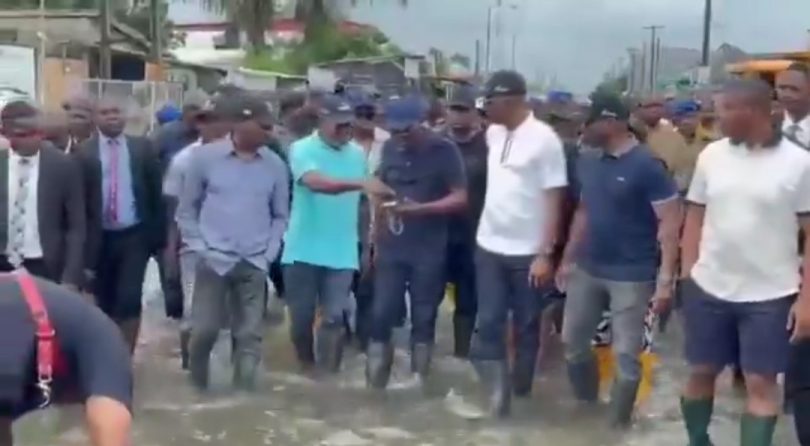
The governor, accompanied by Deputy Governor Obafemi Hamzat, Commissioner for the Environment and Water Resources Tokunbo Wahab and other members of the Lagos State Executive Council, inspected Ogombo, Monastery Road-Sangotedo, Gbetu, Iwerekun and other affected communities in the Eti-Osa East Local Council Development Area.
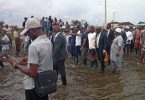
Videos shared by the Lagos State Government and other platforms showed Mr Sanwo-Olu and members of his entourage wading through knee-deep floodwaters to inspect submerged roads, drainage channels and residential areas while interacting with residents and community leaders.
The visit followed days of heavy rainfall that inundated several parts of Lagos, leaving roads submerged, disrupting commercial activities and forcing some residents to use canoes to cross flooded streets.
Residents who spoke with government officials during the visit appealed for immediate relief and long-term flood-control projects, saying recurring flooding has damaged homes and businesses, displaced families and made movement within their communities increasingly difficult.
The governor’s visit comes as Lagos battles another rainy season marked by widespread flooding. Earlier this year, the Nigeria Hydrological Services Agency (NIHSA) identified Lagos among states at high risk of flooding in its 2026 Annual Flood Outlook, warning that intense rainfall, flash floods and coastal flooding could affect vulnerable communities during the peak of the rainy season.
The inspection also followed recent measures announced by the state government to reduce flooding. Last month, Governor Sanwo-Olu approved the dredging and maintenance of 28 additional primary drainage channels after flash floods affected several parts of the state.
The Commissioner for the Environment and Water Resources, Tokunbo Wahab, explained that the recent downpours produced an unusually large volume of water that exceeded the capacity of drainage infrastructure in many locations.
“The rainfalls were an extreme weather event that produced an unusually high volume of water within a short period, overwhelming drainage channels in some locations and resulting in temporary flooding across parts of Victoria Island, Lekki, Ikeja, Gbagada, Mushin, Mafoluku and several other areas,” Mr Wahab said.
He added that the weather event was not unique to Lagos, noting that several African countries and parts of North America experienced similar heavy rainfall during the same period.
Mr Wahab also stated that earlier interventions in flood-prone communities, including Ajiran and Agungi in the Eti-Osa axis, had improved stormwater discharge after blocked drainage channels were cleared and natural waterways restored.
Despite those interventions, flooding remains a recurring challenge in many parts of Lagos. Experts attribute the problem to a combination of rapid urbanisation, inadequate drainage infrastructure, indiscriminate dumping of refuse in waterways, development on wetlands and the increasing frequency of extreme weather associated with climate change.
The Lagos State Government has repeatedly urged residents to desist from dumping waste into drainage channels, warning that blocked drains significantly worsen flooding during periods of intense rainfall.
For many residents in the affected communities, however, the priority is recovering from the latest floods. As floodwaters continue to disrupt daily life, many hope the governor’s visit will be followed by concrete interventions that reduce the risk of future flooding rather than another cycle of damage when the rains return.