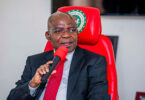
The Chairman of the National Hajj Commission of Nigeria (NAHCON), Amb. Ismail Yusuf, says Saudi Arabia has insisted that Nigeria’s 50,000 Hajj slots allocated for the 2027 pilgrimage remain sacrosanct.
Yusuf disclosed this in Abuja on Monday at a media roundtable on the 2026 Hajj policy reforms of the Kingdom of Saudi Arabia and their implications for Nigeria’s Hajj operations.
He said Nigeria had appealed to the Saudi authorities for an increase in the allocation but the request was rejected because of capacity and the advanced stage of preparations for the pilgrimage.
“The Saudis had told us that the 50,000 quota they gave us was sacrosanct,” he said.
He explained that Nigeria had an obligation to appeal for more slots because of the number of Nigerians interested in performing the pilgrimage.
“We had an obligation to our nationals to appeal, which we did. Unfortunately, the Saudis turned down our requests,” he said.
Yusuf said the Saudi authorities attributed the decision to capacity utilisation and the fact that preparations for the pilgrimage had already gone far.
He, however, said Saudi Arabia had promised to review Nigeria’s allocation in the following year based on the country’s performance in utilising its current quota.
“They however promised that next year they will consider adjustment in our quota depending on how we perform this year,” he said.
He said the performance assessment would particularly focus on Nigeria’s ability to fully utilise the 50,000 slots allocated to it.
Yusuf explained that each country participating in Hajj was assigned a predetermined number of pilgrims based on available space, logistics and other services.
“These numbers are predetermined,” he said, adding that countries could not exceed their approved allocations because of the limited capacity available for pilgrims.
He said Nigeria’s 50,000 slots were divided between the government-controlled pilgrimage system and the tour operator model under the new Saudi arrangements.
According to him, 35,000 slots had been allocated to the government quota, while 15,000 slots were earmarked for tour operators.
“That is what makes our 50,000,” Yusuf said, stressing that the allocation was designed to reflect the new structure being introduced by the Saudi authorities.
He said the Nigerian government had decided to support full compliance with the new Saudi Hajj regulations.
Yusuf said Nigeria’s compliance with the reforms was important to maintaining the country’s diplomatic credibility and relationship with Saudi Arabia.
He said NAHCON was therefore implementing measures aimed at protecting the welfare, security and interests of Nigerian pilgrims within the new regulatory environment.
One of the measures, he explained, was the promotion of state-driven private local entities that could operate within the business-to-business framework being introduced by Saudi Arabia.
Yusuf said the initiative would enable state Muslim pilgrims’ welfare boards to establish subsidiaries that could operate as private companies while retaining a public welfare orientation.
He said the arrangement was intended to combine compliance with Saudi Arabia’s business-to-business model with the need to keep Hajj services affordable for Nigerians.
Yusuf said NAHCON was also pursuing comprehensive digital transformation to align Nigeria’s Hajj operations with the Saudi Vision 2030 framework.
“NAHCON has rolled out an aggressive digital blueprint to match the Saudi Vision 2030 standards,” he said.
He said the commission was improving its digital infrastructure, equipment and staff training to ensure effective migration to the new Saudi digital system.
He added that NAHCON was fast-tracking data ingestion to meet the Sept. 26 deadline stipulated by the Saudi authorities.
He said NAHCON had also commenced nationwide sensitisation programmes to educate state executives, pilgrims and other stakeholders on the new financial and operational requirements.
According to him, the campaigns were aimed at ensuring early remittances and preventing Nigeria from losing its allocated slots because of failure to meet Saudi deadlines.
Yusuf said the commission would also strengthen regulation of tour operators through stricter licensing requirements and compliance audits.
“NAHCON is forcing private travel businesses to become heavily accountable,” he said, noting that the commission had previously received complaints about service providers failing to provide services paid for by pilgrims.
He said the new regulatory measures would ensure that pilgrims under the business-to-business model received appropriate accommodation, transportation and other services.
He added that service providers that failed to deliver would face sanctions, including blacklisting and refund of the cost of undelivered services.
Yusuf said NAHCON was also strengthening early planning, procurement compliance, workforce training, stakeholder engagement, monitoring and evaluation, while assuring that the welfare and dignity of Nigerian pilgrims would remain central to the reforms.
He added that under the new Saudi visa arrangements, eligible Umrah and entry-visa holders could combine the pilgrimage with tourism and travel beyond Makkah and Madinah, including to Riyadh, provided they left Saudi Arabia before their visas expired.