
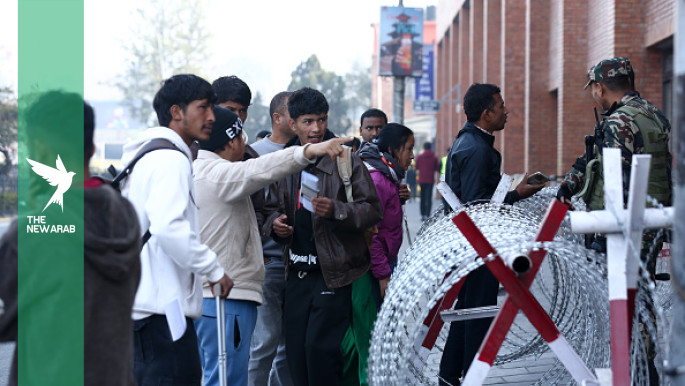
Nepali migrant workers wait for an update from airline companies after Middle East countries closed their airspace amid the Iran war [Getty]
Saudi Arabia has suspended plans to introduce compulsory skills tests for Nepali workers after the proposal sparked protests in Kathmandu over concerns it would burden migrant labourers with additional costs and delays before they can travel to the kingdom.
The certification programme, which was due to take effect this week, would have required Nepali workers to pass practical skills assessments before becoming eligible for Saudi work visas. Applicants would also have had to pay around $100 in testing fees, prompting opposition from recruitment agencies and labour rights advocates who argued the measure unfairly shifted the financial burden onto workers.
The backlash culminated in protests outside a Saudi-backed testing centre in Kathmandu, where representatives of Nepal’s foreign employment industry accused Riyadh of introducing the requirement without consulting the Nepali government. The planned launch of the facility was subsequently cancelled, and the programme has since been suspended as further discussions take place.
Recruiters argue the new requirement contradicts a labour agreement signed by Nepal and Saudi Arabia earlier this year, under which both governments agreed that changes affecting migrant workers would be coordinated through a joint technical committee.
They also warned that the certification process could increase recruitment costs, delay departures and discourage overseas employment.
Saudi authorities say the programme is intended to improve labour standards by ensuring workers possess the necessary skills before arriving in the country. Officials argue the certification system would help verify professional qualifications, improve workplace safety and better match workers with employers’ needs.
The dispute has highlighted the importance of Saudi Arabia as a destination for Nepali migrant workers. Hundreds of thousands of Nepalis are employed in the kingdom, primarily in construction, hospitality, domestic work and other low-paid sectors.
Remittances sent home by overseas workers are a cornerstone of Nepal’s economy, but many migrants already struggle with significant debts to pay for recruitment fees and travel costs before securing employment abroad.
Labour rights groups have long argued that additional financial or administrative barriers risk placing greater pressure on workers, many of whom borrow money at high interest rates to seek jobs overseas. They have called on both governments to ensure any reforms to the recruitment process do not increase workers’ costs or undermine protections agreed under existing labour arrangements.
The suspension is expected to give Kathmandu and Riyadh time to negotiate the future of the certification scheme, though it remains unclear whether the programme will eventually be introduced in a revised form.