National

Scotland, Wales, Northern Ireland Leaders Push For Independence Votes

The leaders of Scotland, Wales and Northern Ireland are set to meet in Cardiff on Monday to sign an agreement calling for the right to hold independence referendums in their respective nations.

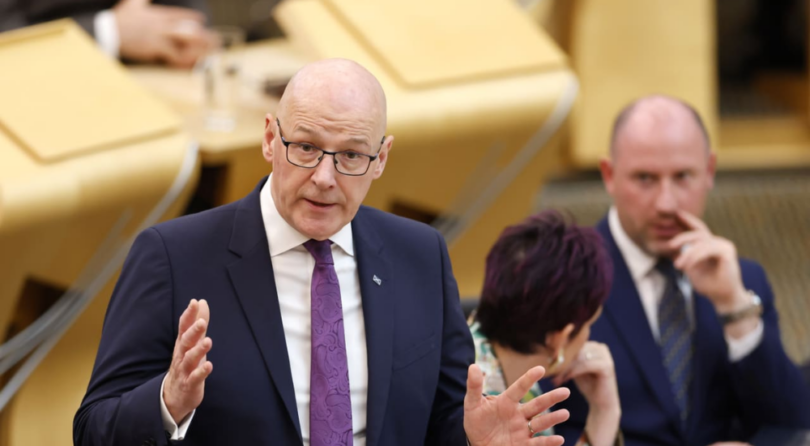
Scotland’s First Minister John Swinney, Wales’ First Minister Rhun ap Iorwerth and Northern Ireland’s First Minister Michelle O’Neill are expected to sign a memorandum of understanding at the meeting.

The agreement is expected to call for mechanisms that would allow Scotland, Wales and Northern Ireland to determine their constitutional futures through referendums.

The meeting marks an unprecedented gathering of the leaders of the three devolved nations, all of whom lead parties that support greater self-determination or independence.

Swinney, who leads the Scottish National Party, has recently stepped up calls for an agreed legal mechanism for another Scottish independence referendum.

He wrote to UK Prime Minister Andy Burnham earlier this week, urging him to turn his position on Scotland’s right to decide its constitutional future into an agreed legal process.

The Scottish Government said Swinney’s call followed comments by Burnham suggesting that Scotland should be in a similar position to Northern Ireland, where the law provides for a referendum on Irish unification if there is evidence of sufficient public support.

In Wales, ap Iorwerth’s Plaid Cymru also supports Welsh independence, although the Welsh First Minister has previously said there will be no independence referendum during the current term of the Welsh Parliament.

O’Neill, who is vice president of Sinn Féin, has supported Irish reunification and has previously said she expects a referendum on the constitutional future of Northern Ireland during her political lifetime.

The proposed agreement does not itself dissolve the United Kingdom or trigger independence referendums. Instead, it is intended to increase political pressure on the UK Government to establish routes for the devolved nations to hold such votes.

The development comes amid renewed debate over the future of the United Kingdom and the balance of powers between Westminster and the devolved governments in Edinburgh, Cardiff and Belfast.


National

Scotland, Wales, Northern Ireland Leaders Push For Independence Votes

The leaders of Scotland, Wales and Northern Ireland are set to meet in Cardiff on Monday to sign an agreement calling for the right to hold independence referendums in their respective nations.

Scotland’s First Minister John Swinney, Wales’ First Minister Rhun ap Iorwerth and Northern Ireland’s First Minister Michelle O’Neill are expected to sign a memorandum of understanding at the meeting.

The agreement is expected to call for mechanisms that would allow Scotland, Wales and Northern Ireland to determine their constitutional futures through referendums.

The meeting marks an unprecedented gathering of the leaders of the three devolved nations, all of whom lead parties that support greater self-determination or independence.

Swinney, who leads the Scottish National Party, has recently stepped up calls for an agreed legal mechanism for another Scottish independence referendum.

He wrote to UK Prime Minister Andy Burnham earlier this week, urging him to turn his position on Scotland’s right to decide its constitutional future into an agreed legal process.

The Scottish Government said Swinney’s call followed comments by Burnham suggesting that Scotland should be in a similar position to Northern Ireland, where the law provides for a referendum on Irish unification if there is evidence of sufficient public support.

In Wales, ap Iorwerth’s Plaid Cymru also supports Welsh independence, although the Welsh First Minister has previously said there will be no independence referendum during the current term of the Welsh Parliament.

O’Neill, who is vice president of Sinn Féin, has supported Irish reunification and has previously said she expects a referendum on the constitutional future of Northern Ireland during her political lifetime.

The proposed agreement does not itself dissolve the United Kingdom or trigger independence referendums. Instead, it is intended to increase political pressure on the UK Government to establish routes for the devolved nations to hold such votes.

The development comes amid renewed debate over the future of the United Kingdom and the balance of powers between Westminster and the devolved governments in Edinburgh, Cardiff and Belfast.