
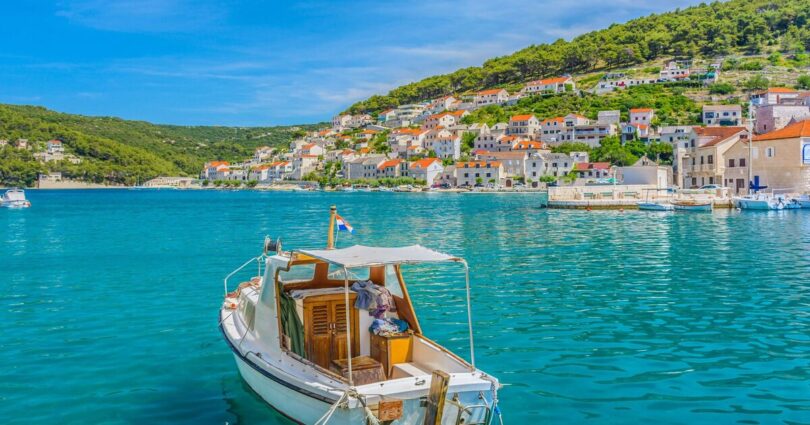
Croatia is world-famous for its crystal-clear Adriatic waters of stunning shades of turquoise and deep blue. As a result, millions of tourists arrive in the country every year, excited to explore its iconic seaside hotspots like Dubrovnik, enjoy world-class island-hopping, or simply relax on a beach.
The stunning hues are formed by sunlight reflecting off the limestone and dolomite sea beds. In recent years, Croatia has performed exceptionally well in the European Environment Agency’s (EEA) annual water quality report, consistently ranking among the continent’s top performers. However, the central European nation has fallen significantly in the EU bathing water quality rankings, according to the report published this week. While the country continues to maintain high overall standards, only 86.2% of Croatia’s bathing waters were rated “excellent,” placing the country 12th among the nations included in the study.
The result marks a notable decline for Croatia, as last year it ranked fifth in the rankings, with previous reports indicating that more than 95% of its bathing waters achieved the highest quality classification, CroatiaWeek reported.
This year, around 85% of monitored bathing sites met the EU’s strictest “excellent” quality standards, while 96% met the minimum quality requirements. Only 1.5% of monitored locations were classified as having poor water quality. The EEA’s Bathing Water Directive (BWD) classifies waters into quality tiers by strictly monitoring for faecal indicator bacteria – E. coli and intestinal enterococci.
Although Croatia remains above the EU average, with more than eight in 10 monitored sites still meeting the highest standard, the report highlighted differences between coastal and inland waters. Croatia ranked 14th for the quality of its coastal bathing waters, while its inland waters were among the lowest-performing in the survey, placing 22nd out of the countries assessed.
Cyprus topped the European rankings, with 100% of its bathing waters receiving an excellent rating. Greece ranked second, with 97.1% of its 1,734 monitored sites classified as excellent. Bulgaria ranked third at 96.9%, followed by Austria at 96.5% and Luxembourg at 94.1%. Among Mediterranean countries, Italy placed eighth with 89.8% of bathing waters rated excellent, Malta ranked ninth with 88.5%, and Spain was 11th with 86.6%.
Commenting on the findings, European Commissioner for Environment, Water Resilience and a Competitive Circular Economy Jessika Roswall said the results demonstrate the long-term benefits of EU environmental legislation and investment in wastewater treatment and water management.
EEA Executive Director Leena Ylä-Mononen added that the strong results show how coordinated European action has helped ensure that the vast majority of bathing waters are safe for swimming, while also contributing to greater resilience in the face of climate change.
The findings are based on 22,289 water samples collected during 2025 from bathing sites across EU member states, Albania and Switzerland.