
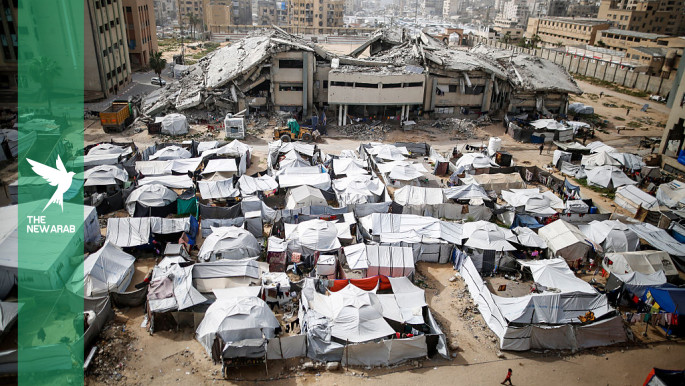
Children in Gaza are being bitten by rats, while medical professionals fail to treat them due to Israeli restrictions on aid and medicine [Getty]
Skin infections in Gaza, mostly linked to parasites and rodents, have increased dramatically in recent months, as Israel continues to prevent the entry of medicine and essential items into the Strip and key infrastructure remains destroyed.
A new report from UNRWA said on Thursday that there have been over 125,000 documented cases of skin infections recorded since the start of this year.
The report adds that this equates to around 400 cases a day, while medical staff struggle to provide the necessary treatment due to a lack of medication.
Israel’s two year genocidal war on Gaza has devastated the enclave, destroying key healthcare and sanitation infrastructure including waste management systems.
Rubbish has gone uncollected for long periods of time, while sewage is overflowing in many areas. Medical agencies state that the dire conditions could also result in respiratory issues and even the plague if it continues.
As a result of worsening conditions, rodent and pest populations have proliferated, particularly in displacement camps.
Rats are chewing through tents, clothing, and food, and in many cases biting young children.
“As far as the rat infestation and the infectious diseases that we’re seeing now, this is all a result of overcrowding and poor living conditions because of the lack of sewage management. Most people are living next to open waste and sewage,” Dr Mimi Syed, a US-based emergency physician who volunteered in Gaza amid the war, told The New Arab.
“The figures do not even include chicken pox and scabies, so conditions are terrible. Every time civil workers are trying to repair the infrastructure, for clean water, for example, the trucks, engineers, those people are deliberately targeted by Israel and killed,” she added, noting there are often children queuing up at water distribution points when attacks happen.
“Living conditions and the tents are inadequate not just for the winter but for the summer too, because we will see an increase in infectious diseases in the summer and skin conditions will only get worse, which will lead to more mortality and casualties because of this type of blockade,” Syed explained.
Syed says matters have been further compounded by Israel preventing most medical evacuations, despite hospitals in the occupied West Bank having the capacity to treat patients.
Displaced residents who spoke to The New Arab earlier this year also said that several months on from the October 2025 ceasefire, the rodents are appearing much larger and more aggressive compared to last year.
“Another crisis in the Gaza Strip. Rats and parasites are surging. Skin infections are spreading. Risk of disease is increasing,” UNRWA wrote on social media platform X, warning that a new health crisis is imminent in Gaza.
“Supplies need to be allowed into Gaza at scale,” the agency added, noting that many cases could be treated if there were adequate quantities of medication available.
The warning from UNRWA comes as the Ministry of Health in Gaza said earlier this month that 47 percent of essential medicines and 59 percent of medical supplies are no longer available, as the health crisis worsens in the enclave.
The ministry emphasised that cancer and blood disease medications, as well as medical equipment for dialysis services, are some of the most affected by the shortage of medical supplies.
Aid groups have also said that contaminated water being used for sanitation, cooking, and washing is another cause for concern, as it creates a unique environment for disease to spread.
The restrictions on medication come despite Israel’s obligations to allow the entry of aid, stipulated in the terms of the October ceasefire agreement.
The truce outlines that Israel must allow the “immediate commencement of full entry of humanitarian aid and relief” into Gaza.
It adds that the entry of aid should be “at a minimum in consistency with the 19 January 2025 agreement regarding humanitarian aid”.
However, Israel has instead suspended dozens of aid associations from operating in Gaza, with UN experts calling it a form of “collective punishment of survivors”.