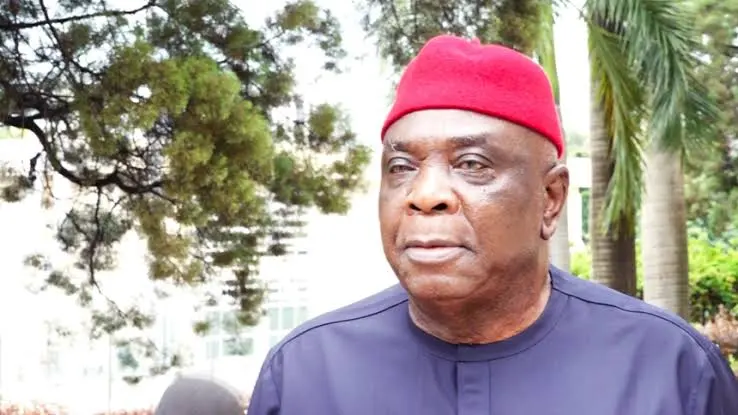
A chieftain of the Peoples Democratic Party (PDP), Dan Ulasi, has called for a sincere national dialogue involving Nigeria’s six geopolitical zones, saying the country cannot achieve genuine unity without addressing historical grievances and ensuring fairness for all regions.
Speaking during an interview, Ulasi said Nigeria’s leaders must move beyond political rhetoric and convene representatives from the six geopolitical zones to openly discuss their respective interests and agree on a common path that would strengthen national unity and development.
Reflecting on Nigeria’s political history, Ulasi recalled the 1999 PDP presidential primary in Jos, where former Vice President Alex Ekwueme lost the party’s presidential ticket to Olusegun Obasanjo. He alleged that former military president Ibrahim Babangida intervened to stop Ekwueme’s emergence, arguing that allowing him to become president would have undermined the justification for the military coup that ousted the Shagari administration.
Ulasi also expressed concern over what he described as the continued marginalization of the South-East decades after the Nigerian Civil War, despite former Head of State General Yakubu Gowon’s declaration of “no victor, no vanquished.”
“It is difficult to imagine our sincerity as a people for one Nigeria. The South-East are neglected and not treated as people of one Nigeria because we fought a civil war. We didn’t start the war,” Ulasi said.
He lamented that the recommendations of the Oputa Panel, which examined many of Nigeria’s historical and political grievances, have largely remained unimplemented by successive governments.
Commenting on the January 1966 military coup, Ulasi argued that the event should not be viewed solely through an ethnic lens, maintaining that some military officers believed they were acting to preserve Nigeria’s unity at a time when regional divisions were deepening.
According to him, Nigeria’s leaders must demonstrate genuine commitment to implementing agreements reached through dialogue rather than merely promoting slogans about national unity.
Ulasi maintained that only honest conversations, justice, equity, and inclusive governance can lay the foundation for lasting peace and national cohesion.