
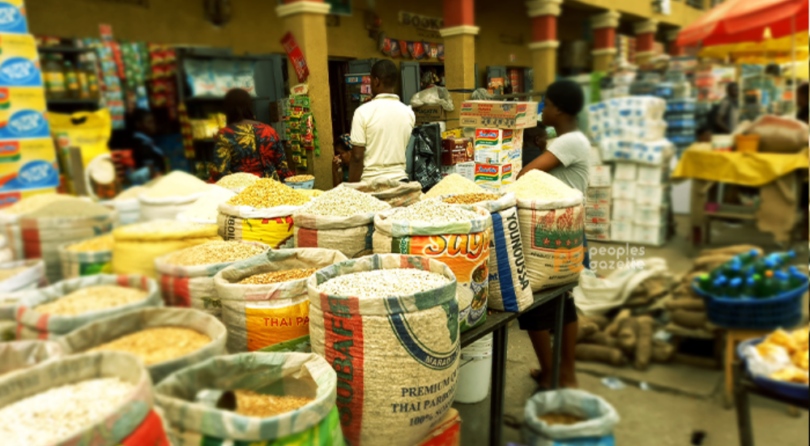
The Lagos State Government and other South-West states are seeking measures to reduce post-harvest losses, improve food transportation and storage, and tackle rising food prices as part of efforts to strengthen Nigeria’s food security.
The initiative was discussed in Ikeja at a three-day regional review of Nigeria’s Food Systems Transformation Pathways (FSTP), which began on Tuesday, and ended on Thursday.
Participants from Lagos, Ogun, Oyo, Osun, Ondo and Ekiti states, alongside academics, development partners and other stakeholders, are reviewing implementation progress and exploring ways to improve food availability and affordability.
Speaking at the meeting, Lagos State Commissioner for Agriculture and Food Systems, Abisola Olusanya, said food preservation, storage and logistics were major contributors to high food prices, stressing that increased agricultural production alone would not guarantee affordability.
“A lot of our problem around inflation is not production. It is actually preservation, storage, logistics. Those are the key challenges around why food inflation is high,” she said.
Olusanya called for better organisation of food markets, stronger traceability systems and improved quality-control measures to ensure that food supplied to consumers was safe, wholesome and affordable.
She also highlighted the need for investments in infrastructure, technology, cold-chain facilities and temperature-controlled transportation to minimise food losses and reduce the cost of moving agricultural produce from farms to markets.
According to her, combining agriculture with technology and enterprise development could also encourage more young people to participate in the sector and help build a more efficient food supply chain.
In his keynote address, Lagos State Commissioner for Economic Planning and Budget, Ope George, said cooperation among states was essential to addressing food security challenges and improving the movement of food from producing areas to markets.
George explained that food systems transformation extended beyond farming to include processing, storage, transportation, distribution, market access and sustainable consumption.
He noted that Lagos’s position as a major commercial and consumption hub made regional cooperation particularly important because of its extensive food supply connections with other parts of the country, including northern Nigeria.
He said collaboration could help tackle post-harvest losses, high transportation costs, inadequate storage facilities and inefficiencies in food markets.
“Our collective goal must be to strengthen food value chains, improve market access for producers, enhance food availability and build a more resilient and sustainable national food system,” George said.
The commissioner added that the regional review would enable stakeholders to assess progress, identify gaps in implementation and agree on practical measures to improve food systems programmes.
He said a common operational framework would also clarify institutional responsibilities and promote consistency in implementation, monitoring and reporting.
Earlier, National Convener of the Food Systems Transformation Pathway for Nigeria, Clementina Ebere-Okoro, urged state governments and regional stakeholders to contribute to the validation of a draft Standard Operating Procedure (SOP) for implementing the country’s food systems transformation agenda.
Speaking on behalf of the Permanent Secretary of the Federal Ministry of Budget and Economic Planning, Deborah Odoh, Ebere-Okoro said contributions from state governments and geopolitical zones were necessary to ensure the proposed framework reflected the realities of implementation.
She explained that although the Federal Government had prepared a draft SOP, stakeholders needed to review and validate it to establish a common approach to coordination, implementation, reporting and accountability.
“At the national level, we have put up the draft SOP, but we need the input of everyone—the states and the zones—because that is where the implementation is. We want a situation whereby we have a joint food SOP, so we need to validate it with your inputs,” she said.
Ebere-Okoro identified climate change, insecurity, malnutrition, post-harvest losses and rising food prices as major challenges confronting Nigeria’s food systems.
She said tackling the problems required stronger coordination, evidence-based decisions and sustained participation by government institutions, development partners and other stakeholders.
According to her, the bi-annual review was designed to assess implementation at federal and state levels, identify emerging challenges, document lessons and good practices, and agree on practical measures to improve results.
In her welcome address, Permanent Secretary of the Lagos State Ministry of Economic Planning and Budget, Olayinka Ojo, also called for sustained collaboration and effective coordination among stakeholders to improve food systems across the South-West.
Ojo said the meeting provided an opportunity to review progress, share experiences, identify implementation gaps and validate an operational framework for more effective programme delivery.
She noted that food systems were closely linked to economic growth, job creation and improved livelihoods, making cooperation among states essential to sustainable development.
Ojo urged participants to contribute actively to the discussions, expressing confidence that their combined experiences would produce practical recommendations for implementing the regional food systems transformation agenda.
The meeting is expected to conclude with recommendations on implementation priorities and contributions towards a harmonised SOP for the South-West.
The proposed framework is intended to strengthen coordination, clarify institutional responsibilities and improve accountability among stakeholders working to transform Nigeria’s food systems.