
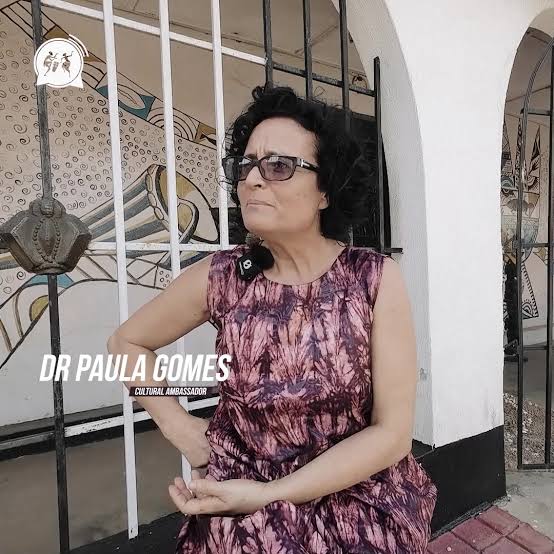
Portuguese cultural researcher and Culture Ambassador to the Alaafin of Oyo, Dr. Paula Gomes, has issued a powerful call to Yoruba parents: teach your children Yoruba, make them speak it correctly, and never allow the language to become a forgotten part of their identity.
Gomes warned that a people who abandon their language risk losing more than words they risk losing the history, values, worldview and cultural knowledge carried by those words.
> “Teach Yoruba to your children. Let them learn their mother tongue. Don’t call it the vernacular.”
According to her, speaking English or other international languages should not come at the expense of a child’s indigenous language.
She pointed to Portugal as an example, noting that Portuguese remains central to the identity of its people, even though citizens may learn English and other foreign languages for education, business and international communication.
For the Yoruba, she argued, Yoruba should not be treated as an inferior language that belongs only in the village or among the older generation.
It should be spoken at home, in schools, at cultural gatherings and wherever Yoruba people interact with one another.
A child who cannot speak Yoruba is losing access to part of his heritage
Gomes stressed that language carries meanings that cannot always be adequately translated into English or another foreign language.
She cited Egungun as an example, questioning the tendency to simply translate the word as “masquerade.”
> “There are some words that you cannot translate,” she said.
According to Gomes, describing Egungun merely as a masquerade can remove the deeper spiritual and ancestral meaning attached to the institution.
> “You took out the spiritual value of your own identity.”
She explained that Egungun, within Yoruba traditional understanding, represents the ancestors returning to the community and being honoured through an annual observance.
This, she argued, demonstrates why Yoruba children must learn not only to pronounce Yoruba words but also to understand what those words mean.
Yoruba is more than a language
For parents who insist that their children must speak only English because it is the language of education and opportunity, Gomes’ message offers a different perspective.
Learning Yoruba does not prevent a child from learning English.
A Yoruba child can speak excellent English, study other international languages and still speak Yoruba fluently and proudly.
The real danger, therefore, is not multilingualism. The danger is replacing the mother tongue with foreign languages until the child can no longer communicate properly with his grandparents, understand Yoruba proverbs, interpret traditional expressions or appreciate the deeper meanings of Yoruba customs.
When a language disappears from the home, generations of knowledge can disappear with it.
Yoruba proverbs, praise poetry, oral history, traditional greetings, names, songs, jokes, idioms and expressions often carry meanings that cannot be fully captured by direct English translations.
Parents have the biggest responsibility
The preservation of Yoruba begins at home.
Parents who speak English to their children all the time while treating Yoruba as a language for domestic workers, rural relatives or the older generation may unintentionally teach their children that their own language is inferior.
It is time to change that mindset.
Speak Yoruba with your children.
Correct them when they speak it poorly.
Teach them Yoruba greetings.
Teach them proverbs.
Explain the meanings of their names.
Teach them the stories behind Yoruba festivals and traditions.
Let them hear Yoruba spoken properly by parents, grandparents and elders.
And, most importantly, let children understand that speaking Yoruba is not something to be ashamed of. It is something to be proud of.
The Yoruba language has survived generations because previous generations passed it from parents to children. If today’s generation refuses to pass it on, the responsibility cannot be blamed on foreigners or Western culture.
As Dr. Gomes’ warning suggests, a people do not completely lose their identity when they stop wearing traditional clothes; they begin to lose it when they can no longer speak, understand and transmit the language that carries their culture.
Teach the child English for the wider world. Teach the child Yoruba for the roots.
A Yoruba child who speaks Yoruba well does not have less identity he has more.