
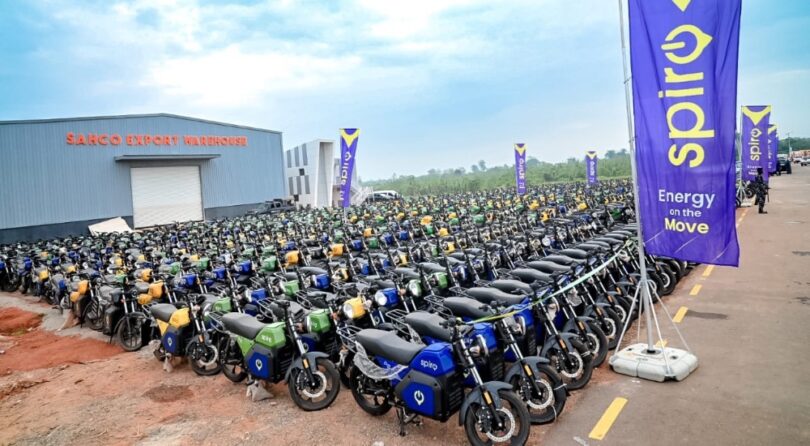
Spiro, an electric mobility company operating in Nigeria, has unveiled plans to expand into more states, strengthen its battery-swapping infrastructure and make electric motorcycles more accessible to riders as it seeks to deepen its presence in the country’s transportation market.
The company said it would prioritise the expansion of its operations across Lagos, Ogun and Oyo states while exploring opportunities to enter additional markets as part of its growth strategy for 2027.
Spiro also announced the appointment of Prasad Sane as its new Managing Director and Country Head for Nigeria, with responsibility for leading its operations, market expansion and business development strategy.
The company disclosed these plans at the second edition of its Media Connect event held in Lagos on Friday, where it outlined its operational priorities, demonstrated its electric motorcycle technology and unveiled the latest version of its Ekon M1 motorcycle, the Ekon M1 Version 3.
Sane said the company’s strategy would focus on making electric mobility more affordable, accessible and reliable for Nigerians, particularly commercial motorcycle riders and businesses that depend on motorcycles for transportation and logistics services.
He said Spiro was looking beyond the deployment of electric motorcycles to developing an integrated mobility ecosystem supported by battery-swapping stations, after-sales services and partnerships with financial institutions, logistics operators and rider communities.
According to him, expanding the company’s infrastructure and strengthening its operational capacity would be critical to increasing the adoption of electric motorcycles in Nigeria.
The company’s battery-swapping model allows riders to exchange depleted batteries for fully charged ones at designated stations, reducing the time spent waiting for batteries to recharge.
Spiro said the process could be completed in less than a minute, enabling riders to return to the road quickly while reducing their dependence on conventional fuels.
The company is positioning the model as an alternative for commercial riders and other motorcycle users seeking to manage operating costs associated with fuel consumption, maintenance and vehicle downtime.
However, the extent to which electric motorcycles can gain wider acceptance in Nigeria will depend partly on their upfront costs, the availability of reliable battery-swapping infrastructure, access to financing and the ability of riders to generate sufficient savings from their operations.
Sane said the company would deepen its presence in Lagos, Ogun and Oyo states by deploying additional battery-swapping stations and service centres to improve access to its products and support services.
He added that Spiro intended to extend its operations beyond the three states, although the company did not disclose the specific locations it plans to enter or provide a detailed timeline for the proposed expansion.
The company also plans to strengthen its battery infrastructure to improve reliability, operational efficiency and convenience for riders.
As part of its affordability strategy, Spiro said it would pursue partnerships with financial institutions, logistics companies and rider communities to widen access to electric motorcycles and its Battery-as-a-Service offering.
The arrangement is intended to make electric mobility more accessible to riders who may face financial constraints in acquiring electric motorcycles or accessing the supporting services required to operate them.
Spiro said its expansion plans would also include scaling local assembly operations, technical training programmes and after-sales support services, with the aim of creating employment opportunities, particularly for young Nigerians and women.
The company did not disclose the projected investment required to execute the expansion plans, the number of jobs it expects to create or the anticipated scale of its local assembly operations.
Speaking at the event, Sane said the company’s immediate priority was to build a trusted and accessible electric mobility business that could respond to the needs of Nigerian riders and businesses.
He said the company’s strategy was centred on developing a broader ecosystem around electric motorcycles rather than focusing exclusively on vehicle deployment.
Spiro’s expansion plans come amid growing interest in alternative transportation technologies as businesses and transport operators seek ways to manage fuel and vehicle operating costs.
Electric motorcycles offer the potential to reduce exposure to petrol price fluctuations and lower certain maintenance expenses.
However, their commercial viability depends on factors including battery costs, electricity supply, charging and swapping infrastructure, financing arrangements and the availability of technical support.
For Nigeria’s commercial motorcycle market, the development of an extensive battery-swapping network could be particularly important because riders typically depend on their vehicles for daily income and may be unable to afford prolonged periods of downtime.
Spiro’s ability to expand its infrastructure alongside its motorcycle fleet will therefore be an important factor in determining how quickly it can attract and retain riders across new markets.
The Media Connect event also featured product demonstrations and an interactive session with journalists, during which the company presented its Ekon M1 Version 3 motorcycle and discussed its operations and plans for the Nigerian market.
Spiro said it would continue engaging with the media as it expands its activities and seeks to increase awareness of electric mobility.
The company described its Nigerian operations as part of a broader effort to promote the adoption of electric transportation solutions across Africa.