This report examines why Nigeria has struggled to turn renewable energy projects into a sustained industry, citing the Lambar-Rimi wind farm project in Katsina State.
For more than two decades, Nigeria has pursued renewable energy as part of the solution to its electricity crisis.
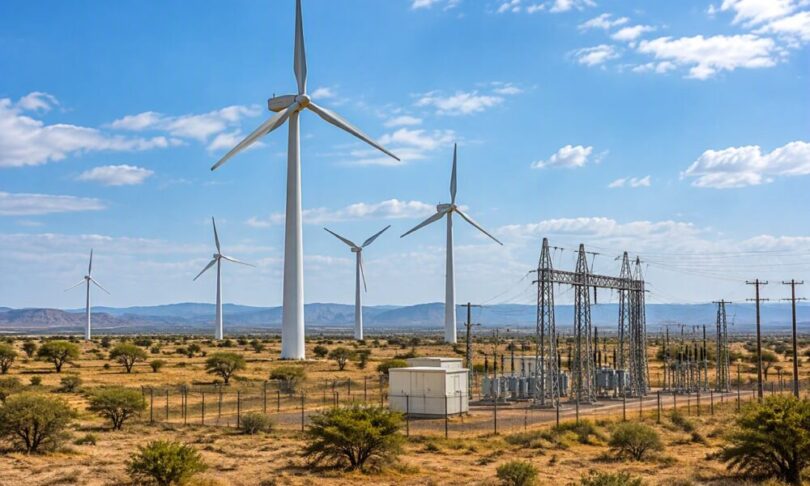
Authorities have tried to expand power generation through solar and wind projects. However, the 10MW Lambar-Rimi wind farm project in Katsina State shows how difficult it has been for the country to turn plans into functioning power assets.
The Katsina State Government began the project in 2005. Since then, the facility has changed ownership twice, the first time in 2007 when it was taken over by the federal government.
After the takeover, the federal government awarded a contract in 2010 to a French company, Vergnet S.A., to build the wind farm within 24 months. The farm would have 37 turbines, each to deliver about 275 kilowatts of electricity. The contract included offshore components valued at €18.5 million and onshore components valued at N494 million.
Safe to say the project did not go according to plan.
The project encountered several setbacks in a state facing severe security challenges. Following the abduction of a French commissioning engineer, the company obtained approval to transfer components of the work to a local contractor, Credco Nigeria Limited.
The revised arrangement increased the contract to €20.85 million offshore and N573.90 million onshore.
By 2016, a government budget implementation report stated the progress made in the project to include the delivery of two 7.5MVA transformers, restoration of a vandalised 33kV line, completion of foundation work, installation of towers and turbines, and construction of medium-voltage rooms.
It said outstanding works included the overhead line linking the wind farm to the 33kV network and an injection substation at Liyafa.
The 2017 government budget implementation report later described the project as about 95 per cent complete.
However, six years later, in 2023, Kano Electricity Distribution Company (KEDCO), the designated off-taker of power from the wind farm, described the wind farm as only 80 per cent complete.
In an article published on 31 August 2026, the Nigerian Wind Energy Council (NWEC) said years of inactivity had left the Lambar-Rimi wind farm’s turbines degraded and in need of extensive rehabilitation.
In April 2025, the Katsina State Government requested to reacquire the facility. The federal government approved the transfer, with the Minister of Power, Adebayo Adelabu, explaining that it was in line with the Electricity Act 2023 and the emerging role of states in the electricity markets.
In September 2025, Katsina announced the reacquisition of the wind farm and its plans to hybridise it with a 10MW solar plant.
The state has since said it was working with Vergnet to assess the turbines, electrical systems, and grid infrastructure. The state government expects the hybrid facility to come on stream in the fourth quarter of 2026.
The twists and turns in the Lambar-Rimi wind farm story demonstrate how Nigeria has struggled to produce and distribute enough electricity for its 240 million people.
PREMIUM TIMES sent several calls and messages to the Special Adviser on Power and Energy to the Katsina State Governor, Abubakar Ibrahim, seeking details of the current status of the facility, the funds committed and whether progress had been made towards the planned commissioning. The officials did not respond to the inquiry.
PREMIUM TIMES also made several attempts to reach officials at the Federal Ministry of Power for clarification on why the project has not been completed in over 15 years.
The calls were not answered, and the ministry did not respond to the text messages either.
Many other large renewable-energy projects in Nigeria have remained at different stages of development for years.
They include the 100MW Maraban Pushit wind farm in Mangu Local Government Area of Plateau State, promoted by JBS Wind Power Limited.
A World Bank project document records that the company had secured a 45-year land lease, conducted environmental impact assessment studies and obtained provisional approval to evacuate electricity through a 132kV substation at Makeri in Plateau State.
The project appeared in regulatory records in October 2012, 14 years ago, but has not developed into an operating utility-scale wind farm. Publicly available records reviewed for this report did not establish how much has been spent on the project or whether public funds were committed.
Solar projects in Nigeria have a similarly mixed track record.
The 50MW Onyi project in Kokona, Nasarawa State, associated with Afrinergia Power Limited, received a generation licence in April 2016. Global Energy Monitor lists the project as cancelled, inferring cancellation occurred in June 2024.
A 75 MW Kankia solar project in Katsina State was promoted by Pan Africa Solar Limited, with JCM Capital listed as the project owner. The Nation newspaper reported in July 2016 that the company and the federal government had signed a power purchase agreement for the project, with a proposed investment of $146 million.
NERC records show that Pan Africa Solar received a generation licence in December 2014, which expired in December 2024. The regulator lists the project as non-operational, while Global Energy Monitor classifies it as cancelled, with cancellation inferred to have occurred in February 2025.
However, despite the lack of success in some renewable energy projects, others have been successfully completed. A 10MW solar project in Kumbotso, Kano State, developed by the Nigeria Sovereign Investment Authority (NSIA), was commissioned in 2023. This project shows that utility-scale renewable projects can be delivered when financing, project management, evacuation infrastructure, and an identifiable market align.