
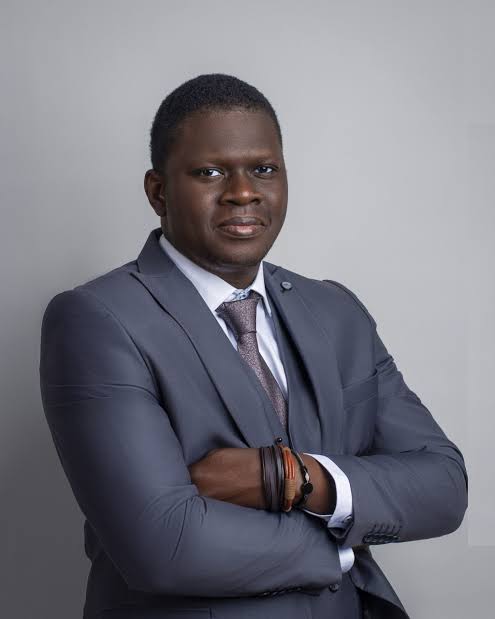
For years, Stephen Akintayo has built a powerful public image around real estate, entrepreneurship, investment education and the promise of financial freedom.
Through Gtext Holdings and other businesses associated with his name, Akintayo has positioned himself as a prominent figure in Nigeria’s property and investment space.
But behind the carefully cultivated success story lies a growing trail of regulatory warnings, legal disputes, allegations from former employees and complaints from individuals who say their dealings with businesses linked to him left them dissatisfied.
The issues do not, by themselves, establish criminal liability against Akintayo. But they raise questions that prospective investors and customers may reasonably want answered.
SEC warning raises the biggest red flag
The most significant development came in August 2025 when the Securities and Exchange Commission (SEC) issued an “Illegal Operator Alert” concerning GVEST Global, GVEST Investment Limited and other entities it said were associated with the group, including Gtext Holdings.
The regulator said the entities were not registered with the SEC to solicit investments from the public or operate in any capacity in the Nigerian capital market.
More seriously, the SEC said its investigations found that the operations exhibited “typical indicators and characteristics commonly associated with Ponzi schemes.”
The Commission advised the public to stay away from the entities in respect of capital-market activities and warned that anyone dealing with them did so at their own risk.
That regulatory statement is difficult to dismiss as merely social-media criticism. It came directly from Nigeria’s capital-market regulator.
Property disputes and unpaid commissions
Long before the SEC alert, disputes involving Gtext Homes had already surfaced publicly.
In 2023, FIJ reported allegations by Image Me Corporate Service that Gtext Homes owed the company ₦75 million in professional and agency fees connected to the acquisition of more than 200 plots in Isheri North, Ogun State.
The complainant alleged that its company facilitated the transaction but subsequently struggled to recover its agreed commission.
The report said Gtext Homes did not respond to FIJ’s calls and messages at the time.
Another legal dispute reportedly involved businessman Kingsley Nwankwo, who sought court intervention against Gtext Homes over an alleged failure to comply with an earlier judgment involving an $18,000 commission.
The company subsequently disputed aspects of the allegations and maintained that the dispute arose from a disagreement over commissions connected to a defaulting client.
Dubai property allegations
There have also been allegations concerning property transactions in Dubai.
In December 2024, TheNigeriaLawyer reported that a medical doctor and businessman petitioned the Inspector-General of Police, alleging that he had lost $50,000 in connection with a Dubai property transaction involving parties linked to Gtext Homes and Tiger Properties.
A separate report in March 2025 said lawyers representing other complainants had petitioned the IGP over alleged Dubai property transactions involving more than $115,000 in total claims. These were allegations contained in petitions, not findings of guilt.
Gtext Homes and Akintayo have strongly rejected fraud allegations circulating online. Their lawyers said the claims were unfounded and maintained that neither the company nor Akintayo had been indicted or convicted of wrongdoing.
Former workers open another front
The controversy did not end with customers and business associates.
In October 2026, FIJ reported allegations from former Gtext Homes employees who accused the company of unpaid salaries, arbitrary termination of employment and other alleged unfair workplace practices.
One former employee reportedly said an outstanding salary of ₦395,000 was eventually paid after she publicly complained, while another former worker alleged that pension and tax deductions were made but not remitted.
Those claims remain allegations from former employees and should not be treated as established facts without independent verification.
Another FIJ investigation published in October 2026 reported allegations by former employees concerning disputes over company property and the treatment of former staff.
The price of the Akintayo brand
Akintayo’s business model has increasingly extended beyond property sales into mentorship, investment education and personal-brand entrepreneurship.
That expansion itself is not improper.
But the bigger the brand becomes, the greater the responsibility to demonstrate that investment-related activities are properly regulated, customers understand exactly what they are buying and corporate obligations are being met.
In April 2025, a proposed one-on-one mentorship programme advertised by Akintayo at $18,000 generated considerable public criticism. Punch reported that the EFCC spokesperson warned Nigerians against putting money into schemes that could expose them to financial trouble, although the warning was not presented as a finding that Akintayo’s programme itself was fraudulent.
There is an important distinction between being accused of wrongdoing and being found guilty of wrongdoing.
Akintayo and Gtext have denied serious allegations against them and have threatened or pursued legal action over what they describe as defamatory attacks. Their lawyers have insisted that the companies and their founder have not been convicted or indicted for the alleged offences.
Yet the questions remain.
Why did the SEC issue a public warning concerning entities associated with the group?
Why have multiple business disputes involving commissions and property transactions reached public attention?
Why are former employees publicly alleging salary, pension and workplace problems?
And, most importantly, what safeguards exist for ordinary Nigerians who place their money into investment opportunities promoted by companies connected to the Akintayo business ecosystem?
The real estate empire must answer the hard questions
A powerful social-media presence, expensive conferences, motivational speeches and claims of business success cannot substitute for regulatory compliance and transparent corporate governance.
For investors, the fundamental questions are much simpler:
Where is the money?
Who regulates the investment?
What exactly is being purchased?
What happens if the promised project fails?
Where can an investor recover his money?
Those questions became particularly important after the SEC’s 2025 warning.
Stephen Akintayo may continue to enjoy a substantial following and a reputation as an entrepreneur who built a business empire from modest beginnings. But reputation is not regulation, publicity is not proof of profitability, and an impressive property portfolio does not automatically answer questions about investment structures.
The other side of the Akintayo story is therefore not simply about allegations.
It is about accountability.
And until the outstanding questions surrounding the businesses connected to his name are fully and independently resolved, potential investors would be justified in demanding more than inspirational speeches before putting their money on the line.