According to him, any lasting resolution will require dealing with the group that controls the security situation on the ground rather than relying only on Iran’s diplomatic leadership.
Batra also argues that the US is likely to continue pressuring Iran to curb its nuclear ambitions while ensuring stability in the region.
He says any proposed levy linked to oil shipments should be borne by Iran as the supplier rather than by oil buyers, adding that the objective is to discourage actions that threaten global shipping and regional security.
This is an edited transcript of the interview.Q: Crude is at $84 per barrel and, after months of back and forth, we are still none the wiser. It’s impacting the Indian macro environment. Given everything that’s happening, is it possible for one nation to claim stake over the Strait of Hormuz and impose a toll? What happens from here? What should we expect?
A: You have asked a lot of questions, but first let me say, thank God we finally have leadership that is willing to act. You don’t have to agree with President Trump on everything he does, but he must be credited for acting.
There is nothing worse than having the ability to make a change or correction and then not using it. The United States has that capacity, and it’s important to use it. Otherwise, you end up with situations like the red line in Syria under President Obama, where the line was drawn but ultimately meant nothing.
The fact that President Trump has not given up, despite the daily ups and downs with Iran, is something to be applauded.
Second, we cannot have another North Korea. The entire world slept while North Korea became an entrenched nuclear power. That is not a good thing, and we certainly don’t want that to happen with Iran, especially when it is supporting the Houthis in Yemen.
Even today, the UN Security Council discussed the issue. As Tammy Bruce shared with the Council, even the plane carrying mourners to a funeral in Iran was allegedly bringing back supplies for further terror attacks.
We need law and order, whether it’s outside my home, outside your home or among nations. Countries have to police their borders and international waters to ensure freedom actually means something. Freedom doesn’t come for free. You have to protect it and ensure your neighbours stay within their own boundaries.
What President Trump is doing with Iran is very difficult because he is trying to get a country to give up its nuclear ambitions. Iran’s nuclear ambitions are not about generating cheaper electricity. They are about overshadowing their neighbours.
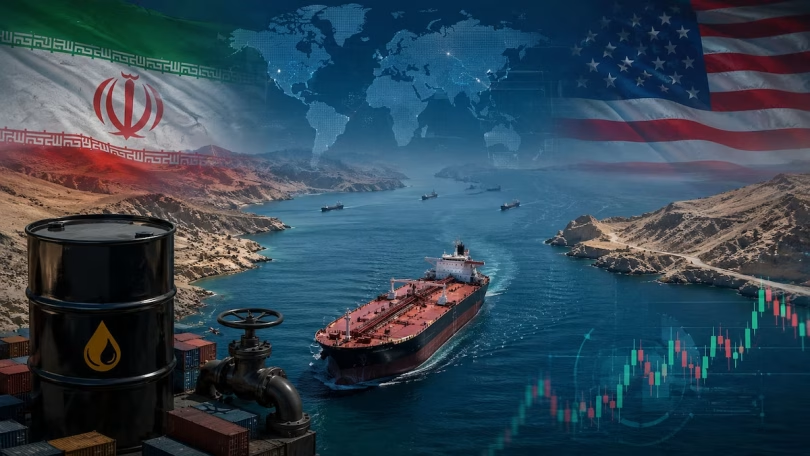
On your question about the Strait of Hormuz, President Trump mentioned today that there could be a 20% fee to cover the expenses the United States incurs to maintain peace and security in the region.
That doesn’t mean the customer has to pay. Iran simply has to agree to sell its oil in dollars through the Society for Worldwide Interbank Financial Telecommunication (SWIFT) banking system. That allows sanctions to work and ensures there is one transparent set of books rather than two.
So, this is not really a charge or toll on the customer. It is a levy on the supplier. The party creating the harm and the danger is the Islamic Revolutionary Guard Corps (IRGC). Therefore, it is only fair that the seller of oil from Iran should bear that cost.
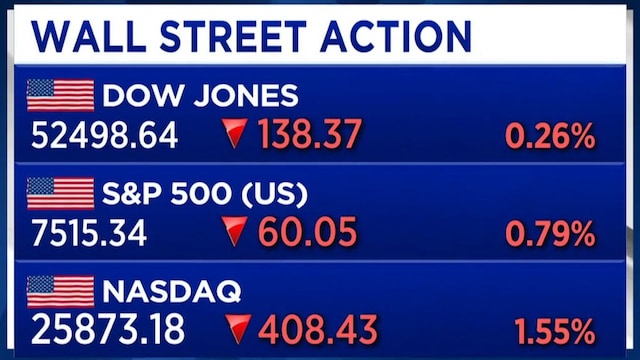
Q: From an equity market perspective, investors want to know whether we are bracing for a prolonged conflict. Is this the re-escalation markets feared? While you have highlighted some positives, including President Trump’s willingness to act, do you think this marks the restart of the war?
A: Iran is a sui generis case because most countries have a clear hierarchical structure of governance.
In the United States, despite the separation of powers, the President heads the executive branch. In India, you have Prime Minister Modi. In China, President Xi Jinping, and in Russia, President Putin. There is a clear hierarchy.
Iran is different.
Since the 1979 American hostage crisis and the Iran-Contra affair, Iran intentionally compartmentalised its governance. People often say there are around 30 different pillars of governance, each operating independently. They function vertically and then come together at the top.
When much of that top leadership was killed earlier this year, the obvious question became: who do you negotiate with?
My personal view is that since the IRGC is creating the problems in the Strait of Hormuz, it is the IRGC that we should be talking to, rather than focusing only on Iran’s Foreign Minister, who does not control the IRGC.
Iran’s governance model is unique. No other country really has a similar structure, except perhaps the UN General Assembly. Think of Iran as being run somewhat like the General Assembly. It makes decision-making and negotiations extremely difficult.
Watch the full conversation here

The IRGC is the group laying mines, launching missiles and carrying out attacks. Perhaps the focus should shift towards negotiating directly with the IRGC and letting it deal with the rest of Iran’s system because the current approach has not produced a resolution.
President Trump may conclude that since the IRGC is creating the internal bottleneck and causing these disruptions, it is the group that needs to be engaged directly—or, if necessary, confronted.
Peace and conflict have always involved a balance between negotiation and the use of pressure. It is always better to resolve matters peacefully if possible, and I believe President Trump is someone who can bring people to the negotiating table, even those who may not initially want peace.
Catch all the latest updates from the stock market here