
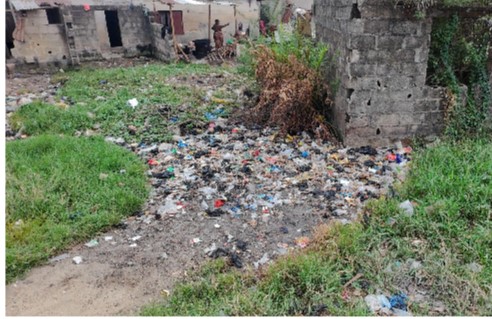
The study, conducted by the African Cities Research Consortium, Rethinking Cities and the Centre for Housing and Sustainable Development, found that poor waste disposal practices are contributing to flooding, environmental degradation and health risks in the community.
A new baseline study has revealed severe waste management challenges in Ajegunle, Ikorodu, an informal settlement in Lagos State, while highlighting strong community readiness to support sustainable solutions.
In a statement signed by the lead researcher, Deji Akinpelu, researchers surveyed more than 400 households across three Community Development Associations namely; Ajegunle CDA, Irawo CDA and Thomas CDA and held focus group discussions with residents, including women, youth, tenants and landlords.
According to the statement, findings showed that 67 per cent of households have no access to Lagos State’s formal Private Sector Participation (PSP) waste collection services.
As a result, many residents resort to burning refuse, dumping waste at roadsides, bus stops and in the community canal, or relying on informal waste collectors.
The report also found that plastic waste and food scraps account for the bulk of household refuse, generated by 89% and 77 per cent of households respectively. However, only eight per cent of residents consistently separate recyclable materials.
Researchers linked the poor waste management practices to recurrent flooding affecting nearly 80% of households, as well as blocked drainage systems and health concerns such as malaria, cholera, typhoid and rodent infestations.
Despite the challenges, the study identified vibrant informal waste economy already supporting many households.
According to the findings, about 65 per cent of households earn between N1,000 and N4,000 monthly from waste recycling activities, while some residents make as much as N20,000 to N30,000 from collecting and selling metals, plastics and electronic waste.
Residents also expressed concern over the environmental conditions in the community and showed willingness to support interventions.
The study found that 85 per cent of respondents prioritised the provision of accessible waste collection points, while 65% called for more education on waste separation and recycling.
Other priorities included clearing existing dump sites and strengthening enforcement of sanitation regulations.
“Residents demonstrated clear awareness of the problem, with many describing the sight of open dumps as “disgusting” and expressing strong willingness to participate in solutions. Community priorities for change are crystal clear:
“More accessible collection points (85% of respondents) Education on waste separation and recycling (65%) Clearing existing dump sites and improved enforcement,” the statement read.
Speaking on the findings, Mr Akinpelu, co-founder of Rethinking Cities and lead researcher, said the community already possesses the social structures needed to drive meaningful reform.
“This study shows that Ajegunle Ikorodu is not just facing a waste crisis; it is sitting on a powerful foundation for real change.
“With 70% of residents already engaging informal recyclers and overwhelming demand for more collection points and education, the community is primed for practical, locally owned solutions,” he said.
He added that integrating formal waste management services with the existing informal recycling economy could improve sanitation, reduce flooding and create economic opportunities for residents.
The research team said it is now working with community leaders, the Lagos Waste Management Authority, local non-governmental organisations and private sector actors to design targeted interventions.
Planned next steps include establishing community waste collection points, launching recycling education programmes and piloting women- and youth-led waste enterprises.
The researchers said the full report would guide future interventions aimed at transforming waste management in Ajegunle into a model of community resilience and circular economy development.