
The Minister of Defence, General Musa (retd), has said that Super Tucano fighter aircraft supplied during the administration of former President Muhammadu Buhari are being effectively deployed alongside other military assets to combat Boko Haram, insurgency and other criminal activities across the country.
According to him, the effective deployment of the aircraft and other military equipment has significantly weakened the operational capacity of terrorists and insurgents.
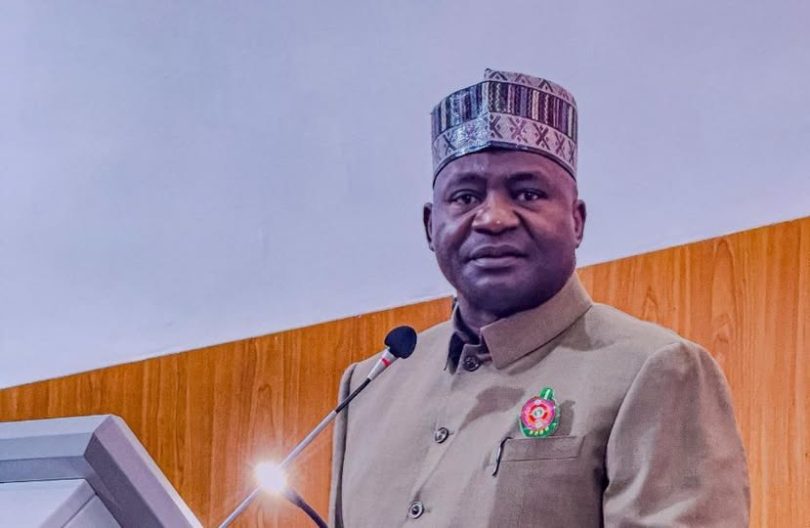
Musa, who was represented by retired Major General Garba Abdullahi, during a Kano Roundtable organised by the Presidential Initiative on CNG and APC, said the introduction of additional military platforms, including helicopters and other security equipment, had continued to strengthen ongoing military operations.
He noted that “the deployment of the Super Tucano aircraft and other newly acquired platforms had changed the operational situation in several areas, helping security forces to degrade terrorist groups.”
The minister, however, stressed that tackling insecurity required more than military operations, describing security as a collective responsibility involving government, security agencies and local communities.
He said the government had adopted several measures to strengthen internal security, including the establishment of complementary security organisations to support conventional security agencies that are already engaged in fighting terrorism and insurgency.
According to him, “one of the major achievements of the administration was the establishment of the Neighbourhood Watch Corps, through which 2,000 youths were selected and trained by the military, the Department of State Services and other security personnel.”
He explained that the government had also initiated plans to place the personnel on its payroll, while providing operational offices, vehicles, more than 450 motorcycles, uniforms, helmets, boots and other security equipment.
The minister further disclosed that, “the administration established a Ministry of Internal Security to strengthen coordination and improve the management of security operations.”
He added that about 600 youths had also been trained and equipped as anti-snatching operatives, while the training of 1,100 forest guards selected from security flashpoint local government areas was nearing completion.
According to him, “the forest guards underwent eight weeks of training and were expected to graduate shortly before returning to their respective communities to support security operations.”
On inter-agency cooperation, General Musa said the administration had strengthened collaboration among the Nigerian Army, Navy, Police, DSS, Civil Defence, paramilitary organisations, the State Fire Service and other relevant agencies.
He said the government had also procured and distributed hundreds of operational vehicles to security agencies to improve their mobility and response capacity.
The minister disclosed that vigilante groups operating across more than 10,000 communities had also been brought into a coordinated security framework, with the establishment of a headquarters and the provision of logistics support.
He emphasised that community engagement remained a critical component of the government’s security strategy, noting that traditional rulers, religious leaders, political leaders and other community stakeholders had important roles to play in addressing insecurity.
On the challenges of combating terrorism, the minister explained that the conflict was not purely military but also involved non-kinetic operations because insurgents and other criminal elements often lived within communities.
He therefore urged Nigerians to remain vigilant and cooperate with security agencies by reporting suspicious activities.
“Security is everybody’s business. When you see something, say something,” he said.
He maintained that sustained cooperation between security agencies and the public was essential to achieving lasting peace and defeating insurgency across the country.