Iranian filmmaker and playwright Karim Lakzadeh has long moved along the edges of form and genre.
Graduating from a theatre school in 2004 and studying TV directing, he has developed into a filmmaker working between alternative fiction and multi-genre storytelling. His work resists easy categorisation, leaning instead into experimentation — both in narrative and process.
From early short films like the mystery crime The Gambler (2015) to features such as the revenge drama Red Head (2017), the adventurous road movie The Great Leap (2020), and the “film inside a film” comedy Dark Matter (2023), Karim has steadily carved out a space for a cinema that is as restless as it is personal. Dark Matter in particular cemented his reputation for pushing the boundaries of cinematic language.
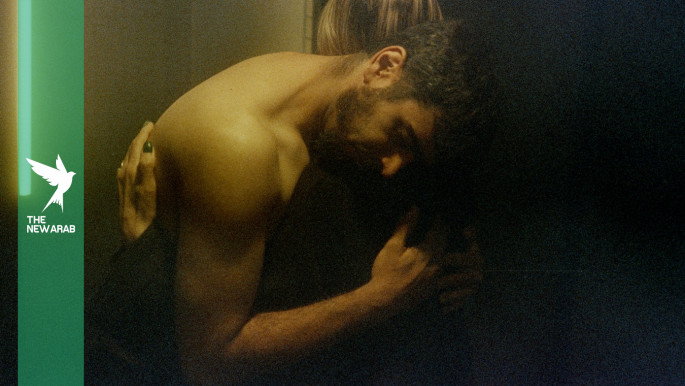
With his newest low-budget, self-produced feature Living Twice, Dying Thrice, which just celebrated its world premiere at the 79th Cannes Film Festival’s ACID strand for independent films selected by filmmakers, he pushes this approach further, drawing from life while refusing the conventions of social realism.
The film begins with a premise rooted in reality: a mine collapses, three workers survive, and instead of returning to their lives, they choose to remain “dead” so their families can claim compensation. Karim quickly disrupts any expectation of gritty realism.
He notes that the base of the story itself was real, but they did not want to continue it like a documentary or social movie. “We already have a lot of those in Iranian cinema,” he says.
Instead, Karim pivots away from documentation toward something more interior. He explains that one thing that really blossoms in poverty is dream and imagination.
“If we’re going to make a movie about poverty and about people who are living in less comfortable socioeconomic levels in Iran, I thought that the best way to make this movie is to set it in a dreamy kind of atmosphere,” he adds.
Tragicomic realities
Despite the grim plot about three men choosing to play officially dead, the film resists bleakness. Its tone drifts into something tragicomic, shaped by small, almost accidental gestures of humour.
Karim says he wanted to maintain the dignity of the people he was showing and that, coming from a working-class family himself, he knows exactly how they look at life and how their defence mechanisms work.
He notes that these mechanisms are built on contradiction. “I have always found the most ambiguous sense of humour in this socioeconomic layer. I kind of know how they are treating and seeing life, and vice versa. It kind of seems like life is always just teasing them. With so much pressure from the social economy, sometimes you feel like the only thing that is left for you is either daydreaming or laughing,” he explains.
Humour, in this context, is not escape — it is survival. Karim says that the characters manage to find the funny things in life because otherwise their existence would be very difficult to handle.
The politics of survival
If humour becomes a form of resistance, the film’s deeper structure is built around refusal. Karim explains that the miners’ disappearance is not just a narrative twist but a philosophical stance. He says he had a central idea that any system of rules ultimately uses people as tools.
For him, the system is not singular. “There’s another structure people always rely on, which is the family. And in my view, both the system and the family function in similar ways—they both lay claim to the individual,” he shares.
He adds that what binds these systems is a shared control over the body. “The mining system wants the worker’s body through labour, through exploitation. And the family, in this case, also needs the body — or at least proof of it — in order to claim compensation from the government. It becomes about dividing the body, using it, turning it into something that can be exchanged for money,” he says.
In Living Twice, Dying Thrice, the miners are caught between these two forces. Karim explains that they are under pressure from both sides: from the authorities who control their labour and from their families, who depend on what their bodies can provide. Their transformation begins at the moment they refuse both.
“The character becomes a hero precisely when he says no to both systems, trying to use his body — first to the ruling structure, and then to the family,” he says.
Living twice
As the characters move away from the mine, the film opens into a different geography: night-time Tehran, glimpsed through bars, backrooms, and fleeting encounters.
Karim says that unveiling the clandestine is about more than representation — it shapes the film’s inner logic. “For me, it was about this idea that the characters are living twice. They have one life before the mine, and another one after. It refers to the meaning of a double life, implied in the title,” he explains.
He adds that the movement from the mine to the city marks a deeper transformation. “They come from extremely hard physical labour into a different kind of life — something more modern, more symbolic, something that people don’t usually see in Iran,” he notes.
Organic storytelling in motion
Karim describes the filmmaking process as fluid and spontaneous. He says he didn’t even have a script. “We shot the film in four parts. After each part was edited, we would screen it together and then discuss what should happen next,” he explains.
As he puts it, the story emerged collectively, with Karim saying, “We didn’t know how it would end. Each time, we added a new part and decided together how the story and the characters should develop.”
Many of the actors, including Mehdi Rashidi as one of the three main characters, are non-professionals and became active contributors. Karim notes that they were involved in shaping the script, improvising, giving feedback, and influencing the story’s direction.
By the end of the process, he says, authorship had become shared. “After a year, I could say that the actors themselves were fully capable of writing a script,” he adds.
Between tradition and innovation
Karim’s cinematic language sits between Iranian tradition and international influence. He notes that directors like Abbas Kiarostami or Sohrab Shahid Saless have influenced him, but the dominant approach to social issues in Iranian cinema is not something he relates to.
In sharing this, he admits that he is not a fan of Asghar Farhadi, whose style contrasts with his own artistic interests. Instead, he looks elsewhere for inspiration.
“I’m more impressed by the cinema of Jim Jarmusch or Aki Kaurismäki, as I like their tone and their way of telling stories,” he explains.
He adds that his aim is not imitation but transformation, saying, “I thought I could ‘Iranise’ those approaches, to take those ideas and see what they would look like in an Iranian context. That combination feels exciting to me.”
Uncertainty and experimentation
For all its experimentation, Living Twice, Dying Thrice remains shaped by uncertainty about reception, risk, and what lies ahead. Karim admits that he hasn’t spoken to non-Iranian audiences yet and is unsure how the humour will translate or which moments will resonate.
“I’m curious to see what people will take from it,” he says.
It’s a revealing hesitation. His film unfolds in fragments: small absurdities, fleeting gestures, moments suspended between laughter and despair.
In Karim’s cinema, nothing feels entirely fixed — not identity, not narrative, not even death. Only the fragile act of living — twice, and against all odds.
Mariana Hristova is a freelance film critic, cultural journalist, and programmer. She contributes to national and international outlets and has curated programs for Filmoteca de Catalunya, Arxiu Xènctric, and goEast Wiesbaden, among others. Her professional interests include cinema from the European peripheries and archival and amateur films