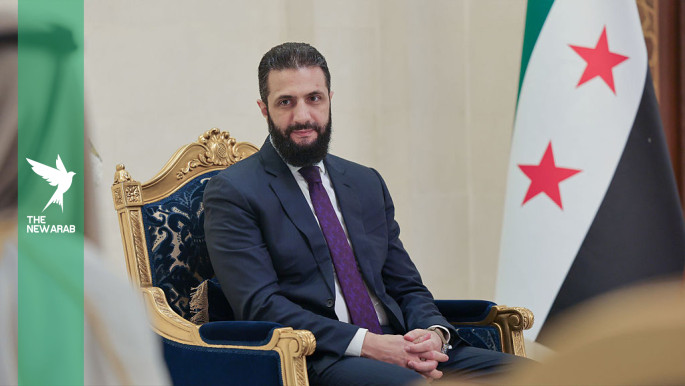
Syria’s interim President Ahmed Al-Sharaa met top Qatari officials on Wednesday, including the country’s leader, as part of a wider Gulf tour aimed at strengthening regional ties and securing economic support.
After arriving in Doha earlier in the day, Sharaa held talks with Emir Sheikh Tamim bin Hamad Al-Thani, with the two leaders discussing regional developments and ways to preserve stability.
The meeting underscored the “importance of bilateral relations and their development in various fields”, according to a statement carried by Syrian state media, “particularly in economic and investment cooperation, as well as strengthening trade ties”.
The talks were also attended by the two countries’ foreign ministers and other senior officials, during which Sharaa renewed Syria’s solidarity with Qatar in the face of what was described as “Iranian aggressions”.
Syrian state media had earlier announced that Sharaa would begin a Gulf tour, without specifying the full itinerary.
The Syrian president began his trip in Saudi Arabia, arriving in Jeddah on Tuesday, where he met Crown Prince Mohammed bin Salman in the latest step in Damascus’ efforts to rebuild ties with Riyadh following the ousting of longtime leader Bashar Al-Assad in December 2024.
During the visit, Sharaa also met the head of the Syrian-Saudi Business Council, according to SANA.
Saudi Arabia has positioned itself as a leading regional investor in Syria, signing multibillion-dollar deals across sectors including aviation, real estate, energy and finance.
In May 2025, Saudi Arabia and Qatar agreed to settle Syria’s World Bank debt, valued at more than $15 million, paving the way for Damascus to access new loans as it seeks to rebuild its economy after a devastating 14-year civil war.
Sources suggest Sharaa is seeking to secure and expand these investments through closed-door meetings with Gulf officials and investors during the tour, particularly amid concerns that GCC states may scale back overseas spending as they redirect resources towards defence following the regional conflict with Iran.