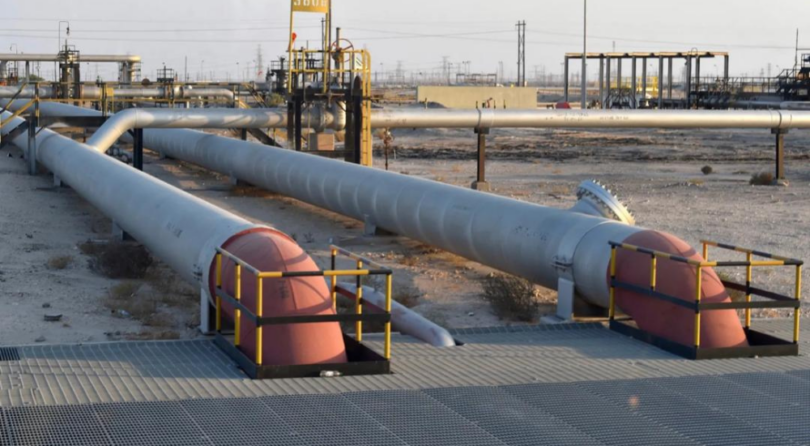
Nigeria’s ambition to raise crude oil production to three million barrels per day (mbpd) by 2030 is placing renewed emphasis on fresh investments in the upstream petroleum sector and sustained protection of critical oil infrastructure, with Tantita Security Services Nigeria Limited (TSSNL) playing a role in efforts to secure assets in the Niger Delta.
The Federal Government is pursuing the production target alongside plans to increase gas output to 12 billion cubic feet per day by 2030. However, achieving the targets will depend on the industry’s ability to attract new capital, expand production capacity, improve operational efficiency and maintain security across oil-producing communities and transportation networks.
The Nigerian Upstream Petroleum Regulatory Commission (NUPRC) is leading efforts to attract investors through licensing rounds and regulatory reforms. The commission has announced plans for its 2026 licensing round, offering 40 oil and gas blocks across onshore, shallow-water and deepwater terrains.
The initiative comes as Nigeria seeks to reverse years of underinvestment and raise production beyond levels recorded in recent years.
Historical production data show that Nigeria’s crude oil output peaked at about 2.5 million barrels per day in November 2005. More than two decades later, total crude oil and condensate production has struggled to reach that level, despite renewed efforts to attract investment and improve the operating environment.
A member of the NUPRC governing board, Sunday Adebayo, said recent licensing activities, increasing rig counts and improved cooperation between oil companies and host communities were creating opportunities to raise output.
“We have already started in a good direction. One of them is the bid rounds which were successfully done. New ones will be done that will be bringing in more players,” he said.
Adebayo added that the industry was beginning to explore previously underdeveloped areas and that improved relations with host communities were supporting renewed interest in oil-producing locations.
He also pointed to developments in Ogoniland, where stakeholders have expressed interest in the resumption of economic activities, as part of the broader effort to unlock investment opportunities.
The NUPRC Chief Executive, Oritsemeyiwa Eyesan, said the 2026 licensing round followed approvals from President Bola Tinubu and the Minister of Petroleum Resources.
She said the 40 blocks would be open to investors with the technical expertise, financial capacity and commitment required to develop Nigeria’s petroleum resources.
Eyesan, however, warned that competition for upstream investment was intensifying, stressing that investors were increasingly attracted to jurisdictions with clear regulations, predictable processes and reliable data.
The licensing initiative is part of a wider effort to reverse the decline in investment in Nigeria’s oil and gas industry. According to Eyesan, annual investment in the sector has fallen from about $26bn in 2014 to approximately $2bn.
The commission has also introduced incentives aimed at attracting investment into offshore oil and gas projects, which it says could unlock as much as $50bn in new capital.
But while licensing new acreage and attracting investors are important to expanding production, stakeholders say protecting existing oil infrastructure remains essential to ensuring that additional output translates into higher export earnings and government revenue.
This is where the operations of Tantita Security Services Nigeria Limited come into focus.
The Federal Government engaged Tantita, led by High Chief Government Oweizide Ekpemupolo, popularly known as Tompolo, to protect oil assets in the Niger Delta, particularly pipelines and other critical infrastructure vulnerable to oil theft and vandalism.
The company works alongside other security agencies to monitor oil infrastructure, detect illegal connections and support efforts to maintain the uninterrupted transportation of petroleum resources.
Pipeline surveillance is particularly important because production gains can be undermined when crude oil is stolen, pipelines are damaged or transportation infrastructure becomes unavailable. Such disruptions can affect export volumes, revenue projections and investor confidence.
The operations of Tantita have been credited by supporters with helping to reduce oil theft, improve pipeline security and strengthen the stability of crude oil transportation in the Niger Delta.
A recent survey cited in discussions about the company’s operations also found that a majority of respondents attributed the reduction in security incidents in the region to pipeline surveillance activities undertaken by Tantita.
However, sustained growth in production will require more than pipeline protection. New investments must translate into additional wells, improved recovery from existing fields, expanded infrastructure and the development of previously untapped reserves.
President-General of the Niger Delta Progressive Alliance, Nse Victor Udoh, said pipeline surveillance had helped create conditions for a more predictable operating environment by reducing the risks associated with the transportation of petroleum resources.
He said the importance of surveillance should be understood within the wider energy value chain, while acknowledging that it does not directly address every challenge facing the industry.
“Energy security encompasses the full value chain, from exploration and production to refining, distribution, pricing policy, and subsidy frameworks. Pipeline surveillance does not manage these domains,” Udoh said.
He added that the role of surveillance was to safeguard critical infrastructure through which petroleum resources are transported, arguing that production targets, refining plans and export commitments could be undermined when pipelines were insecure.
According to him, improved security can help companies plan operations more reliably, fulfil export commitments and assess investment risks with greater certainty.
He also said more predictable crude oil flows could support government revenue planning, infrastructure development and long-term commercial agreements.
The link between security and investment is particularly important as Nigeria seeks to attract new players into its upstream sector. Investors must be confident not only that petroleum resources are commercially viable but also that production and transportation can be sustained without frequent disruptions.
The experience of existing operators also highlights the importance of capital investment in increasing output from mature fields.
Chairman and Chief Executive Officer of Brittania-U, Catherine Uju Ifejika, has highlighted the scale of investment required to develop acquired oil assets, citing the company’s Ajapa field.
She said more than $400m was invested after Brittania-U acquired the asset from Chevron, including the drilling of additional wells and the deployment of a floating production, storage and offloading vessel.
According to her, the investment enabled the field to commence production at about 2,300 barrels per day in 2010, followed by efforts to increase and stabilise output.
The example illustrates the capital-intensive nature of upstream development and the need for sustained investment to expand production capacity.
Nigeria’s efforts to attract investors have also included the 2025 licensing round, in which 31 companies emerged winners of 37 oil and gas blocks.