KINGSLEY EBERE
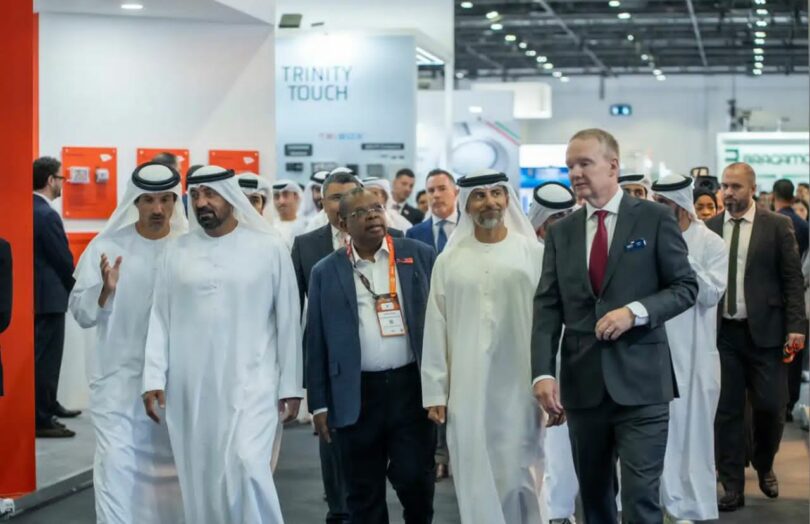
The Honourable Minister of Power, Joseph Tegbe, on Tuesday said Nigeria’s power sector reforms provide an example for how developing economies can strengthen global energy security amid growing geopolitical fragmentation. He made the statement during a keynote address at the opening plenary of the Middle East Energy 2026 Leadership Summit in Dubai.
Speaking on the theme “Energy Security and the Effect of Geopolitics” at the summit’s 50th edition, Tegbe addressed ministers, industry leaders and international guests. He stated that the definition of energy security in 2026 goes beyond hydrocarbon reserves. According to him, it now includes the resilience of the entire system, covering critical mineral supply chains, grid infrastructure, financing and institutions that ensure power supply to homes, hospitals and industries.
The Minister positioned Nigeria as a key participant in the global discussion. He referenced the country’s more than 200 trillion cubic feet of proven gas reserves and its record of LNG supply to Europe and Asia over the past two decades. He also highlighted the Electricity Act of 2023, which he described as the most significant reform of Nigeria’s power sector in a generation. He noted that the Act ended the federal monopoly and paved the way for 37 electricity markets across the federation under the leadership of President Bola Ahmed Tinubu, GCFR.
“Capital does not flee risk; it flees uncertainty. Investors will price risk all day long; what they cannot price is a rule that changes after the contract is signed,” the Minister said. He described Nigeria’s reform agenda as focused on credibility, regulatory certainty, contract sanctity and bankable offtake.
Tegbe presented four key points to summit delegates. First, that diversification rather than diplomatic disengagement offers the best form of strategic insurance. Second, that electricity grids require the same level of strategic attention previously given to fuel supply. Third, that affordability is a security issue. Fourth, that the global energy transition must be orderly, fair and responsive to the realities of different countries.
He added that Africa, with 600 million people still without electricity, is central to global energy discussions. He cited the continent’s mineral resources, solar potential, young population and rising demand as factors that will influence energy security in major economies in the coming decades. He called for partnerships that go beyond raw material extraction to include local processing, manufacturing, skills development and long term investment.
“Nigeria has chosen to build. Africa has chosen to build. And we invite you, in the spirit of this remarkable city and this landmark fiftieth summit, to build with us,” the Minister said in his closing remarks.
The Minister’s engagements in Dubai will continue through the week. This includes participation in a ministerial discussion on financing Africa’s power future as part of the summit’s Africa Spotlight programme.