CYRIACUS IZUEKWE
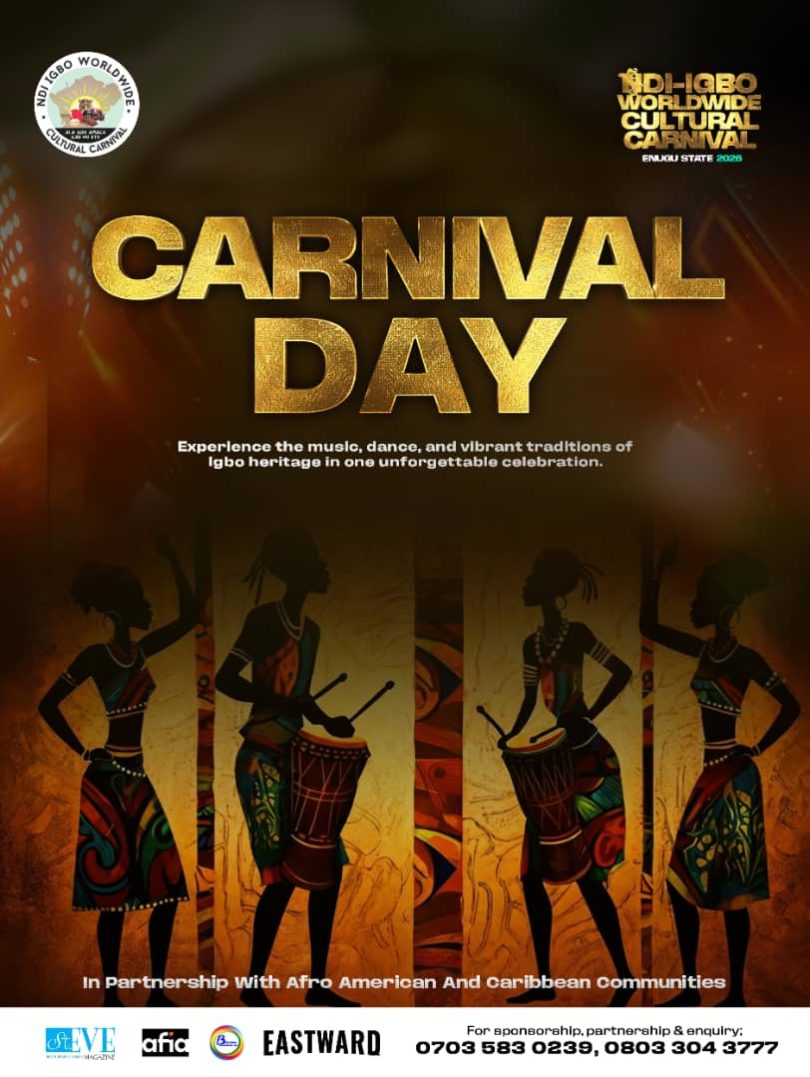
For years, the Igbo Carnival has turned major streets into a moving gallery. But in 2026, those colours won’t wash away when the masquerades leave. The temporary art is set to build permanent effects across the Southeast of Nigeria.
This will be “The Festival Effect” in action. Instead of just parading heritage, the 2026 Igbo Carnival will add large-scale, hands-on art installations along the route — uli walls, weaving looms, beadwork booths, and live wood-carving stations. Visitors won’t just watch. They will make.
The organizers are setting up “Heritage Hubs.” Each hub will be a large installation run by master artisans from Enugu, Anambra, Imo, Abia, Ebonyi, and other Igbo-speaking communities in Nigeria and the diaspora. The goal is simple: turn spectators into students for a few minutes.
The uli installation is expected to be the biggest draw. A long wall will become a canvas where hundreds can trace traditional symbols with natural dye. Artists will explain what each line means — protection, fertility, title. By evening, people will be posting their own uli on skin and clothes. The wall will be temporary. The photos and skills won’t be.
Next to it, a live Akwa Ozo loom will sit in the middle of the road. Festival-goers will be able to pay to throw the shuttle. Organizers expect many to return the next day to book full classes. Weavers have already been trained to take deposits and custom orders during the carnival weekend.
Economists call this a “wave effect.” The installations will cost money to build, but they are projected to create income long after. Artisans will sell materials, take orders, and build contact lists. One beadwork hub alone is projected to make in two days what it would earn in a month of market sales.
For the diaspora, the installations will solve a key problem: access. Many who fly in from London, the US, and Canada have worn isiagu their whole lives but never touched the fabric on a loom. “Now they’ll know the labor behind it,” one curator said. That connection is expected to turn a tourist into a repeat customer.
Local businesses are also set to benefit. Food vendors, printers, and transporters around the hubs are preparing for a sales jump. Hotels near Abule Egba are already taking bookings, with guests citing “the carnival workshops” as their reason for travel.
Crucially, the installations will be curated. Sacred symbols and ozo regalia will be marked “display only.” Elders will be stationed at each hub to approve what can be taught. Culture will be opened, not diluted.
The Lagos Ministry of Tourism is already backing the model. In a pre-event brief, officials noted that temporary art at cultural festivals can generate millions in direct artisan revenue and lead to new apprenticeships in the months after the event.
The biggest wave may be among young Igbo creatives. Designers who usually learn online will assist masters at the installations. They will film techniques and are expected to launch their own pop-ups in the weeks after the carnival. The festival is being positioned as a talent pipeline.
Schools will also be involved for the first time. Secondary school art clubs have been invited to co-create one of the installations. Students will learn uli patterns from elders in the morning and teach tourists in the afternoon. For many, it will be their first paid cultural work.
Brand sponsors have also signed on. Instead of just logos on banners, companies will fund the materials for the hubs. In return, they will get content and community goodwill. It’s marketing, but it will also keep the art free for attendees.
When the tents come down, the economic impact is expected to continue. Orders will keep coming in. Classes will stay booked. WhatsApp groups created at the hubs will remain active with people sharing progress photos months later.
That’s the Festival Effect: days of installation, years of impact. The 2026 Igbo Carnival aims to prove that when you let people touch heritage, they don’t just remember it. They invest in it.
The carnival is being sponsored by Zeneith BANK Plc, while Mrs. Evelyn Okere Onyung is the Convener, Ndigbo Worldwide Cultural Carnival