
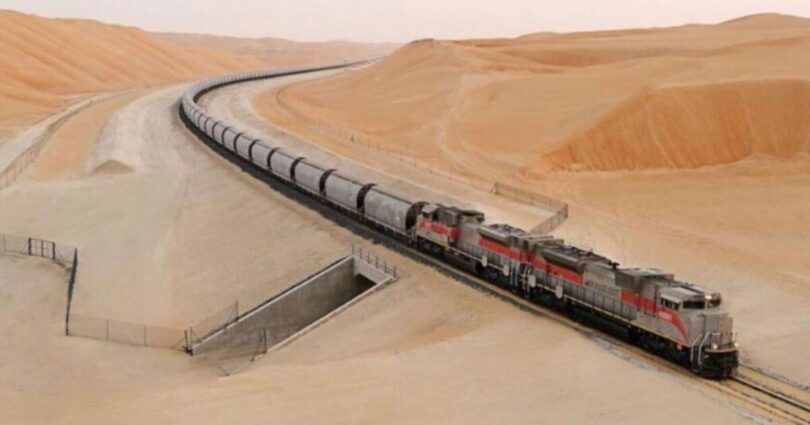
A major new railway project that will transform Africa’s biggest country is under way. Algeria’s National Railway Investment Design and Implementation Supervision Agency (Anesrif) has issued two proposals to construct a new 495km railway through the South of the country.
It is reported that the project will cost a whopping $2.6 billion (approximately £2.2 billion) for the complete construction of the line, which will run between Laghouat, Ghardaia and El-Meniaa.
The development is being split into two contracts. The first is for the 265km stretch from Laghouat to Ghardaja. It will feature five stations, 21 viaducts, one tunnel and 55 culverts.
The second section of the work will cover the 230km between Ghardaia and El-Meniaa, and will have three stations, six viaducts, and 35 other structures.
The El-Meniaa project will be Algeria’s largest railway project in history. Passenger trains will operate at up to 220km/h on the railway and freight at 160km/h. The work development is expected to boost trade across the region by making the movement of agricultural and industrial projects to markets easier.
The African Development Bank is providing a $870m (over £642 million) to partly finance the project.
The bank’s project appraisal report states: “The overall objective of the project is to improve the competitiveness of rail transport and regional development, and to strengthen regional integration.
“Specifically, the project aims to: open up the agricultural and mining production areas of the Wilayas of Laghouat, Ghardaïa, and El Ménéa; and reduce transport time and costs on the Algiers-El Ménéa corridor.
“It also aims to create opportunities for private sector participation in: agribusiness; and transport and logistics services; and construction.
“The project also aims, in the long term, to reduce greenhouse gas emissions through modal shift to rail and to modernise the infrastructure and fleet.”
The project is still in its early stages, but is expected to be operational by late 2028.