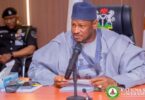
In Nigeria’s most electorally consequential northern state, a battle of mentors and mentees, structures and sentiments, is quietly but decisively taking shape
There is a political proverb that resonates deeply within the corridors of Kano’s power: “The student who does not eventually surpass the teacher has wasted his schooling.
Whether Abba Kabir Yusuf, the sitting governor of Kano State and the APC’s governorship candidate for 2027, has truly surpassed his political godfather, Senator Rabiu Musa Kwankwaso, remains the defining question shadowing the northwest’s most consequential state as Nigeria inches towards the 2027 general elections.
What began as one of Nigerian politics’ most celebrated mentor-protégé relationships has curdled into one of its fiercest rivalries.
The Kano political space, always restless and always pivotal to any national political equation, now finds itself at a critical crossroads of split between loyalty to the man who built the structure and confidence in the man currently sitting inside it.
Understanding who holds the edge requires more than a scorecard. It demands a reckoning with history, geography, sentiment, and the brutal arithmetic of electoral politics in a state of 5,921,370 registered voters as at 2023 general elections.
The Making and Unmaking of an Alliance
Abba Kabir Yusuf, popularly called Abba Gida Gida, did not stumble into the Kano Government House by accident.
He rode there on the wheels of the Kwankwasiyya political movement, a formidable and decade-old political machinery built around Kwankwaso’s personal brand, grassroots penetration, and a carefully cultivated network of loyalists spanning virtually every ward in Kano’s 44 local government areas.
In 2023, Kwankwaso, then the presidential flagbearer of the New Nigeria Peoples Party (NNPP), handed Yusuf the governorship ticket, confident that his movement’s structure would deliver the state and it did.
Yusuf defeated the incumbent APC governor, Abdullahi Ganduje, in a result that stunned many political observers and sent tremors through the APC’s national leadership.
But victory, as Kano’s political history repeatedly shows, has a way of reshaping allegiances.
Almost immediately after the inauguration dust settled, cracks began to emerge. Yusuf, now armed with the power of incumbency and the patronage levers of a state government, began to assert independence. Appointments were made without Kwankwaso’s blessing.
Political foot soldiers who had served the movement began gravitating toward the new power centre — Government House, Kano — rather than the senator’s mansion in Abuja.
Kwankwaso, never one to mask his displeasure, did not mince words. “What I built in Kano, I built with my sweat, my resources, and my time,” he had noted in one public address in late January 2026, signalling his irritation at what he perceived as ingratitude. “Nobody should forget where they are coming from.”
Yusuf, for his part, has consistently projected confidence in his independent capacity. “The people of Kano elected me to serve them, and I answer to Kano people first,” he said at a public function, in remarks widely interpreted as a declaration of political self-determination.
The marriage, it seemed, had produced a child who no longer needed his parents.
Kwankwaso’s Strengths: The Structure That Built a Dynasty
To dismiss Rabiu Musa Kwankwaso in 2027 would be to misread twenty years of Kano political history. The man remains, by almost any objective assessment, the most organisationally formidable politician in the northwest.
THE WHISTLER learnt that Kwankwasiyya movement is not merely a fan base but a structured, grassroots political network with ward-level coordinators, youth mobilisers, and a deeply emotional following that views loyalty to Kwankwaso as a near-ideological commitment.
His track record in Kano governance as two terms governor, a stint as Minister of Defence, and a Senate seat, gives him credibility across policy areas that matter to northern voters: education, infrastructure, and security.
The red caps synonymous with his movement remain an unmistakable symbol of political solidarity in Kano’s streets, markets, and mosques.
Kwankwaso, having now officially joined the African Democratic Congress (ADC), retains significant influence within the party’s national structure, which gives him a distinct organisational platform through which to mount his 2027 challenge.
Should the two forces reach an irreconcilable break, the question of who controls politics in Kano as its machinery, its symbols, and its legal platform could become a decisive battleground.
Furthermore, Kwankwaso’s presidential ambitions, frustrated in 2023, have not entirely evaporated.
There are whispers in Abuja corridors that he remains in active negotiation with major political forces, including elements within the APC and PDP, for a potential realignment that could redraw the political map of the northwest ahead of 2027.
His ability to play at the national level gives him leverage that a sitting state governor, however powerful, cannot easily replicate.
In an Interview with THE WHISTLER, Prof. Kamil Sani Fagge, a political scientist at Bayero University, Kano, and a close observer of the state’s political evolution, argues that Kwankwaso’s greatest asset remains the emotional bond his movement commands at the grassroots.
“What many analysts underestimate about Kwankwaso is that the Kwankwasiyya is not just a political structure, it is a social identity,” Fagge told THE WHISTLER.
He noted that the fallout between Kwankwaso and Yusuf has changed the terrain, but not the balance of power.
“Even though Abba Kabir is now governor and controls state resources, I don’t think he is comparable to Kwankwaso in terms of followership,” he said flatly.
“Kwankwaso has an almost cultish followership among his core loyalists, and these loyalists are the majority of active voters in Kano. Just because he has lost Abba Kabir does not mean his political power is waning. I doubt that very much.”
Fagge invoked history to make his case. When Kwankwaso lost his second term bid as governor, he held his movement together for eight years without a government platform — then came back and won.
“That should tell you something about the depth of his grassroots influence,” he said.