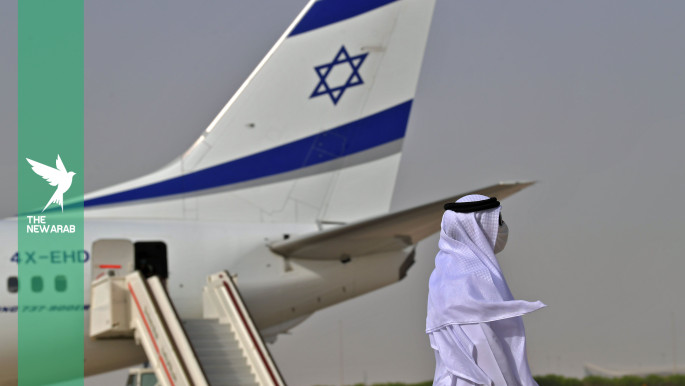
The United Arab Emirates (UAE) and Israel appear to have emerged from the Iran war with a stronger relationship than ever.
The UAE sustained the most Iranians attacks throughout that conflict and felt let down by the lack of support from many of its more immediate neighbours and traditional allies. Conversely, it publicly acknowledged and welcomed Israel’s support during that war.
With Tehran continuing its bellicose rhetoric and threats against Abu Dhabi, it’s possible that UAE-Israel relations and cooperation across multiple fronts will continue to strengthen.
In a controversial September 2025 speech, Israeli Prime Minister Benjamin Netanyahu raised eyebrows when he declared Israel needs to become a “super Sparta” of the Middle East.
More than a decade before that remark rattled the Tel Aviv stock market, retired US Marine General and former Defence Secretary James Mattis affectionally dubbed the UAE “Little Sparta”.
Today, these two Spartas are closer than ever.
Unprecedented military cooperation
After the war, it emerged that Israel had deployed its Iron Dome and new Iron Beam anti-rocket and laser defence systems, plus a Spectro drone-detection system, to help bolster the UAE’s air defences.
Abu Dhabi welcomed this assistance in its time of need, contrasting Israel favourably with its more immediate Arab Gulf neighbours and other Arab allies like Egypt.
Furthermore, reporting in the Wall Street Journal this week revealed that the UAE allegedly carried out attacks on Iran in early April, targeting a refinery located on Iran’s Lavan Island.
Nicolas Heras, Interim Executive Director at the Middle East Policy Council and Senior Director at the New Lines Institute, noted that the UAE has become “Israel’s frontline state” against Iran.
“The Israelis are testing certain weapons systems, such as Iron Beam, and certain cyber capabilities, such as those related to using AI to track and intercept incoming projectiles, that are cutting-edge and require a proof of concept proving ground,” Heras told The New Arab.
“The Israeli approach to the UAE is similar to how the US approached Israel during the Cold War, which is being a close partner who tests useful military tech out in real-world fighting,” he said.
In the Israeli-Emirati case, they have a “symbiotic relationship” that provides Israel with another training ground for its military technology. Israeli firms can market certain systems used in the Emirates to defend against Iranian attacks as battle-tested. And it’s a win-win, since the UAE also gains access to these cutting-edge systems.
Nevertheless, Heras noted that the UAE doesn’t “exist in a vacuum,” with its relationship with Israel remaining “constrained by popular causes” in the Arab World, most notably Palestine.
Alex Almeida, a security analyst at the political risk consultancy Horizon Engage, noted that the war has been a “big accelerant” to the defence relationship.
“There is a real sense that Israel came through where some of Abu Dhabi’s other long-standing regional Arab allies did not. The Israelis really proved their worth to the UAE,” Almeida told TNA.
“With the UAE being hit so heavily while Iranian retaliation on Israel has been quite a bit lighter than expected, there’s room for Israel to shift more air defence cover to the UAE,” he added.
“Expect deeper cooperation between the Israeli and Emirati defence industries on air and missile defence as well.”
Kyle Orton, an independent Middle East analyst, believes the UAE’s alignment with Israel marks a departure for the Gulf states. Furthermore, the “depth and openness” of their cooperation marks a break with the “quiet, selective cooperation” that existed in recent decades.
“The question of whether the UAE-Israel alliance will be directed against Iran is complicated by ongoing ties between the UAE and Tehran, especially in the financial realm,” Orton told TNA.
“A major consequence of this war is the Gulf states learning that they can be subject to Iranian attacks that they cannot defend themselves from, and the US will not retaliate on their behalf.”
An apt “reification” of that lesson occurred on 14 September 2019, when drones hit vital oil processing facilities in Saudi Arabia, Abqaiq and Khurais, exposing how vulnerable its key energy infrastructure was to such attacks.
“To that extent, the Gulf States will not want to be visibly antagonistic to Iran, though in publicly allying with Israel, the UAE must know it is making itself a target for Iran regardless of anything it actually does,” Orton said.
That point was underlined in a remark by hardline Iranian lawmaker Ali Khezrian on Thursday. “We no longer see the United Arab Emirates as a neighbour,” he said. “They are considered a hostile base.”
Geopolitical alliance
It is possible that the Emiratis and Israelis could extend their deepened cooperation to other flashpoints in the wider region where they share interests.
Almeida anticipates that beyond Iran, Yemen and Somaliland are the “main points of convergence”. The Iran-allied Houthis have used their territories in Yemen to strike Israel since the October 2023 war in Gaza started, and the UAE in January 2022.
Abu Dhabi has built a network of overseas bases in these strategically important areas.
“The UAE also takes pride in its operational flexibility and its expeditionary campaigns across the Greater Middle East and Africa are not dependent on Israeli patronage,” Heras said.
Aside from their mutual opposition to Iran, Orton posits that the country the Israel-UAE alliance is “most clearly and openly directed against” is in fact Turkey. More broadly, both states oppose Islamist movements, specifically the Muslim Brotherhood, which Ankara supports in several countries.
“This is the story in Sudan and Somaliland,” Orton said. “Israel’s involvement is much less in Sudan, but the UAE has supported Hemedti since his reinvention as an anti-Islamist against the Islamist-friendly, somewhat Brotherhood-reliant Sudanese government, and Somaliland is a bulwark against the official Somali government that is politically very close to Turkey.”
Hemedti is the nom de guerre of Muhammad Hamdan Dagalo Musa, the head of the paramilitary Rapid Support Forces (RSF) fighting the Sudanese Armed Forces in Sudan’s brutal civil war. The UAE backs the RSF while Saudi Arabia opposes it.
In Somalia, Turkey has been expanding its military footprint, recently deploying some of its F-16 fighter jets in the country. Ankara’s largest overseas military, Camp TURKSOM, is in Somalia.
“The Horn of Africa has been a key theatre of Emirati-Turkish competition for some time, and the UAE has been rather outpointed by the Turks,” Orton said.
Israel has retaliated for Houthi attacks several times since July 2024 with long-range air strikes. Earlier, the UAE fought for years on the ground in Yemen.
“The Emiratis are very wary of getting sucked back into Yemen, but they have deep experience operating in the country,” Almeida said. “The Houthis are also still a potential threat, particularly with the UAE now Iran’s primary target.”
Conversely, Israel historically has had a much more limited reach in Yemen, especially compared to other countries like Lebanon.
“The UAE already has a base in Somaliland and Israel has been very actively cultivating ties to Hargeisa, including pursuing military access with an eye on the Houthis next door,” Almeida said. “Israeli access through UAE-facilitated arrangements is a logical next step.”
Orton similarly assesses that Yemen is the “most complicated theatre” for cooperation, not only because of the sheer number of “cross-cutting external actors,” but also because of the numerous internal ones.
“The UAE does, of course, oppose the Houthis, and there is a desire to prevent their expansion,” he said. “But the Emirates’ chosen method for that is the Southern separatists, which runs counter to the Saudi policy of supporting the recognised Yemeni government that is unalterably opposed to separatism.”
It is this latter intra-Gulf tension in Yemen which is of most immediate concern, according to Orton, since the Houthis are not going anywhere.
“There does not seem much likelihood of Israel getting dragged into this mangle: its interests are much narrower, solely to keep the threat from the Islamic Revolution forces in Yemen within tolerable bounds.”
Gulf friction
Closer to home, Emirati alignment with Israel comes at a time when relations between Abu Dhabi and its Arab Gulf neighbours are under strain. Among the things the UAE expressed disappointment with after the war was the ineffectiveness of the six-member Gulf Cooperation Council (GCC).
Almeida observed that the war does appear to be “accelerating the split” in the GCC. On the one hand, Abu Dhabi is aligning more closely than ever with Israel and taking a “more hawkish position” against Iran alongside Bahrain, the only other GCC state that normalised relations with Israel.
On the other hand, Saudi Arabia and Qatar are more focused on diplomacy with Iran and are aligned with larger powers, Egypt, Turkey, and Pakistan.
Orton noted that the GCC was always “a bit of fiction,” especially when presented as a united political front.
“The UAE’s relations with Israel are more likely to be a backdoor way for the other Gulf states to deal with Israel than a source of friction within the GCC,” Orton said.
“What does suggest that the GCC may be being sidelined is the UAE leaving OPEC, because if there was an issue where the Gulf states genuinely were united, it was oil, and the setting of prices for the same,” he added.
“The UAE’s departure from OPEC is a much stronger signal than its relations with Israel that it is charting a path independent of the GCC.”
Paul Iddon is a freelance journalist based in Erbil, Iraqi Kurdistan, who writes about Middle East affairs.
Follow him on Twitter: @pauliddon
Edited by Charlie Hoyle