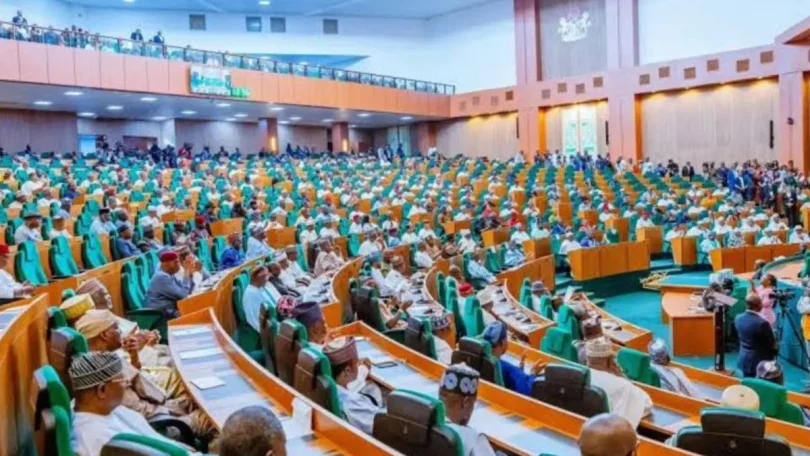
President Bola Tinubu has reportedly approved the phased implementation of outstanding constituency projects for members of the National Assembly in what sources described as a move to calm growing dissatisfaction among lawmakers ahead of the 2027 general election.
The decision follows complaints by senators and members of the House of Representatives over the non-implementation of their Zonal Intervention Projects (ZIPs), also known as constituency projects, captured in the 2024, 2025 and 2025 Supplementary Appropriation Acts.
The reported move also comes amid broader concerns over the slow release of funds for capital projects across federal ministries, departments and agencies.
According to a senior legislative source, the Presidency asked lawmakers to identify their preferred constituency projects for funding after outrage over delays in paying contractors due to the slow implementation of the 2025 budget, which was rolled over to September.
“They are complaining that the 2025 budget is not being funded, but they have asked lawmakers to select their own projects for payment,” The Sun Newspaper quoted a source.
The claims are said to align with a July 2026 communication from the House Committee on Appropriations, which informed lawmakers that approval had been secured for the phased clearance of verified outstanding obligations relating to constituency projects. The notice directed members of the House of Representatives to nominate payment certificates worth a combined N500 million for an initial phase, while additional batches of N500 million would be processed monthly until all verified obligations are settled.
The source further claimed that senators were allocated projects valued at N1 billion each for funding over three months beginning in July.
“N1 billion for the Senators. The Presidency asked them to submit their own for N1 billion,” the source said.
According to the report, the source alleged that the arrangement was intended to prioritise projects directly nominated by lawmakers rather than those considered to have wider national significance. The source also claimed that politically attractive constituency projects were being favoured over investments in areas such as healthcare and national infrastructure.
“Things like hospitals are not their business. It is just the projects that concern them,” the source alleged.
The report also claimed that there were concerns about abuse of the appropriation process, citing constituency projects for religious institutions and youth empowerment programmes allegedly linked to Deputy Speaker Benjamin Kalu.
The Federal Government has consistently maintained that budget releases depend on available revenue and that capital projects are funded according to cash availability and implementation priorities.
A memo obtained by the newspaper reportedly confirmed the phased implementation plan. It stated, “Initial Clearance Tranche – In the first instance, nominated payment certificates with a combined value of N500 million will be processed for the first phase of clearance.”
The memo added, “Subsequent phases – Additional batches of projects with a combined value of N500 million each will be processed monthly until all verified outstanding obligations are fully addressed.”
It also directed lawmakers to submit details of their nominated projects for verification and processing.
Multiple House sources told the newspaper that members had already submitted their preferred projects, with implementation expected to commence before the end of July.
Lawmakers have repeatedly expressed frustration over delays in implementing constituency projects. On July 8, members of the House clashed over a motion seeking to summon President Tinubu to explain what was described as poor implementation of appropriation laws since 2024. Although the proposal to invite the President was dropped, the House resolved to invite relevant ministers and set up a 12-member ad hoc committee to engage fiscal authorities on budget releases, contractor payments and the utilisation of approved borrowings.
Another source told the newspaper that the phased release of funds was part of negotiations following the dispute within the House.
“Lawmakers didn’t want that Open Week, but the leadership just played them, went ahead with the Open Week. So, part of that negotiation was this thing,” the source claimed.
The source added, “Because they have been complaining about the inability of the government to fund the projects in their constituencies. You know, some of them don’t even have anything to show. If your constituents have seen that there is a budget of a project for N1 billion for their constituency and they didn’t see anyone at all, they won’t take it lightly. The story out there was that they have gone to collect the money and you know that this is election year, so they were all under pressure to see that one or two things are done in their constituencies.”
The source further claimed that concerns over the next reaction of aggrieved lawmakers influenced the decision to begin phased funding of the outstanding constituency projects.