“No future attack must find us unprepared,” Mr Shettima said as Tinubu ordered security reinforcement at NIPSS.
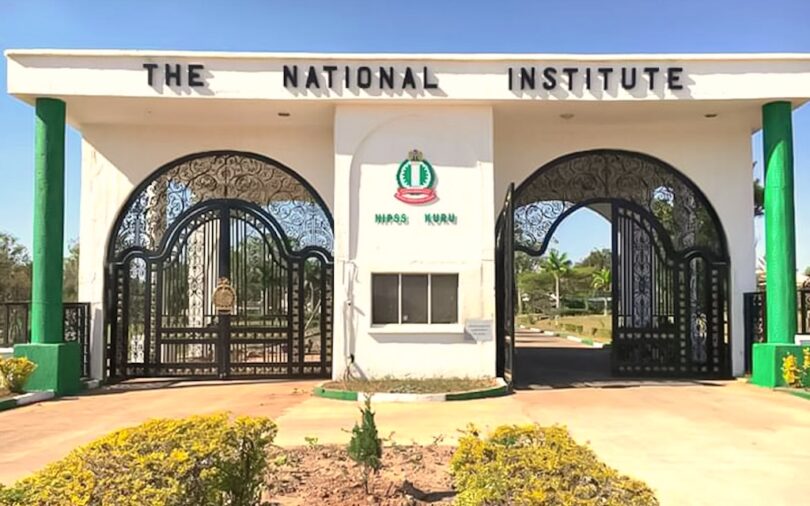
President Bola Tinubu has ordered the immediate and permanent reinforcement of security at the National Institute for Policy and Strategic Studies (NIPSS), Kuru, Plateau State, following the recent deadly attack on the institute’s perimeter that claimed the lives of two soldiers and a police officer.
According to a statement issued on Friday by the Senior Special Assistant to the President on Media and Communications in the Office of the Vice President, Stanley Nkwocha, the directive was conveyed by Vice President Kashim Shettima during a visit to the institute on behalf of President Tinubu.
The president directed the activation of emergency security measures and ordered NIPSS management to work closely with the Armed Forces, the Nigeria Police Force and the State Security Services (SSS) to strengthen security around the institution.
“His Excellency, President Bola Ahmed Tinubu, has directed that emergency security measures be activated at once, with the DG to coordinate with the Armed Forces, the Police, and the DSS to fortify the perimeter without delay,” Mr Shettima said.
He added that a comprehensive security reinforcement plan covering surveillance, personnel deployment, access control and emergency response systems must be submitted to the Office of the Vice President within 72 hours.
“On the President’s order, a comprehensive action plan and timeline for permanent reinforcement, covering surveillance, personnel, access control, and emergency systems, must be submitted to the Office of the Vice President within seventy-two hours.
“Weekly progress reports will follow until full completion. No future attack must find us unprepared,” he said.
The vice president also conveyed the federal government’s condolences to the families of the slain security personnel, assuring them that their welfare would be catered for.
“The sacrifice of those three brave men will not be in vain. Their children will be our children. Their welfare will be our responsibility,” he said.
PREMIUM TIMES earlier reported that gunmen attacked the institute in Kuru, Jos South Local Government Area, late on 15 June. The attack triggered a gun battle between the assailants and security personnel guarding the institute.
No group has claimed responsibility for the attack.
A staff member of the institute told journalists that the attackers opened fire on security operatives at the gate at about 11:40 p.m., while reinforcements later arrived and repelled the assault.
NIPSS subsequently confirmed the incident in a statement signed by its Head of Public Affairs Department, Osime Samuel, saying security agencies had brought the situation under control and commenced investigations.
The attack came amid renewed insecurity in Plateau State.
On 15 June, PREMIUM TIMES reported that eight persons were killed and more than 10 were injured when gunmen attacked Gwon-Ajang village in Foron District of Barkin Ladi Local Government Area during a birthday celebration.
Days earlier, on 11 June 11, the Berom Youth Moulders Association (BYM) reported the killing of two residents in Ta-Hoss community of Riyom Local Government Area, while another resident was killed the following day in Bangai.
Earlier, on 8 June, at least seven persons, including a police inspector, were killed during an attack in Barkin Ladi, while on June 6, 12 residents, including pregnant women and children, were killed in a midnight attack on Ngbra-Zongo community in Bassa Local Government Area.
Speaking during the visit, Plateau State Governor Caleb Mutfwang thanked the federal government for its support following the attack and approved requests for additional security measures around the institute.
The governor also approved the creation of a buffer zone around NIPSS and the installation of security lights to improve surveillance in the area.
NIPSS Director-General, Ayo Omotayo, described the attack as a reminder of the vulnerability of critical national institutions and appealed for the deployment of more security personnel and surveillance infrastructure, including closed-circuit television cameras.
The institute hosts senior government officials, military officers, academics and policymakers undergoing strategic leadership training and is regarded as Nigeria’s foremost policy and research institution.