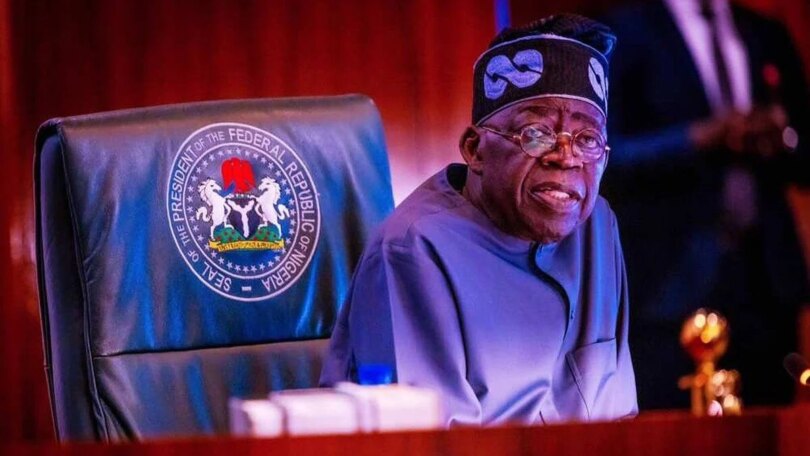
President Bola Ahmed Tinubu has ordered a comprehensive reform of Nigerian football following what his administration described as repeated failures by the country to qualify for major regional, continental and global competitions.
The directive was contained in a statement issued on Thursday by Bayo Onanuga, Special Adviser to the President on Information and Strategy, on Thursday.
The development comes as the country’s football administration faces a leadership crisis following the resignation of Nigeria Football Federation (NFF) President Ibrahim Gusau and several members of the federation’s Executive Committee.
Tinubu Directs Comprehensive Reform
According to the statement, Tinubu wants fundamental changes in the way football is governed, administered and developed in Nigeria, with particular attention to accountability, stakeholder participation, domestic competitions and pathways for developing players.
“The reform must respond to a longstanding need to strengthen governance, administration, stakeholder representation, development pathways, domestic competitions and accountability across Nigerian football,” the President said.
Tinubu noted that football had continued to underperform despite the progress recorded in other sporting disciplines since the Federal Government’s reset of the sports sector through the re-established National Sports Commission.
The President attributed the difficulties facing Nigerian football largely to weaknesses within the structure of the sport rather than a lack of talent or public interest.
“Football, Nigeria’s most popular sport and the greatest beneficiary of public support, investment and national attention, has continued to struggle basically due to structural deficits within the system,” Tinubu said.
He stressed that Nigeria’s football system must be reorganised to make better use of the country’s large pool of football talent, the passion of its supporters and the resources committed to the sport.
Sports Commission, NFF Stakeholders to Lead Process
As part of the directive, the President asked the Chairman of the National Sports Commission to work closely with the NFF Secretariat and other relevant football stakeholders.
The assignment is expected to ensure that essential football administration continues while a wider consultation on the proposed reforms takes place.
The process will also involve engagement with the Confederation of African Football (CAF) and the world football governing body, FIFA, in order to ensure that any changes remain consistent with Nigeria’s international football obligations.
Tinubu called on football stakeholders and Nigerians to support the reform process, stressing the need to build institutions capable of producing better and more consistent results.
The directive comes at a difficult period for Nigerian football, with the country’s football administration dealing with leadership changes while the performances of several national teams have also generated concern.
Gusau Resigns Amid NFF Crisis
The President’s directive came on the same day Ibrahim Gusau officially resigned as NFF President.
Gusau announced his resignation during a press conference in Abuja on Thursday, confirming earlier reports of a serious leadership crisis within the federation.
Several members of the NFF Executive Committee also resigned, leaving the administration facing uncertainty over its immediate future.
The development prompted the NFF Congress to convene an emergency meeting in Abuja, with representatives of state football associations, clubs, referees, coaches, players and other stakeholders invited to attend.
The emergency Congress was expected to examine the status of the NFF leadership and determine how the federation would continue operating following the resignations.
It was also expected to consider relevant provisions of the NFF statutes and the regulations of CAF and FIFA in determining the next steps.
Before Gusau’s resignation was formally confirmed, reports had indicated that several members of his executive had already resigned or were considering doing so.
The situation reportedly left eight of the 13 members of the NFF Executive Committee either having resigned or no longer occupying their positions, raising concerns about the stability and functionality of the federation.
Gusau was elected President of the NFF in September 2022 after winning the federation’s elective congress in Benin City, Edo State.
Resignation Follows Reported Investigations
The leadership crisis has also unfolded against the backdrop of reported investigations involving the administration of football funds and alleged contacts involving some NFF officials.
POLITICS NIGERIA reports that the Department of State Services (DSS) is examining documents connected to a N17 billion intervention fund approved by President Tinubu in 2024 to address outstanding salaries, bonuses and other financial obligations owed to members of Nigeria’s national teams.
A source familiar with the matter said the DSS had requested documents relating to the funds.
“It’s a normal thing for DSS to go through all documents relating to the funds released them,” the source said, rejecting suggestions that the exercise was designed to witch-hunt NFF officials.
The reported examination of the N17 billion intervention fund is said to be separate from another intelligence investigation involving the DSS and the National Intelligence Agency over alleged contacts between some NFF officials and foreign nationals.
A security source described some of the alleged communications as “highly disturbing”, saying the inquiry was focused on issues considered to have wider national security implications.
The source also stressed that the two investigations should not be treated as the same matter.
“It is true that President Bola Tinubu in 2024 approved N17 billion as a special intervention fund to help NFF clear outstanding payments owed to Nigeria’s national teams. However, that falls within the purview of the EFCC, not the DSS and NIA,” the source said.
National Teams Suffer Qualification Setbacks
The President’s reform directive also comes after a series of disappointing results involving some of Nigeria’s national teams.
The Super Eagles failed to qualify for the 2022 and 2026 FIFA World Cups, while the Super Falcons recently suffered another major setback after failing to secure a place at the 2027 Women’s World Cup.
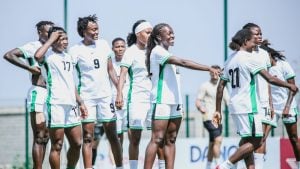
The Falcons had previously maintained an uninterrupted appearance at every edition of the Women’s World Cup since the competition began in 1991.
That record ended after Nigeria’s difficult qualification campaign.
The team lost 1-0 to Cameroon in the quarter-final of the 2026 Women’s Africa Cup of Nations, ending its title defence and sending the team into the World Cup qualification playoff route.
Nigeria subsequently lost 2-1 to South Africa’s Banyana Banyana in the playoff, confirming that the Falcons would miss the 2027 Women’s World Cup in Brazil.
Nigeria’s youth football system has also experienced setbacks.
The Golden Eaglets, who have won a record five FIFA U-17 World Cup titles, have failed to qualify for the last three editions of the competition.
The country’s U-23 side, the Dream Team, has similarly struggled to reproduce the standard associated with the team that won Olympic football gold at the Atlanta 1996 Games.
September NFF Election Faces Fresh Uncertainty
The crisis has also raised questions over the NFF’s scheduled elective Congress on September 27 in Lafia, Nasarawa State.
The election is expected to produce a new leadership for the federation, but the resignation of Gusau and several members of his board has created uncertainty over whether the process will proceed as originally planned.
An insider previously linked the resignations to concerns surrounding the ongoing investigations and warned that the situation could affect preparations for the election.
“That at least half of NFF executive have or are contemplating resignation, may not be unconnected with the fear of DSS and NIA probe, fuelling fears on the possibility of holding the NFF board election scheduled for September 27 in Lafia, Nasarawa State,” the insider said.