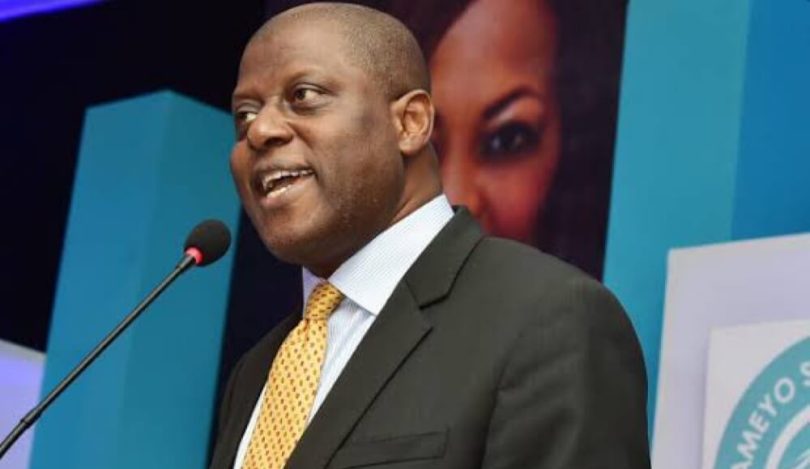
Governor of the Central Bank of Nigeria (CBN), Olayemi Cardoso, has said that the difficult economic reforms undertaken by the Federal Government and the apex bank are earning Nigeria increasing recognition on the global stage, describing them as necessary measures that are beginning to yield positive results.
Cardoso stated this on Tuesday while briefing journalists after the Monetary Policy Committee (MPC) meeting in Abuja.
He said the international recognition recently bestowed on the CBN was not a personal achievement but a testament to the collective efforts of the bank’s management and staff in restoring confidence in Nigeria’s economy.
“I was very clear in dedicating that award not to the Central Bank Governor, but to the staff and management of the bank,” he said.
According to him, the award reflects the hard work of the institution rather than that of any individual.
“A lot of the very hard work that has been done by the Central Bank has not been done by the governor alone, but by the whole bank. At times like this, when these recognitions come, it is important to reflect on the road we have travelled and why we are now relatively more successful and recognised internationally,” Cardoso said.
The CBN governor noted that the award was an international recognition, underscoring that global institutions are closely monitoring Nigeria’s economic reforms.
He stressed that central banking carries enormous responsibility because policy decisions affect millions of people, adding that those working behind the scenes deserve recognition for their contributions.
Cardoso also commended Nigerians for their resilience in enduring the hardships associated with the reforms.
“This has been a hard and tough journey. It has not been easy by any stretch of the imagination,” he said.
He explained that one of the major achievements of the reforms has been restoring macroeconomic stability, which he described as a prerequisite for attracting investment and driving economic growth.
“You don’t get investment without stability, and without investment, you don’t get the growth that you need. It has been important to work hard to get that stability in place, and that is forming the platform for greater growth in our economy.”
According to him, Nigeria’s external reserves have improved, while stability in the foreign exchange market has strengthened confidence in the economy.
Cardoso said the CBN remains committed to maintaining a transparent, liquid and market-driven foreign exchange market based on a willing-buyer, willing-seller framework.
Responding to questions on the value of the naira following comments by the International Monetary Fund (IMF) that the currency may be undervalued, he said the exchange rate would continue to be determined by market fundamentals rather than administrative controls.
“Our view is to continue on the path we have embarked upon by ensuring we have a market that is transparent, liquid and based on willing buyer, willing seller,” he said.
He added that the eventual value of the naira would depend on improvements in economic fundamentals such as oil exports, foreign direct investment, domestic productivity and reduced import dependence.
“We are very comfortable that we now have a fully functional market that is open and transparent. There are days when turnover exceeds $1bn, and the market is responding positively to the reforms we have undertaken.”
The CBN governor further said Nigeria requires a competitive currency to support economic growth and investment.
Cardoso also defended the apex bank’s adoption of the Nigerian Overnight Financing Average (NOFA) benchmark, saying it aligns Nigeria’s financial markets with international best practices.
He explained that unlike the previous system where banks submitted estimated rates, the new benchmark is based on actual transaction rates.
“This system ensures that real transactional rates, as opposed to judgmental rates, are being used. We are simply aligning ourselves with international benchmark standards.”
He said the benchmark would play an important role as the CBN transitions towards an inflation-targeting framework.
On inflation, Cardoso acknowledged that global shocks had delayed the pace of disinflation but expressed satisfaction that headline inflation had begun to moderate.
He said the moderation indicates that the CBN’s monetary tightening measures are producing results.
“We are pleased that inflation has moderated, albeit slightly. That gives us an indication that the tools we have implemented so far are bearing effect,” he said.
The CBN governor reiterated the need for stronger collaboration between fiscal and monetary authorities to address structural rigidities fueling inflation.
“We intend to deepen and strengthen that collaboration to ensure we contain rising inflation and bring it to the single-digit level that we have consistently projected,” he added.
Cardoso expressed confidence that as more reforms take effect, Nigeria’s economic outlook will continue to improve.
“We are not an island. The things we do are recognised and monitored by the rest of the world. The difficult and painful reforms we have made have been tracked internationally, and they can see that those reforms are taking Nigeria on a journey that is paying off. As other measures begin to cascade, I am confident that better times lie ahead for the country,” he said.