
Ibrahim Oyewale in Lokoja
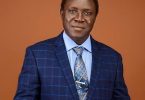
Piqued by the Nigeria’s underdevelopment and abject poverty across the country, a university don and Professor of Political Economy, Prof. Abraham Peter, has disclosed that Nigeria’s future depends not merely on resources endowment but on the transformation of the state into a developmental institution capable of promoting social justice, national security and human development.
He advocated for restructuring of the state to serve public rather than private interests to meet the yearning and aspirations of the masses and generality of Nigerians.
Professor Peter made this call while speaking as the 43rd Inaugural Lecturer of the Federal University, Lokoja, titled ‘Between the Ritual and ingredients: An inquiry into the Political Economy of governance in post in Colonia State’ held at the permanent site, Felele in Lokoja yesterday.
He explained that as long as state whose institutions, practices, and governing philosophies continue to bear the imprint of colonial domination there can not be positive growth and development, stressing that democracy will remain fragile, Peter noted development will remain elusive and human security will remain threatened .
According to him, “if this continues there will be corruption and elite predation, while state resources diverted from developmental priorities while public institutions captured by elite interests.”
He lamented that weak institutions, political interference, poor funding, weak enforcement capacity and lack of accountability were the bane of developmental democracy.
The scholar noted that oil dependency, rentier economy, economic volatility, neglect of agriculture and manufacturing will continue to hinder the growth and development of the nation .
He highlighted some hindrances such as structural challenges, leadership crisis, poor policy implementation, short-term political calculations, lack of policy continuity, ethno-religious politics undermines meritocracy and weakens national integration as it creates policy incoherence.
“Nigeria’s future depends not merely on resource endowment but on the transformation of the state into a genuinely developmental institution capable of promoting social justice, national security, and human development.”
“Until the state is restructured to serve public rather than private interests, democracy will remain fragile, development will remain elusive and human security will remain threatened.
“Reimagine the state as instrument of collective well-being and scholarship must illuminate pathways for transformation.
“Critical inquiry remains indispensable to social change”Scholarship must not merely interpret the world; it must illuminate pathways for its transformation.”
He however concluded that there is hope for the future. “I remain convinced that through critical scholarship, institutional reforms, responsible leadership, and active citizenship, Nigeria can overcome its present challenges and realise its enormous potential.”
“A Nigeria where democracy truly delivers development, justice, peace, and human dignity,” he added.
“Scholars must engage with societal realities, universities must produce knowledge for public good and citizens must demand accountability.
“Leaders must prioritise national interest. The inaugural lecture tradition reminds us that scholarship is more than the accumulation of knowledge,” the lecturer noted.