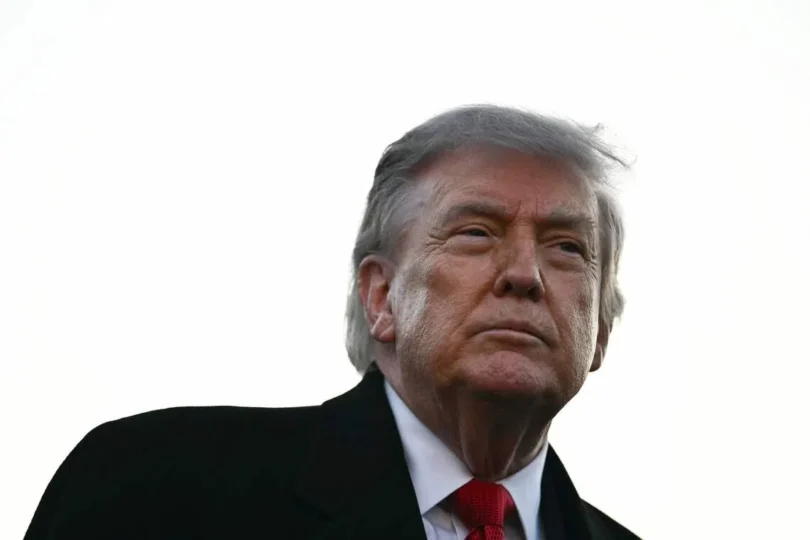
WASHINGTON – President Donald Trump’s announcement on May 3 that the US military would escort ships through the Strait of Hormuz angered Crown Prince Mohammed bin Salman of Saudi Arabia, who denied US access to Saudi airspace and American bases in the country, according to a person briefed by Saudi officials and a US military official.
Crown Prince Mohammed’s action stunned US officials and forced Mr Trump to abandon his plan, according to a US military official familiar with the sequence of events.
The Saudis have since lifted the restrictions on the bases and overflights, but still have not agreed to permit the use of its territory in support of “Project Freedom,” as Mr Trump named the naval operation, the US official added.
Mr Trump halted the tanker escort operation on May 5, after a flurry of phone calls between Washington and Saudi Arabia, including a call between Mr Trump and Crown Prince Mohammed.
By that evening, Mr Trump had announced that he had “paused” the operation after less than 24 hours.
Mr Trump said he was reacting to new “progress” toward a peace agreement with Iran, although no evidence of a dramatic breakthrough has emerged.
Even if the US disagreement with Riyadh over tanker escorts is resolved, the initial Saudi refusal of support suggests that Mr Trump’s unpredictable and whipsawing approach to Iran has strained ties with one of his closest allies.
As recently as mid-March, the de facto Saudi leader was pressing Mr Trump to continue his bombing campaign against Iran with the goal of bringing down its clerical regime and ridding the kingdom of a longtime adversary, according to people briefed by US officials on the conversations. Saudi officials dispute those accounts.
Crown Prince Mohammed’s calculus has since shifted.
Mr Trump instead agreed to an April ceasefire deal with Iran’s leaders, and the crown prince is now trying to help end the conflict by supporting peace talks through Saudi Arabia’s ally, Pakistan.
Iranian officials said on May 7 that Iran and the United States were discussing a one-page proposal to open the Strait of Hormuz and end hostilities – which flared up again on May 7 – for 30 days while they search for a comprehensive deal that would include matters like Iran’s nuclear program.
The person briefed by Saudi officials confirmed that the kingdom had denied the United States permission to fly over Saudi Arabia for the tanker mission, which they did not think had been well studied.
Saudi officials also feared it would have led to an escalation with Iran, according to the person.
Signs of a rift between Mr Trump and the crown prince could embolden Iran as it jockeys for leverage in on-again, off-again negotiations with the United States amid clear signs that Mr Trump is eager for a deal.
The Saudi government’s Center for International Communication, which handles queries from journalists, did not immediately respond to a request for comment, nor did the Saudi Embassy in Washington.
The friction emerged after Mr Trump declared on May 3 via his Truth Social account that the US military would begin guiding commercial ships through the narrow waterway between Iran and Saudi Arabia.
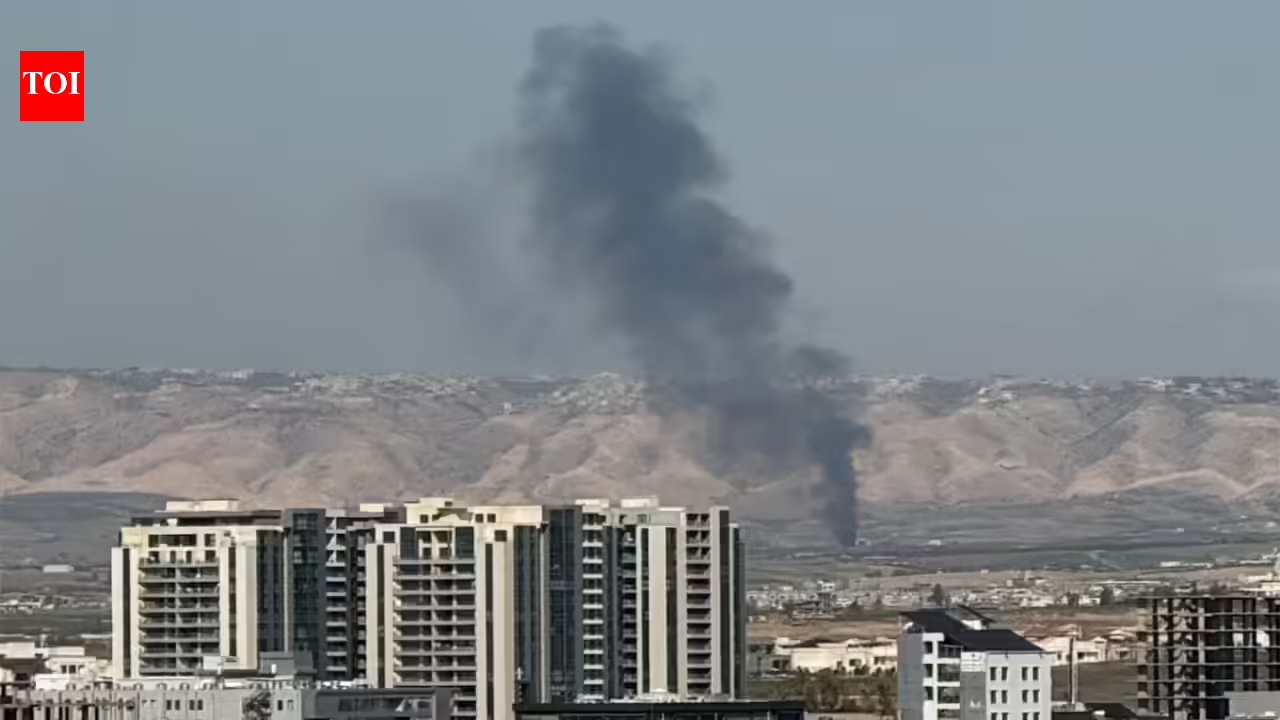
Most maritime traffic through the strait has been halted since Iran began attacking tankers in response to the joint US-Israeli bombing campaign that began in February.
Mr Trump initially depicted the operation as a “humanitarian” mission intended to free ships and crews who had been stranded in the strait for weeks or months, although his rhetoric grew more bellicose after the announcement.
On May 4, Mr Trump warned that he might wipe Iran “off the face of the earth” if it attacked American vessels in the strait.
On May 5, Saudi officials notified US counterparts that they could not use their country’s territory or airspace for the operation, according to a US military official.
That rendered the plan unfeasible: US naval escorts through the strait would require substantial air support for protection, including from fighter jets and attack helicopters.
Three people who speak often to Saudi officials said the episode shows growing frustration in Riyadh with Mr Trump’s shoot-from-the-hip management of his clash with Iran.
Mr Trump has left his strategic goals unclear and his tactics subject to sudden change, often catching U.S. allies by surprise.
In his early years, Crown Prince Mohammed pursued a hawkish approach to Iran, which included a disastrous bombing campaign in Yemen launched to fight Iran-backed Houthi rebels.
But in recent years, he has prioritised diplomacy over military action, and in 2023 Saudi Arabia restored diplomatic relations with Iran after decades of deep hostility.
The shift reflects Crown Prince Mohammed’s view that regional stability is crucial for his broader economic ambitions, which involve turning Saudi Arabia into a global hub for business and tourism, Saudi officials and analysts say.
After Mr Trump went to war against Iran, the crown prince’s main interest was in seeing a decisive victory against Iran’s regime.
Despite the easing of tensions in 2023, Saudi Arabia still considers the country a threat to its security.
Now that it has become clear that the war is not likely to bring regime change, the crown prince is eager to bring the conflict to an end. Hoping to speed an agreement between the two sides, Saudi Arabia’s foreign minister has been speaking to his Iranian counterpart regularly, according to one of the people in touch with Saudi officials. NYTIMES