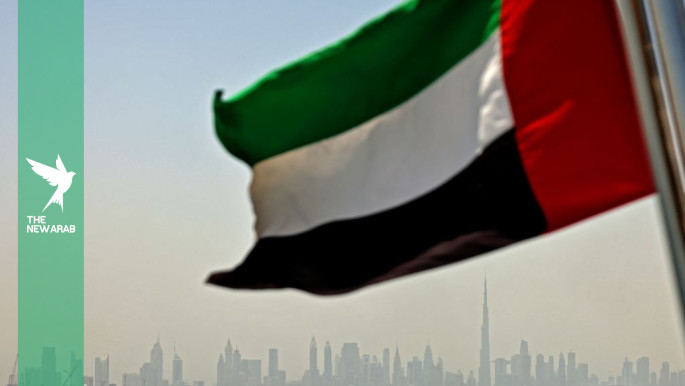
Among the six Gulf states, the UAE was targeted the most by Iranian attacks [Getty]
President Donald Trump has admitted he is considering a currency swap arrangement with the United Arab Emirates after reports that Abu Dhabi raised concerns over dollar liquidity risks linked to the Iran war.
The UAE was among the Gulf states hit during the recent regional conflict that erupted after the US and Israel struck Iran on 28 February.
Tehran said it was retaliating against states hosting or supporting US military operations, while civilian infrastructure and energy facilities across the Gulf also came under attack.
Alongside the direct costs of the war and heavy spending on air defences against Iranian drones and missiles, the UAE has also faced economic pressure from Iran’s blockade of the Strait of Hormuz, a waterway through which around a fifth of global oil and gas shipments pass.
Trump told CNBC that a currency swap with the UAE was under consideration.
“It’s been a good ally of ours,” he said. “And you know, these are unusual times.
“They were able to shoot down most of them, but they did get hit hard,” he said, referring to Iranian projectiles. “They were hit the hardest of the group, actually.”
He said he was “surprised” that the Emiratis would need financial help because “they are really rich.”
According to the Wall Street Journal on Sunday, the UAE has hinted that the US dollar’s dominance was not guaranteed in the global oil trade if there is further escalation from the war.
A two-week truce is set to expire early on Wednesday, and an agreement is yet to be reached between Iran and the US, amid fears the conflict could reignite.
WSJ said the UAE’s central bank chief raised the idea of a currency swap with Treasury Department and Federal Reserve officials during meetings in Washington last week.
The publication said the UAE has $270 billion in foreign-exchange reserves and trillions of dollars across its sovereign wealth funds.
If the conflict with Iran leads to a deeper economic slowdown, access to a US swap line would give the UAE’s central bank a low-cost source of dollars to support the dirham – pegged to the US currency – or to bolster foreign-exchange reserves if liquidity tightens, the report said.
Officials in the UAE also argued that Washington initiated the war with Iran and warned they could turn to China’s yuan or other currencies for oil trade should dollar supplies become constrained, according to sources cited by the WSJ.
The shift from the US dollar to the yuan is deeply concerning for the United States, which sees China as its primary economic rival.
US bases: No guarantees of protection
The UAE is one of several Middle Eastern countries hosting US forces, a key target for Iranian attacks during the war.
The conflict has raised questions about Washington’s role in protecting its regional partners, particularly in the Gulf, long seen as a haven of stability where the US was expected to guarantee security.
Observers say the US has fallen short in protecting its Gulf allies despite maintaining a significant military presence, including at the UAE’s Al Dhafra Air Base.
Remarks by a former adviser to the Emirati president have challenged that longstanding assumption.
“The UAE no longer needs the United States to defend it; during the Iranian aggression it proved it can protect itself effectively. What the UAE needs is simply to acquire the best and most advanced weapons the US has. Therefore, it is time to consider closing American bases, as they are a burden rather than a strategic asset,” Abdulkhaleq Abdulla told Reuters on Sunday.
On Monday, the prominent geopolitical analyst reiterated his comments in response to a UAE-based Lebanese journalist, who argued it was in the country’s strategic interest to deepen ties with Washington.
“No one is questioning the importance of UAE-US relations. If anything, this relationship is here to stay and will be deepened and expanded in the days to come. However, the time has come to review the value added by US bases to our national defence portfolio,” Abdulla wrote on X.
While Abdulla does not hold a government position, his remarks are seen by some analysts as indicative of a broader debate within the UAE.