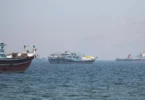
The scale of the financial impact on vital sectors and the Qatari economy remains dependent on the duration of the conflict in the Strait of Hormuz and the length of supply chain disruptions through this strategic passage. [Getty]
Qatar is facing one of its most sensitive economic moments in years after attacks on energy facilities in the industrial cities of Ras Laffan and Mesaieed.
The disruption prompted QatarEnergy to declare “force majeure” early last month, suspending liquefied natural gas production and exports, and affecting related industries such as aluminium, petrochemicals, helium and fertilisers.
While Doha has shown a clear capacity to withstand the shock due to its financial strength, the crisis is simultaneously raising broader questions about supply reliability, partner confidence and the limits of resilience in an increasingly volatile global energy market.
Officially, the adviser to the prime minister and spokesperson for Qatar’s foreign ministry, Majed Al-Ansari, said on 31 March 2026 that “the impact of closing the Strait of Hormuz would be felt even at the level of homes and essential services in countries thousands of kilometres away from the region”.
He said ensuring the strait remains open to navigation is a shared international responsibility. He also expressed Qatar’s commitment to its international partners and its continued role as a reliable energy partner.
He added that coordination is ongoing to ensure maritime security and market stability and that reaching solutions to this crisis is a priority for Qatar’s national security and national interests, as well as those of its partners.
A shock beyond gas
The current crisis does not appear to be merely a technical production stoppage but rather a shock affecting the core of Qatar’s economic model.
Liquefied natural gas is not only a primary export commodity but also the foundation of a wide network of revenues and associated industrial and service activities.
With exports halted for nearly two months, the impact is widening to include direct revenue losses, declining shipments, supply chain disruptions and uncertainty in long-term contracts with major importers in Asia and Europe.
In this context, the importance of “force majeure” emerges. It partially exempts QatarEnergy from legal consequences of delays, but not from reputational costs.
Major buyers not only consider contractual terms but also the supplier’s ability to deliver consistently during periods of tension.
As such, any prolonged disruption opens the door for competitors such as the United States, Australia, Algeria and Russia to strengthen their positions in sensitive markets.
Limited alternatives and commercial manoeuvring
Commercially, Qatar’s available options appear limited but not non-existent.
The fastest alternative is to activate swap agreements with international partners. This allows deliveries from terminals outside Qatar, particularly in the United States or Australia, to ensure contract continuity and reduce the risk of importers making permanent shifts to other suppliers.
This approach does not fully compensate Qatar’s export capacity, but it mitigates the impact and provides time to reorganise priorities.
Qatar can also partially rely on its global investment network and overseas assets to offset some operational losses.
It can also reschedule certain industrial and commercial commitments related to petrochemicals, aluminium and helium.
However, these alternatives remain crisis absorption tools rather than comprehensive solutions, as the core deficit lies in halted production at the primary source.
Qatar possesses strong economic resilience built through successive crises over recent years, alongside vast financial reserves and a sovereign wealth fund with assets distributed across more than 60 countries.
However, the repercussions of the current crisis are expected to weigh heavily on public finances, given the near-total halt in exports of gas, oil products and petrochemicals.
This will be reflected in current account figures, balance of payments data and the performance of energy and industrial sectors later in 2026.
The scale of the financial impact on vital sectors and the Qatari economy remains dependent on the duration of the conflict in the Strait of Hormuz and the length of supply chain disruptions through this strategic passage.
No Qatari gas or oil tanker has passed through it for 60 days. Maritime disruptions, rising marine insurance costs, higher operating expenses and shipment delays indicate negative effects on transport and shipping.
They also point to increased claims on insurance companies and pressure on the aviation and energy sectors.
These sectors may be forced to raise prices, reduce flight numbers, and even delay or cancel events and conferences.
Sovereign fund as a line of defence
The most prominent advantage in Qatar’s case is financial flexibility.
The sovereign wealth fund, managing around $600bn, alongside central bank reserves and accumulated surpluses, provides the state with broad capacity to finance imports, sustain public spending, and absorb shocks for an extended period.
This means that, despite its severity, the crisis does not threaten immediate financial stability but primarily risks Qatar’s commercial position and investment momentum.
However, this financial margin should not be interpreted as unlimited immunity. Each additional month of disruption increases recovery costs and raises the likelihood that importers will restructure supply chains away from Qatar.
The real challenge, therefore, lies not only in financial endurance but also in the speed of repair, the resumption of production, and the restoration of international confidence. This must occur before a temporary crisis turns into a structural market shift.
Jalal Qannas, a professor at Qatar University’s faculty of economics, told The New Arab that Qatar’s energy crisis extends beyond figures to the core of international reliability.
He said the loss of around 12.8 million tonnes of liquefied gas annually, alongside halted activities in helium, petrochemicals, fertilisers and aluminium, places Doha before an unprecedented strategic challenge.
He added that the United States’ emergence as a major energy player and its attempts to sign large contracts with European and Asian markets represent a real threat to Qatari exports in the coming phase.
Fiercer competition
This assessment places the crisis within a broader context, as the global market is no longer as it was, and competition over long-term contracts has become more intense, particularly amid Washington’s efforts to establish itself as a reliable alternative supplier.
Accordingly, any delay in restoring operations may not only result in temporary revenue losses for Qatar. It could also push some clients to rebuild their strategies away from it, Qannas said, noting that the country has a financial safety net enabling it to withstand pressure for years.
The competitive advantage lies in significant “financial flexibility” through the sovereign wealth fund and the central bank reserves’ surplus. This allows the country to finance imports for 24 months.
Commercially, the fastest alternative remains activating “swap agreements” with international partners. This enables Qatar to supply gas to Asian clients from terminals in the United States or Australia, thereby maintaining contracts and reducing the likelihood of permanent shifts to competitors.
Qannas said that although “force majeure” legally protects Qatar from liability, restoring the confidence of major importers in Europe and Asia requires very rapid repair, production, and resumption of supply.
During this period, Qatar can absorb revenue declines, estimated at $20bn annually, through its surpluses. However, prolonged disruption could drive consumers toward structural changes in supply chains.
Global market repercussions
Academic and economic expert Mourad Kouachi offered a broader perspective, saying developments in the Strait of Hormuz have major implications for all countries, not just Qatar.
He said the alternatives available to Qatar are currently very limited and will have only a temporary, weak impact, while the real question concerns not only Qatar’s ability to endure but also the global economy’s ability to function without Qatari and Gulf energy.
Kouachi told The New Arab that despite financial losses, Qatar remains a country with considerable financial and energy strength, and that the crisis has revealed its importance in the international market.
He noted that disruption in “Hormuz” has not only harmed Qatar but also shaken the global energy system, raising oil and gas prices and affecting food, aviation, agriculture, recession and inflation.
This perspective reframes the crisis as both global and Qatari.
Analysts said Qatar possesses the economic tools to absorb the shock, particularly given its strong competitive advantages, including low production costs and advanced technology.
However, the real challenge lies in turning this crisis into an opportunity.
This includes accelerating infrastructure modernisation and security, advancing economic diversification, and advancing a comprehensive industrial and technological policy based on value-added industries.
This would ensure it remains the most secure supplier in the global energy landscape.
Article translated from Arabic by Afrah Almatwari. To read the original, click here.