
The United Arab Emirates’ public rupture with Gulf allies over their response to Iran’s attacks has been accompanied by a sharp downturn in its relations with Pakistan, as Abu Dhabi reassesses its regional strategy and expectations of partners in the wake of the US‑Israeli war with Iran.
A senior Emirati official on Monday openly criticised Gulf Cooperation Council (GCC) states for what he described as a “historically weak” reaction to Iran’s missile and drone barrage that followed US and Israeli strikes on Iranian territory.
Speaking at a conference in Dubai, presidential adviser Anwar Gargash said Gulf states had supported each other logistically as the crisis unfolded but argued that the political and military response from the six‑member bloc fell far short of the threat posed by Iran’s retaliation.
He added that while he expected a muted reaction from the Arab League, he was surprised to see the same from the GCC, signalling rare public dissatisfaction with the performance of the Gulf monarchies.
Gargash’s remarks came after Iran fired hundreds of missiles and drones at GCC countries, with the UAE being the most heavily hit country in the Gulf.
In recent weeks, as a response, Abu Dhabi has adopted a more forceful tone towards Tehran while some of its neighbours have opted for more measured public messaging.
Gulf monarchies have long had fraught relations with Iran, balancing security fears with economic and energy interdependence, but the scale of the most recent confrontation appears to have brought those tensions to a head – particularly amid the continuing blockade of the Strait of Hormuz, which has drastically impacted Gulf economies reliant on the key waterway.
According to Gargash, Gulf capitals in recent years pursued a “containment policy” towards Iran, relying on mediation channels, energy partnerships, strategic agreements and, in the UAE’s case, extensive trade links.
He said these efforts had “failed miserably” and argued that the region is now entering a phase of major reassessment over how to deal with Tehran.
Pakistan under pressure as UAE recalls loans
It is against this backdrop that the UAE’s relationship with Pakistan has come under renewed strain.
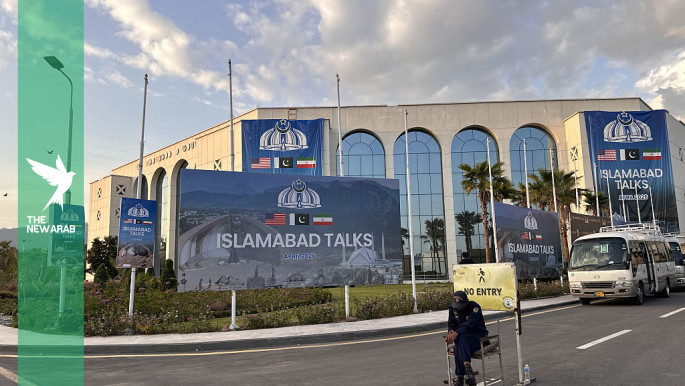
Pakistan, facing a severe balance‑of‑payments crisis and dependent on Gulf deposits to shore up its foreign reserves, has sought to position itself as a mediator in the war between the United States and Iran.
As Pakistan pursues this mediating role despite a stalemate in the negotiations, Abu Dhabi shocked policymakers in Islamabad earlier this month by requesting the rapid repayment of around $3.5 billion in loans that the UAE had previously deposited in Pakistan’s central bank.
The demand threatened to drain a significant portion of Pakistan’s foreign currency reserves and potentially disrupt its multi‑billion‑dollar bailout programme with the International Monetary Fund, which concluded in 2024 after months of negotiations and austerity measures.
The IMF had counted on the continuation of Gulf deposits, including from the UAE, as a key pillar of Pakistan’s external financing plan.
Saudi Arabia, which last year signed a mutual defence pact with Pakistan, stepped in to ease the pressure by extending an existing $5 billion deposit and providing additional funds to help Islamabad protect its reserves.
Riyadh’s move means that, at least in the short term, the immediate risk of Pakistan’s reserves falling below IMF‑agreed thresholds was reduced.
Analysts say Abu Dhabi’s decision is an indication of the growing frustration with Pakistan’s stance, particularly its efforts to remain in the middle ground between Iran and the US‑Israeli‑Gulf camp.
Emirati policymakers are understood to regard mediation as a form of unacceptable neutrality at a time when Iran has directly targeted Gulf territory, according to the Financial Times, who spoke to Emirati officials.
Pakistan’s foreign ministry has publicly framed the recent repayment to the UAE as a “routine financial transaction” and insisted there is no political rift with Abu Dhabi.
Behind the scenes, however, officials in Islamabad have privately expressed frustration at the timing and manner of the Emirati demand, while also noting that a reduced exposure to UAE deposits could, over time, make Pakistan less vulnerable to sudden shifts in Abu Dhabi’s policy.