
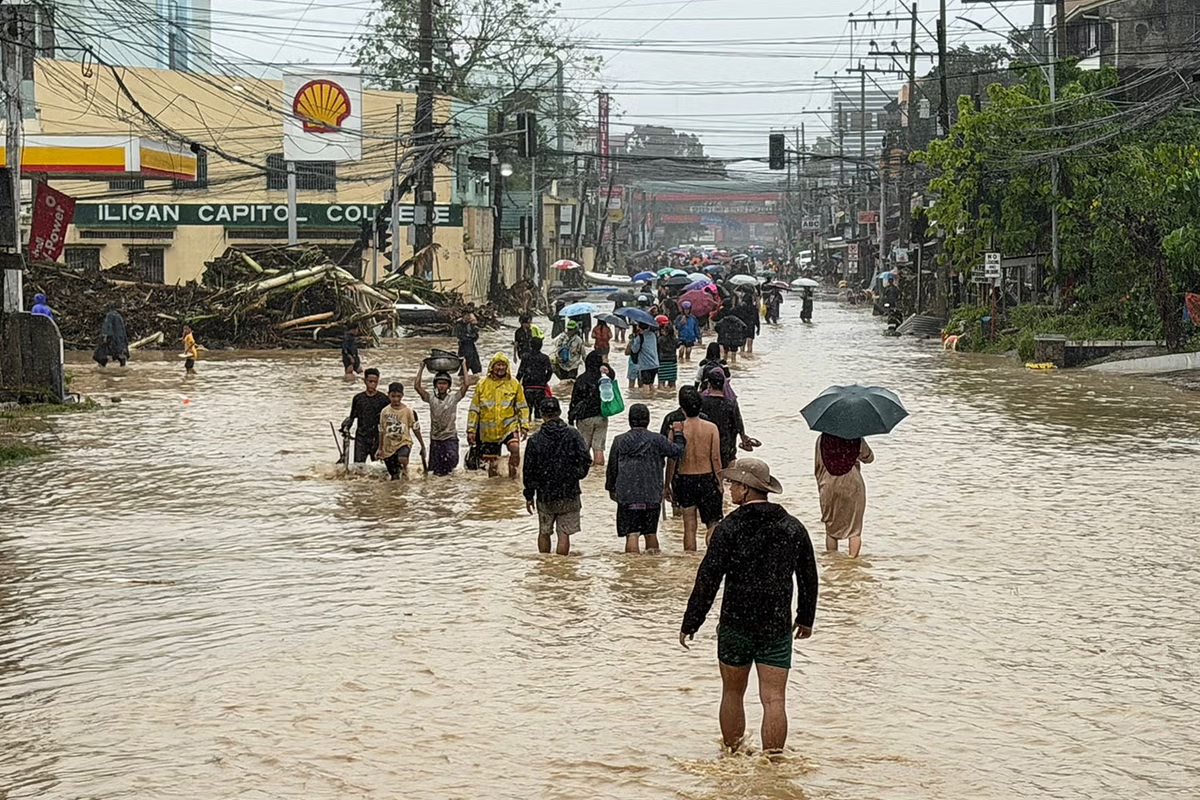
The UK is set to deploy artificial intelligence to help climate-vulnerable countries prepare for extreme weather events, as forecasters warn a potentially record-breaking El Niño could trigger devastating floods, droughts and storms.
The Foreign, Commonwealth and Development Office (FCDO) will be working with the Met Office to introduce the systems across parts of Africa and South-East Asia in the coming months.
“Climate security is affecting all our lives,” said the foreign secretary. Yvette Cooper. “When countries are devastated by extreme weather, the effects can be felt all over the world, whether it is through the impact on global trade, the disruption of supply chains, or the increase in food and energy prices.”
“Our new partnership with the Met Office will help countries across the Global South to protect against extreme weather events, and manage the effects of climate change – using British expertise and technology to create a more stable world,” she added.
The partnership will see British scientists and meteorologists work with existing weather services in countries, sharing forecasting models, climate data and technical expertise to improve predictions of severe weather events and help communities recover more quickly after disasters.
As part of the programme, the Met Office is set to use advances in machine learning that will mean weather forecasts are produced significantly faster, with greater accuracy and at far lower cost than traditional forecasting methods, allowing more countries to benefit from sophisticated prediction systems.
The new programme comes as scientists at the the National Oceanic and Atmospheric Administration (NOAA) confirmed this week that 2026 would see an El Niño, which is a climate phenomenon that sees warmer-than-average sea surface temperatures in the Pacific Ocean, and which results in changing rainfall patterns across Africa, Asia and Latin America.
Recent years have seen these weather events become turbocharged by climate change, causing unprecedented temperature spikes and exacerbating both droughts and extreme flooding.
The first phase of the programme will focus on the Philippines, where densely populated coastlines and its location in the western Pacific typhoon belt leave millions of people vulnerable to tropical storms each year.
The FCDO will then support the initiative throughout Britain’s diplomatic network, helping to connect British technology and expertise with local partners.
“This strategic partnership will enable us to amplify the impact we already have through combining our priorities, values and strengths – positioning the UK as global leaders in this space and enabling more people to be protected from extreme weather,” said Simon Brown, acting chief executive of the Met Office.
The partnership is set to be officially launched this week during London Climate Action Week, which has in recent years become a major event in the global climate calendar, attracting numerous high profile attendees including heads of state as well as Antonio Guterres, secretary general of the UN.
According to the government, the partnership also reflects “the UK’s modern approach to development”, which “moves beyond traditional aid to unlock growth, jobs and trade”.
After cutting the UK foreign aid budget last year at from 0.5 to 0.3 per cent of Gross National Income (GNI) in a move that was widely condemned by charities, last month the UK shared its ambition for a “bold new approach to aid” that it claimed would better fit a world beset with problems including disease, conflict, and the climate crisis.
This article produced as part of The Independent’s Rethinking Global Aid project