“When we boarded that plane, it felt like something was being ripped out of my chest… like I’d never see my family again… It was like something pulling at me with pliers, ripping a vein from my heart.”
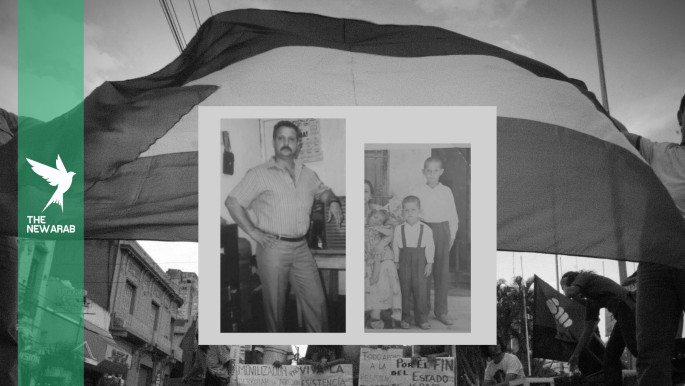
Talal Al-Dimassi is a victim of a 1969 Israeli ethnic cleansing scheme that has been largely underreported. Decades later, he shares the emotional turmoil he endured on the Uncovering Roots podcast, founded by Maxim Saakyan, in a four-part series unpacking Israel’s Paraguay Scheme in depth.
The scheme was set to send 60,000 Palestinians from Gaza – around 10% of the population at the time – to Paraguay under false pretences of work, while Gazans were under the impression they would be heading to Brazil with good work and comfortable salaries ahead of them.
Government minutes published in 2020 by Israeli public broadcaster KAN revealed that Mossad, Israel’s national intelligence agency, suggested the scheme and reportedly developed it alongside Paraguay in the years following the 1967 war, in which Israel occupied Gaza, East Jerusalem and the West Bank.
This is one of many stories homed in on by Max on the SWANA-focused podcast.
Displacement by design
The ethnically Armenian-Spanish, Italian-born, and London-raised storyteller feels the twanging pains of humanitarian injustice on a personal level, after 1.5 million Armenians lost their lives under the Ottoman Empire, in what 34 countries, including some major nations, have recognised as a genocide.
During the production of this particular Uncovering Roots series last November, news broke that a group of 153 Palestinians arrived in Johannesburg on a chartered Global Airways flight from Kenya without departure stamps, return tickets, or details of accommodation.
Suddenly, the Paraguay Scheme didn’t feel like a one-off.
Passengers told social workers that Israeli authorities ordered them to board an unmarked plane at an Israeli air base, according to an Al Jazeera report, and an AP investigation found that the flight – among several in 2025 – was organised by an Israeli group called Ad Kan, in conjunction with a third-party company called Al-Majd Europe.
“Sadly, it isn’t a historical story,” Max told The New Arab.
“One of the reasons we did this [series] was that we told ourselves history repeats itself all the time. When justice doesn’t get served, it means people can do things over and over again, until they get punished for it… and they did.”
Mahmoud is another victim of the scheme that we learned about on the podcast, who was looking for work and hoping to pursue a career abroad.
Talal, however, was forced out of his hometown following Israeli detention for resisting the Israeli occupation.
He was given an ultimatum that either he or his family must leave Gaza. He chose to leave, expecting the same promises as the other victims once on the other side.
The Paraguay scheme came to an end following the publicity of a 1970 shooting at the Israeli embassy in Asunción, where Talal and another victim of the scheme, Khaled Kassab, confronted Israel’s ambassador to Paraguay, Benjamin Varon.
Talal says armed officers attacked the men, and after grabbing one of their guns, he shot in the direction of the ambassador, who hid behind his secretary Edna Peer – resulting in her death, a trial and a prison sentence for the two Palestinians.
Western media covered the shooting as a premeditated “terrorist attack”, with no mention of the Paraguay scheme.
Uncovering a passion for storytelling
Uncovering encounters endured by a particular individual, such as Talal and Mahmoud’s, is at the heart of the Uncovering Roots podcast.
“People nowadays need to have a person to cling to in order to empathise,” Max told The New Arab.
“Anne Frank is obviously a very famous one… or Alan Kurdi — that was the moment where people suddenly started caring about refugees, [but] it was a huge crisis way before that,” he added.
His journey into storytelling began when he listened to a Kerning Cultures podcast about Armenia, which made him feel “seen” like never before.
“I was listening to an Armenian story that wasn’t my dad saying an old tale or something, and I was like ‘I feel so seen right now’,” Max told The New Arab, sharing that he realised “if I’m tired of not seeing any Armenian stories being platformed, then I need to do that.”
Inspired and empowered, the seeds of Uncovering Roots were born.
The podcast’s first series, The Lost Voice — Aurora Mardiganian, follows the story of a woman “who was just 14 years old when she lost everything during the Armenian genocide… and was forced on a death march for hundreds of miles towards the Syrian desert,” Max shares.
“The Aurora story for me is the story I’ve worked the hardest on,” Max continued.
“I think I interviewed 44 people for that story. Obviously, not all 44 voices went in, but a lot was for fact-checking.”
The following episodes of the podcast tell stories from the Levant, including The Baron Hotel, which takes listeners to Syria’s northern city of Aleppo and inside the layered history of one of the country’s oldest hotels, which hosted kings, spies, Armenian refugees, and even Agatha Christie.
“The Barron Hotel is one of my favourites, especially because I worked with Zila [the episode’s co-producer], who was based in Aleppo. She went inside the hotel, and it felt very much like a historic episode, but we’re [also] going into the present day,” Max said.
He also noted his Lebanese-focused Passolini in Beirut episode as one of his standouts, sharing, “I feel like every single episode has a very, very different type of feel,” while the overarching theme remains educating about “overlooked stories.”
Storytelling is resistance
However, for those who have endured pain, telling said stories involving the oppression of their people can often feel like screaming into the abyss, only to remain in a world where people are killed in “broad daylight [with] no consequences.”
The fourth episode of Palestinians in Paraguay touches on this, as researcher Hadeel Assali — Mahmoud’s great niece, who dedicated her work to uncovering the scheme — recounted questions she had received from family members effectively asking, ‘what’s the point?’
“I think that’s one thing that hurts us in the sense of being like, who cares anyway… but I do think art has its place in like resistance, and I think learning is a big resistance,” Max said, echoing the thought process of many activists.
“Maybe listening to a few stories will get them to email their MP or even to just protest, very, very simple things that can maybe cluster into something bigger. Because if we stay silent, nothing will happen, that’s for sure.”
Max’s motivations for the SWANA region’s focus on the podcast also stem from his belief in the importance of collective liberation.
“Simply, everyone needs to learn about our region. I talk about it a lot, collective liberation, solidarity… everything’s connected, and we need to make sure that we’re all in this together. It’s not separate,” Max told The New Arab.
Israel’s continued assaults
Since 2023, Israel has killed over 70,000 people in Gaza, in what UN and human rights experts have deemed a genocide.
This includes 743 people killed since the truce began in October, according to Gaza’s health ministry figures.
Israeli attacks have killed a further 2,000 people across Lebanon since March, according to Lebanese authorities. The US-Israel war on Iran has also killed 2,000 in Iran.
Aisha Aldris is a London-based journalist who writes on social and humanitarian issues alongside culture and the arts
Follow her on X: @aishaaldris