
National

UNDERCOVER: How Corrupt Customs, SON Officials Clear Counterfeit Goods Into Nigeria

…Customs Agent Pays $10,000 Per Container, N1.9m In Bribes To Secure Clearance

…Despite B’Odogwu’s Transparency Promise, Officials Turn Port Examination Into Cash Ritual

…Scanners, Technology Being Deployed To Curb Extortion—Customs

…We Will Probe Alleged Compromise Of Officials At Lagos Ports—SON

An influential Customs licensed agent (name withheld to protect him) sat beside his driver as the car headed towards Tin Can Island Port in Apapa, Lagos around 12 pm on a Tuesday in June,2026. THE WHISTLER reporter was seated at the back of the car, having been introduced to the agent as a PhD student writing a thesis on importation and distribution channels in Nigeria.

He said he had some cargoes to clear at one of Tin Can Island port’s terminals, revealing that the ship had arrived four days earlier, and he was going to clear the goods for his client.

But while on the road, he was busy on the phone with an obviously friendly senior Customs officer who usually facilitates clearance of his cargoes. This time he had four containers loaded with household goods. But he revealed they contained counterfeits of some expensive foreign branded household items manufactured in China.

For a while they argued about the duty to be paid on the containers. He negotiated the official duty on each container from $52,000 to $22,000. It was also agreed he would pay the officer and his boys $10,000 on each container. When he arrived at the port, he first had to go through the transfers at the GT Bank office in Apapa, not far from the Customs office.

Within hours, his papers were ready, showing that all the necessary vetting had been done, with only the physical examination of the goods remaining.

With the papers at hand, THE WHISTLER followed the agent as he moved from office to office at the Nigeria Customs Service Tin-Can Island Port Command. First, he went to the Compliance unit where he negotiated with the desk officer (name withheld) over charges that were not official.

Unsatisfied, he excused himself to make a call outside the office. Then, he called a senior officer based at the Customs headquarters in Abuja who used to be his point man at Tin-Can Island Port before his redeployment, to intervene.

He said the desk officer was asking for N2m but he pleaded to pay N1.2m. The officer told him to pay the N1.2m, promising to take care of the matter. The agent went back and did a transfer on his phone. When THE WHISTLER asked if he paid into the Customs account, he said the money was not an official fee, but a bribe to facilitate the clearance of his containers. He was not given any receipt for the payment.

The transfer receipt showed he paid into a private account given to him. THE WHISTLER saw the receipt and the name on the account.

Then he moved to another office, which in Customs parlance is called “Approval”. Asked what the approval department does, the agent said it was a meaningless nomenclature created by Customs to make money from agents like him. He went in and negotiated as he did in compliance, and paid another N700,000 into a private account. THE WHISTLER also saw the transfer receipt and the name on the account.

This is happening barely five months after the NCS launched the Unified Customs Management System (UCMS), popularly known as B’Odogwu, a technology designed to deliver transparency, speed, and accountability at the ports.

B’Odogwu was supposed to eliminate illegal payments and ensure system-accurate valuation and faster processing at the ports.

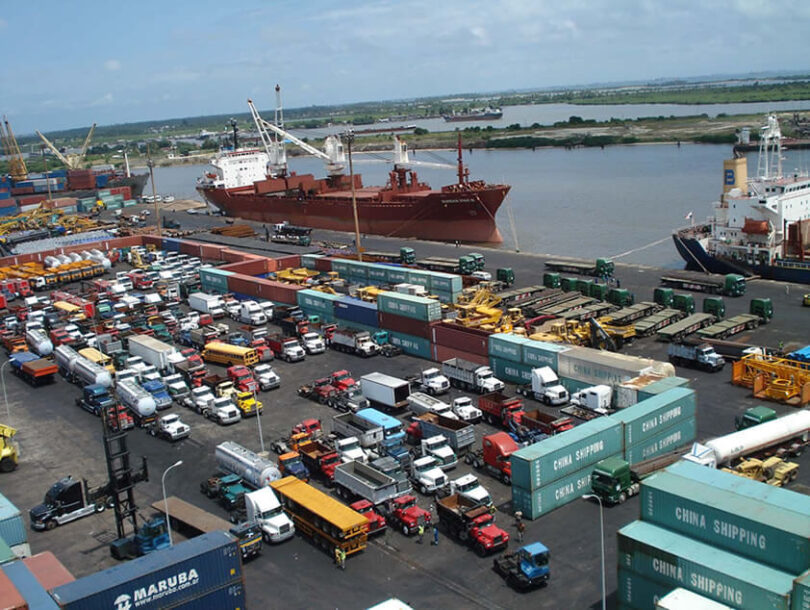
Done with paying the bribes, the agent proceeded for the physical examination of his containers inside Terminal D where there were more than one thousand containers. This is where Customs, NAFDAC, SON, NDLEA and other regulatory agencies are expected to reconcile the contents of the containers with the declarations on their bills of lading.

It’s one of the most critical roles of the regulatory agencies to physically check all containers and ensure that they contain only the items stated in the bill of lading.

As part of its mandate, the NCS conducts inspection of containers(examination) at all Nigerian ports to verify that actual contents match the importer’s declarations, calculate the correct duties, and prevent the smuggling of contrabands or dangerous items like arms and illicit drugs.
According to the National Bureau of Statistics (NBS), over 93 per cent of merchandise import into Nigeria comes through the sea ports, specifically through the Apapa, Tin Can Island and Lekki Deep Sea Ports in Lagos.

In 2025, out of the N146.63tn total merchandise trade, N136.63tn or 93.18% of it came through the three ports. According to quarterly Foreign Trade Statistics from the NBS, total import volume for 2025 stood at N64.09trn.

Nigeria’s total import volume for the first quarter of 2026 stood at N13.62tn (specifically N13,619.33bn), accounting for 39.15% of the total merchandise trade
Manufactured goods dominated Nigeria’s import list, with China being the major country of origin. Other top import origins are United States, India, Germany and the United Arab Emirates (UAE).

NAFDAC also undertakes the inspection of imported food, drugs, medical devices, cosmetics, Chemicals, detergents, drinks and bottled water at ports of entry before release, while SON Inspects and issues certificates for imported goods to ensure they meet minimum requirements.

The process is the same for other agencies such as NDLEA, DSS, and the Nigeria Agricultural Quarantine Service (NAQS) which is the federal regulatory agency tasked with preventing the entry, establishment, and spread of foreign pests and animal diseases.

The terminals at the port are usually restricted areas enforced by security personnel. You need an ID and official jacket to pass through the entry gate. The agent facilitated THE WHISTLER’s entry into the terminal to witness how regulatory agencies do the job of inspecting goods coming into the country.

The process started with a terminal staff cutting the locks of the containers so that officials could open and inspect the goods inside.

But the agent already told THE WHISTLER that the process was “mere formality,” adding that the officials would just show up to collect their own money while pretending to do their job.

This was exactly what happened when the inspection started. THE WHISTLER observed an obvious shortage of personnel at the port for regulatory agencies. It took almost one hour of waiting for the first batch of officials to show up at the container location. The reporter learnt that the officials were conducting inspections at other locations. There are five terminals at Tin Can Port warehousing thousands of containers each.

It was the customs officer that first arrived. He was handed the bill of ladin by the agent for him to inspect the container. He stood at the entrance of each of the containers and asked the agent if the items on the bill were the only things inside. He was told that nothing else was inside the container. He smiled and whispered something to the agent.

Then the agent brought out some dollar notes and gave them to him. That was the end of the examination by the customs officer! He didn’t spend up to five minutes before moving to other containers to continue with inspection. The agent later told THE WHISTLER he parted with $100.

Then the others came one after the other. Two male NAFDAC officials came for the inspection and demanded to see samples of the goods. One of the officers pointed at a carton inside the container and asked the agent to bring it out. It was removed for quality control test. But the agent told THE WHISTLER the officials would only take it home!

They asked similar questions as the customs officer and the examination didn’t last more than 10 minutes! They also got their own bribe. The reporter saw when the agent handed the money to one of them. It was not hidden; they took it the way policemen take money from motorists!

SON came at the same time with one official of the NDLEA. They were both handed the bill of lading for the inspection. They looked inside the containers and asked the agent some routine questions while scribbling something on the paper in their hands. Within five minutes they were done. The agent squizzed some money into their hands. They checked the money and were not satisfied. They went back and forth with the agent before he added some more money.
The agent told THE WHISTLER that the two officials insisted on $100 each.

Officials from the Quarantine Service came for inspection too. So did two officials from the Department of State Services (DSS). They all performed the “ritual” and left with money.
We left the terminal by 1pm. By 4pm the containers had been dropped off at the gate of the terminal, ready to be transported into a warehouse in the city.

A customs official who spoke to THE WHISTLER off-the-record, explained that it was not the job of customs to ensure goods shipped into the country were of good quality, adding it was the main job of SON and NAFDAC.

But in a response sent to THE WHISTLER, the National Public Relations Officer of the NCS, Deputy Comptroller of Customs Abdullahi Aliyu Maiwada, said the service “actively collaborates” with enforcement agencies, including the Standards Organisation of Nigeria (SON) and NAFDAC, to prevent counterfeit and substandard items from entering the country.


National

UNDERCOVER: How Corrupt Customs, SON Officials Clear Counterfeit Goods Into Nigeria

…Customs Agent Pays $10,000 Per Container, N1.9m In Bribes To Secure Clearance

…Despite B’Odogwu’s Transparency Promise, Officials Turn Port Examination Into Cash Ritual

…Scanners, Technology Being Deployed To Curb Extortion—Customs

…We Will Probe Alleged Compromise Of Officials At Lagos Ports—SON

An influential Customs licensed agent (name withheld to protect him) sat beside his driver as the car headed towards Tin Can Island Port in Apapa, Lagos around 12 pm on a Tuesday in June,2026. THE WHISTLER reporter was seated at the back of the car, having been introduced to the agent as a PhD student writing a thesis on importation and distribution channels in Nigeria.

He said he had some cargoes to clear at one of Tin Can Island port’s terminals, revealing that the ship had arrived four days earlier, and he was going to clear the goods for his client.

But while on the road, he was busy on the phone with an obviously friendly senior Customs officer who usually facilitates clearance of his cargoes. This time he had four containers loaded with household goods. But he revealed they contained counterfeits of some expensive foreign branded household items manufactured in China.

For a while they argued about the duty to be paid on the containers. He negotiated the official duty on each container from $52,000 to $22,000. It was also agreed he would pay the officer and his boys $10,000 on each container. When he arrived at the port, he first had to go through the transfers at the GT Bank office in Apapa, not far from the Customs office.

Within hours, his papers were ready, showing that all the necessary vetting had been done, with only the physical examination of the goods remaining.

With the papers at hand, THE WHISTLER followed the agent as he moved from office to office at the Nigeria Customs Service Tin-Can Island Port Command. First, he went to the Compliance unit where he negotiated with the desk officer (name withheld) over charges that were not official.

Unsatisfied, he excused himself to make a call outside the office. Then, he called a senior officer based at the Customs headquarters in Abuja who used to be his point man at Tin-Can Island Port before his redeployment, to intervene.

He said the desk officer was asking for N2m but he pleaded to pay N1.2m. The officer told him to pay the N1.2m, promising to take care of the matter. The agent went back and did a transfer on his phone. When THE WHISTLER asked if he paid into the Customs account, he said the money was not an official fee, but a bribe to facilitate the clearance of his containers. He was not given any receipt for the payment.

The transfer receipt showed he paid into a private account given to him. THE WHISTLER saw the receipt and the name on the account.

Then he moved to another office, which in Customs parlance is called “Approval”. Asked what the approval department does, the agent said it was a meaningless nomenclature created by Customs to make money from agents like him. He went in and negotiated as he did in compliance, and paid another N700,000 into a private account. THE WHISTLER also saw the transfer receipt and the name on the account.

This is happening barely five months after the NCS launched the Unified Customs Management System (UCMS), popularly known as B’Odogwu, a technology designed to deliver transparency, speed, and accountability at the ports.

B’Odogwu was supposed to eliminate illegal payments and ensure system-accurate valuation and faster processing at the ports.

Done with paying the bribes, the agent proceeded for the physical examination of his containers inside Terminal D where there were more than one thousand containers. This is where Customs, NAFDAC, SON, NDLEA and other regulatory agencies are expected to reconcile the contents of the containers with the declarations on their bills of lading.

It’s one of the most critical roles of the regulatory agencies to physically check all containers and ensure that they contain only the items stated in the bill of lading.

As part of its mandate, the NCS conducts inspection of containers(examination) at all Nigerian ports to verify that actual contents match the importer’s declarations, calculate the correct duties, and prevent the smuggling of contrabands or dangerous items like arms and illicit drugs.
According to the National Bureau of Statistics (NBS), over 93 per cent of merchandise import into Nigeria comes through the sea ports, specifically through the Apapa, Tin Can Island and Lekki Deep Sea Ports in Lagos.

In 2025, out of the N146.63tn total merchandise trade, N136.63tn or 93.18% of it came through the three ports. According to quarterly Foreign Trade Statistics from the NBS, total import volume for 2025 stood at N64.09trn.

Nigeria’s total import volume for the first quarter of 2026 stood at N13.62tn (specifically N13,619.33bn), accounting for 39.15% of the total merchandise trade
Manufactured goods dominated Nigeria’s import list, with China being the major country of origin. Other top import origins are United States, India, Germany and the United Arab Emirates (UAE).

NAFDAC also undertakes the inspection of imported food, drugs, medical devices, cosmetics, Chemicals, detergents, drinks and bottled water at ports of entry before release, while SON Inspects and issues certificates for imported goods to ensure they meet minimum requirements.

The process is the same for other agencies such as NDLEA, DSS, and the Nigeria Agricultural Quarantine Service (NAQS) which is the federal regulatory agency tasked with preventing the entry, establishment, and spread of foreign pests and animal diseases.

The terminals at the port are usually restricted areas enforced by security personnel. You need an ID and official jacket to pass through the entry gate. The agent facilitated THE WHISTLER’s entry into the terminal to witness how regulatory agencies do the job of inspecting goods coming into the country.

The process started with a terminal staff cutting the locks of the containers so that officials could open and inspect the goods inside.

But the agent already told THE WHISTLER that the process was “mere formality,” adding that the officials would just show up to collect their own money while pretending to do their job.

This was exactly what happened when the inspection started. THE WHISTLER observed an obvious shortage of personnel at the port for regulatory agencies. It took almost one hour of waiting for the first batch of officials to show up at the container location. The reporter learnt that the officials were conducting inspections at other locations. There are five terminals at Tin Can Port warehousing thousands of containers each.

It was the customs officer that first arrived. He was handed the bill of ladin by the agent for him to inspect the container. He stood at the entrance of each of the containers and asked the agent if the items on the bill were the only things inside. He was told that nothing else was inside the container. He smiled and whispered something to the agent.

Then the agent brought out some dollar notes and gave them to him. That was the end of the examination by the customs officer! He didn’t spend up to five minutes before moving to other containers to continue with inspection. The agent later told THE WHISTLER he parted with $100.

Then the others came one after the other. Two male NAFDAC officials came for the inspection and demanded to see samples of the goods. One of the officers pointed at a carton inside the container and asked the agent to bring it out. It was removed for quality control test. But the agent told THE WHISTLER the officials would only take it home!

They asked similar questions as the customs officer and the examination didn’t last more than 10 minutes! They also got their own bribe. The reporter saw when the agent handed the money to one of them. It was not hidden; they took it the way policemen take money from motorists!

SON came at the same time with one official of the NDLEA. They were both handed the bill of lading for the inspection. They looked inside the containers and asked the agent some routine questions while scribbling something on the paper in their hands. Within five minutes they were done. The agent squizzed some money into their hands. They checked the money and were not satisfied. They went back and forth with the agent before he added some more money.
The agent told THE WHISTLER that the two officials insisted on $100 each.

Officials from the Quarantine Service came for inspection too. So did two officials from the Department of State Services (DSS). They all performed the “ritual” and left with money.
We left the terminal by 1pm. By 4pm the containers had been dropped off at the gate of the terminal, ready to be transported into a warehouse in the city.

A customs official who spoke to THE WHISTLER off-the-record, explained that it was not the job of customs to ensure goods shipped into the country were of good quality, adding it was the main job of SON and NAFDAC.

But in a response sent to THE WHISTLER, the National Public Relations Officer of the NCS, Deputy Comptroller of Customs Abdullahi Aliyu Maiwada, said the service “actively collaborates” with enforcement agencies, including the Standards Organisation of Nigeria (SON) and NAFDAC, to prevent counterfeit and substandard items from entering the country.