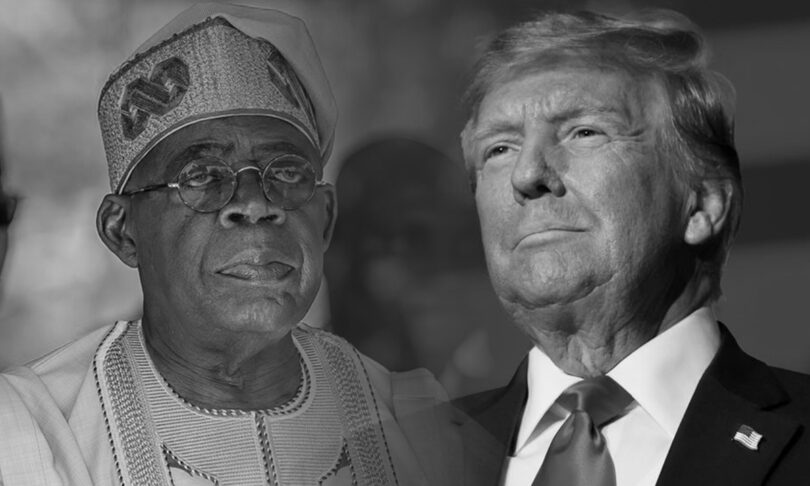
There are concerns that the US is trying to coerce Nigeria into accepting a US military base.
Five months after the US designated Nigeria a Country of Particular Concern following false claims of Christian persecution, America has now asked its citizens not to travel to the West African country. The US has also asked its non-essential workers to leave Nigeria.
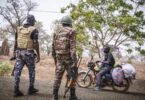
PREMIUM TIMES reports that Nigeria faces several security crises with various armed groups operating in different parts of the country. Armed groups, including terrorists, have carried out attacks in several states, including Katsina, Sokoto, Borno, Plateau and Benue, killing thousands of people annually and displacing many more.
The Nigerian government and many of its international partners have admitted the security failings and called for more government action to stem the violence. However, the US has repeatedly framed the violence as targeting Christians and used that as a basis of its hostile attitude to the government, amidst concerns that it seeks to coerce the Nigerian government into accepting a US military base in Nigeria.
On Wednesday, the US government asked its non-essential workers in Nigeria to leave the country due to worsening security conditions.
In its updated travel advisory, the US Department of State listed armed robbery, kidnapping, assault, and roadside banditry as violent crimes that are common across the country.
The State Department described Nigeria as unsafe.
It also declared that “it authorised non-emergency US government employees and US government employee family members to leave the US Embassy Abuja due to the deteriorating security situation.”
The US also urged American citizens to reconsider travelling to Nigeria due to threats posed by crime, terrorism, kidnapping and civil unrest.
The advisory noted that security risks remain high in several areas, including incidents of kidnapping for ransom and attacks by armed groups that can escalate without warning.
The US government noted that conditions vary significantly across states, with some areas facing higher risks than others.
It listed the states with higher risk as Borno, Yobe, Adamawa, Kogi, Jigawa, Kwara, Niger, Plateau, Taraba, Bauchi, Gombe, Kaduna, Kano, and Katsina.
Others, it said, are Sokoto, Zamfara, Abia, Anambra, Bayelsa, Delta, Enugu, Imo, and Rivers.
“Do not travel to these areas for any reason. The security situation in these states is unstable and uncertain. This is because of widespread terrorist activity, violence between communities, and kidnapping. Security operations to counter these threats may occur without warning,” the statement read.
The advisory further indicated that the US government’s ability to provide emergency services to its citizens in some areas of Nigeria is limited, particularly in regions affected by heightened insecurity.
As of the time of this report, the Nigerian government has yet to respond to the US advisory.
Perhaps the most controversial part of the US advisory is its warning to Americans not to trust the Nigerian healthcare system.
“Nigerian medical facilities are generally not equipped to US or European standards,” the State Department said.
“Many medicines are not available. This includes common diabetes or asthma medications. Counterfeit pharmaceuticals are a common problem. Bring enough over-the-counter and prescription medicines to last your entire stay in Nigeria.
“Hospitals often expect immediate cash payment for health services. Most hospitals and doctors do not accept US health insurance.”
Although Nigeria faces inadequate health infrastructure, which has led many medical experts to leave the country, this is not a new phenomenon, as the US government suggests.
The government has also increased its investment in healthcare in recent years and improved infrastructure in hundreds of primary healthcare centres and many other secondary and tertiary hospitals.
Thousands of private hospitals also operate in the country, at various standards, with some boasting modern healthcare equipment and conducting complex surgeries.
There is also a new wave of Nigerian medical experts returning from developed countries, such as the US, to set up private facilities in Nigeria. Many Nigerians abroad, as well as non-Nigerians, are also travelling to Nigeria to seek cheaper and more easily accessible healthcare than they would find in some Western countries, especially the US and the UK.
This newspaper also reported that while the White House and some American lawmakers continued to spread false claims about Nigeria, the US embassy, the FBI and other American institutions praised cooperation between the two countries in business, law enforcement, and other areas.
In January, the US embassy issued a statement thanking Nigeria for its cooperation with the US in setting up a Working Group that was established in response to the designation of Nigeria as a Country of Particular Concern by President Trump. The objectives of the Working Group are to reduce violence against vulnerable groups in Nigeria.
The National Security Advisor, Nuhu Ribadu, led the Nigerian delegation comprising 10 Ministries and agencies, and Under Secretary of State Allison Hooker headed the US delegation of eight federal agencies.
Also, the United States Africa Command (AFRICOM) announced the delivery of military supplies to its “Nigerian partners” in Abuja.
“US forces delivered critical military supplies to our Nigerian partners in Abuja,” it posted, adding the “delivery supports Nigeria’s ongoing operations and emphasises our shared security partnership.”
PREMIUM TIMES also reported that the US sent about 200 troops to assist Nigerian troops in the fight against terrorism.