US consumers are steering clear of some restaurant chains and buying less lettuce in grocery stores as a multistate outbreak of a parasitic disease fuels confusion over what is safe to eat, according to foot traffic data and industry sources.
The US Food and Drug Administration has linked the outbreak of cyclosporiasis to iceberg lettuce that was served at Taco Bell restaurants and sourced from privately held Taylor Farms’ operations in central Mexico.
But cases have continued to rise even after Taylor Farms said it removed all potentially affected products from the marketplace. The increase has stoked uncertainty and fears about other products that may be infecting people with the disease that causes explosive, watery diarrhoea.
Health officials have said they are investigating additional potential sources of infection. In North Carolina, parsley and cilantro were commonly identified ingredients among people who fell ill, though there could be multiple sources of exposure, according to the state’s health department.
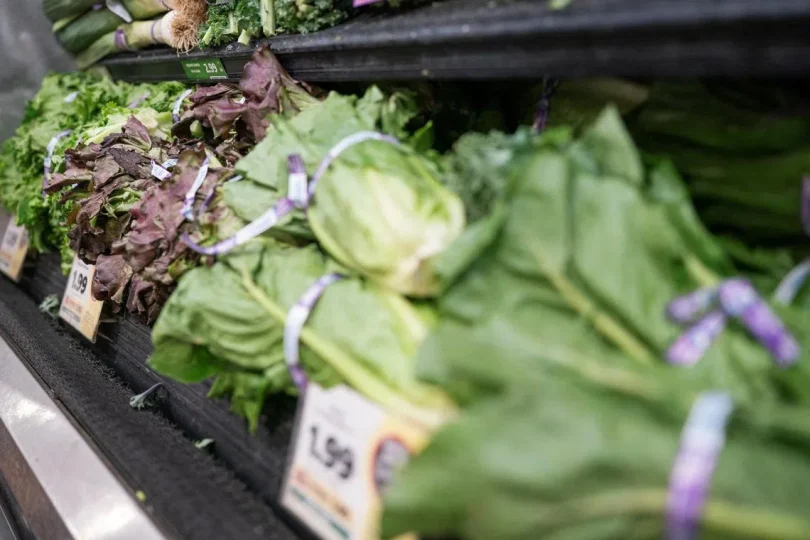
As consumers wait for clarity, they have cut back on fresh lettuce and visits to restaurant chains whose menus rely heavily on the greens.
Healthy adults can continue to eat leafy greens, as long as they are not in states such as Michigan that have been hit hard by the disease, said Tyler Evans, chief executive officer of a public health organisation called the Wellness Equity Alliance and a former New York City chief medical officer.
“If this were some recall on candy or licorice, I’d say just don’t eat it,” Evans said.
“But the nutritional benefit of leafy greens is significant, so we don’t want to tell people to avoid it at all costs.”
Foot traffic drops at Taco Bell, Panera
Foot traffic at Taco Bell, owned by Yum Brands, has slumped every day since July 13. It dropped by 20.8 per cent on July 23, compared to the Thursday average between Jan 1 and July 6, according to the latest data from analytics firm Placer.ai.
Foot traffic was also down by 12.2 per cent at salad chain Chopt; 1.4 per cent at Chipotle Mexican Grill; and 3.1 per cent at Panera Bread on July 23, compared with the prior six-month average for Thursdays, the firm said.
Chipotle declined to comment on the decline, while Taco Bell, Chopt and Panera Bread did not immediately respond to requests for comment. Taco Bell has said it removed affected Taylor Farms lettuce from its restaurants as at July 17.
“Restaurant chains that saw significant foot traffic declines following the outbreak of Cyclospora in recent weeks are still seeing fewer customers,” a Placer.ai representative said, adding that the worst may be behind them.
People contract cyclosporiasis after eating food or drinking water contaminated with human faeces containing the microscopic parasite Cyclospora.
The US outbreak has resulted in 6,707 laboratory-confirmed cases, with health authorities aware of more than 11,500 additional suspected cases, according to the Centers for Disease Control and Prevention. In Michigan, health officials reported 9,680 cases on July 28, up 427 cases from on July 27.
Some large retailers and restaurants have stopped sourcing produce from the region of central Mexico linked to the expanding outbreak because of concerns about widespread contamination, former FDA Commissioner Scott Gottlieb said on July 27.
Lettuce sales suffer
Paul Sellew, CEO and founder of Little Leaf Farms, which grows lettuce in the eastern United States, said worries about infections have driven down sales by double digits.
According to market research firm NielsenIQ’s data, US unit sales for fresh lettuce in the week ending July 18 were down 9 per cent from a week earlier and 19 per cent from two weeks before.
“The entire fresh produce category at retail is down,” Sellew said. “The consumer has been motivated by fear.”
To reassure customers, Massachusetts-based Little Leaf Farms has sought to educate them about company production practices it says are designed to keep harvests safe.
The company produces lettuce in greenhouses supplied with potable water or rainwater collected on a roof, Sellew said, adding that no water enters its facilities before undergoing an ultraviolet disinfection process.
Automation in its growing system also means humans do not touch the lettuce, he said.
“How we grow is so fundamentally different that there’s no way that these issues could affect our product,” Sellew said.
“Not all leafy greens are created equal.” REUTERS