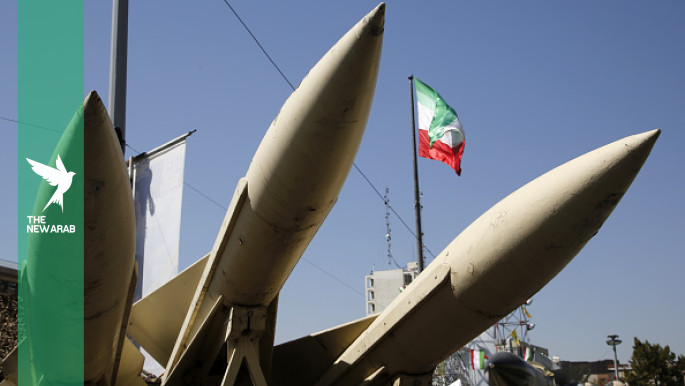
Secret US intelligence assessments show Iran has regained operational access to most of its missile infrastructure and retained around 70% of its prewar missile arsenal, contradicting repeated claims by President Donald Trump that Tehran’s military had been “crushed”, according to a report by The New York Times published on Tuesday.
Citing people familiar with classified assessments compiled earlier this month, the newspaper reported that Iran has restored operational control over 30 of its 33 missile sites along the Strait of Hormuz, with only three remaining fully inaccessible.
The report said the findings had raised alarm among senior US officials because the sites could threaten American warships and oil tankers passing through the strategic waterway, through which roughly a fifth of global daily oil consumption flows.
According to the intelligence assessments, Iran has retained about 70% of its mobile missile launchers and approximately 70% of its prewar missile stockpile, including ballistic missiles capable of striking targets across the region, as well as a smaller number of cruise missiles designed for shorter-range land and maritime attacks.
US military intelligence agencies also concluded, based on satellite imagery and other surveillance methods, that Tehran had regained access to roughly 90% of its underground missile storage and launch facilities nationwide, many of which were assessed to be “partially or fully operational”.
The findings sharply contrast with statements made by Trump and US Defence Secretary Pete Hegseth during the war.
On 9 March, Trump claimed Iran’s missiles were “down to a scatter” and said the country had “nothing left in a military sense”.
Hegseth later said the joint US-Israeli military campaign known as “Operation Epic Fury” had rendered Iran’s military “combat-ineffective for years to come”.
The intelligence assessments cited by The New York Times were reportedly compiled less than a month after those statements.
Responding to questions from the newspaper, White House spokeswoman Olivia Wales reiterated Trump’s position, saying Iran’s military capabilities had been “crushed” and describing suggestions that Tehran had rebuilt its forces as either “delusional” or supportive of Iran’s Islamic Revolutionary Guard Corps.
Acting Pentagon spokesman Joel Valdez criticised media reporting on the war, accusing The New York Times of acting as a “public relations agent” for the Iranian government.
The report said the assessments had highlighted a growing dilemma for the Trump administration if the fragile ceasefire with Iran collapses and fighting resumes.
The report noted that the US military has significantly depleted key munitions stockpiles during the conflict, including Tomahawk cruise missiles, Patriot interceptor missiles and ATACMS tactical missiles.
Moreover, the report stressed that the US fired around 1,100 long-range stealth cruise missiles during the war, close to its remaining stockpile, along with more than 1,000 Tomahawk missiles and over 1,300 Patriot interceptors, exceeding two years of production capacity at 2025 manufacturing rates.
The report also revealed that, due to limited bunker-busting munitions, US military planners chose in many cases to seal entrances to hardened Iranian underground facilities rather than attempt to destroy entire missile complexes, preserving some specialised weapons for potential future conflicts involving North Korea or China. Officials told the newspaper the results of that strategy had been mixed.