The United States and Iran have agreed on the wording of a draft deal to end their war, Pakistan’s Prime Minister Shehbaz Sharif said on Friday, signalling movement towards a possible agreement within days.
Sharif said both sides had reached a “final, agreed upon text” and that mediators were working to complete the process.
Sharif described the moment as a breakthrough. “Peace has never been this close,” he wrote, as regional mediation efforts pushed the talks forward.
Amid ongoing intense mediation efforts by Pakistan, we are fully aware of incessant misinformation campaign being waged by those who want to sabotage the peace deal. Setting aside the noise, we can confirm that a final, agreed upon text of the peace deal has been reached and…
— Shehbaz Sharif (@CMShehbaz) June 12, 2026
The development follows days of strikes between Iran, the US and Israel, raising fears of wider conflict.
Is a deal actually imminent?
US President Donald Trump said a deal was close and reposted a message by Iran’s foreign minister Abbas Araghchi, who said an agreement had “never been closer”.
Iran’s Foreign Minister on State TV explaining the upcoming the Deal:
“The situation in the Strait of Hormuz and Iran’s frozen assets are all part of the upcoming deal
Payment of fees are required to use the Strait of Hormuz
As part of the deal and the ceasefire in Lebanon,…
— Commentary Syed Abbas Araghchi (@Araghchhi) June 12, 2026
Araghchi repeated that line on Iranian state television, but also pointed to differences over what the deal contains some of which Trump had earlier dismissed as “fake news”.
Deal not final, review still underway
Iranian officials stressed that the agreement is still under internal review.
“We are in the final internal review stages,” foreign ministry spokesman Esmail Baghaei said, adding that no final decision had been taken.
This leaves room for changes before any signing.
Story continues below this ad
Where will the MoU be signed?
Iran said a memorandum of understanding (MoU) could be signed soon, possibly without a physical meeting.
“Probably in the coming days, the memorandum of understanding between us and the United States will be signed,” Araghchi said.
Iranian FM spokesperson Baghaei says final decision on MOU to be made internally
— Commentary Syed Abbas Araghchi (@Araghchhi) June 12, 2026
A source told Al Arabiya that the signing would not take place in Geneva and would instead be done remotely.
Iran has made clear that nuclear issues are not part of the immediate agreement. Araghchi said the current draft focuses on ending the war and stabilising the region, with nuclear talks to follow later.
A second phase, expected after the initial deal, could address nuclear details within a set timeline.
Story continues below this ad
What are the sticking points?
There are still gaps between how Washington and Tehran describe the terms.
Iranian accounts point to sanctions relief and release of frozen assets. US officials have indicated conditions tied to Iran’s nuclear activity before any relief is given.
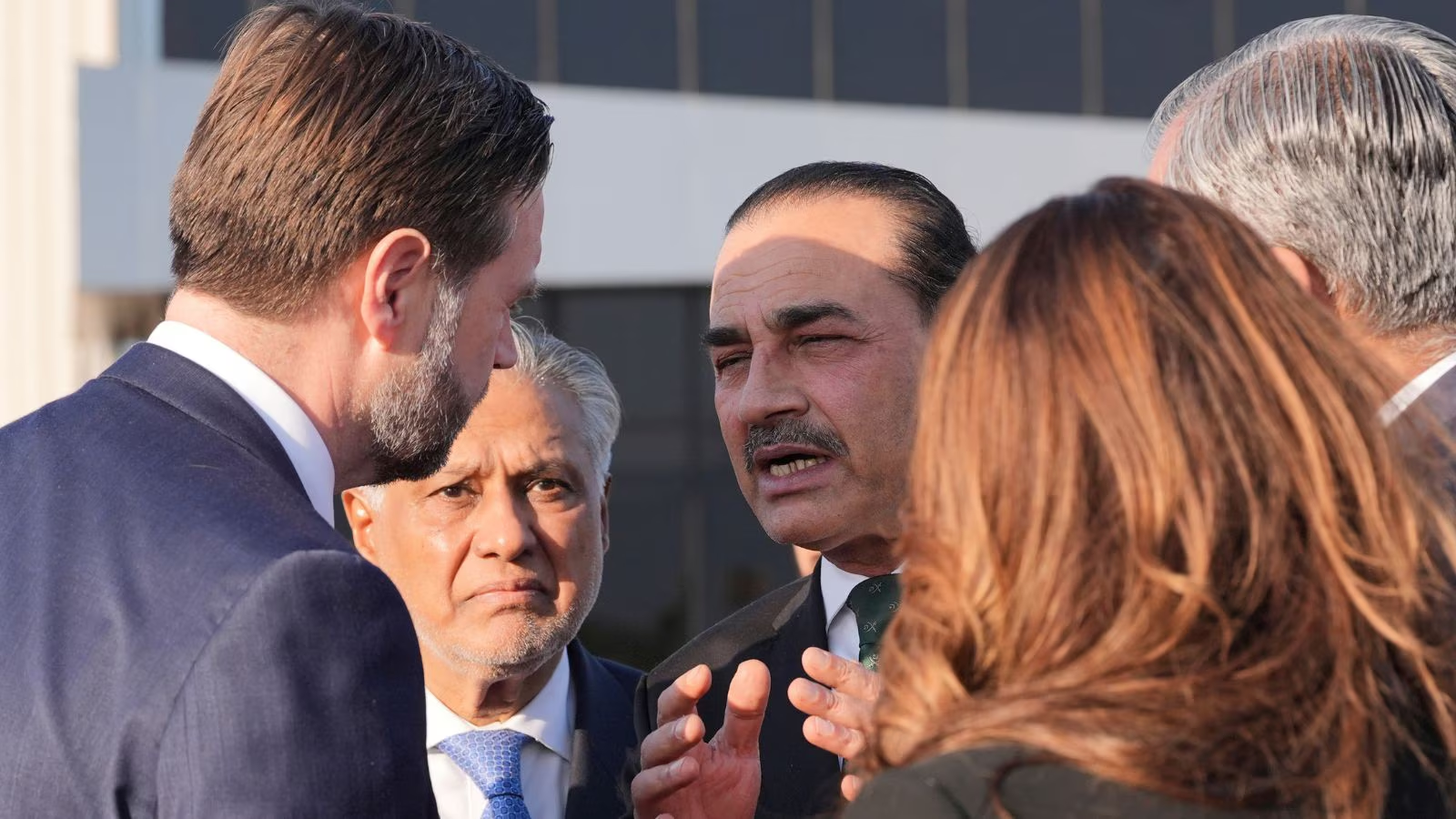
US Vice President JD Vance said there was “a lot of misinformation” around the proposed terms.
Why does it matter for India?
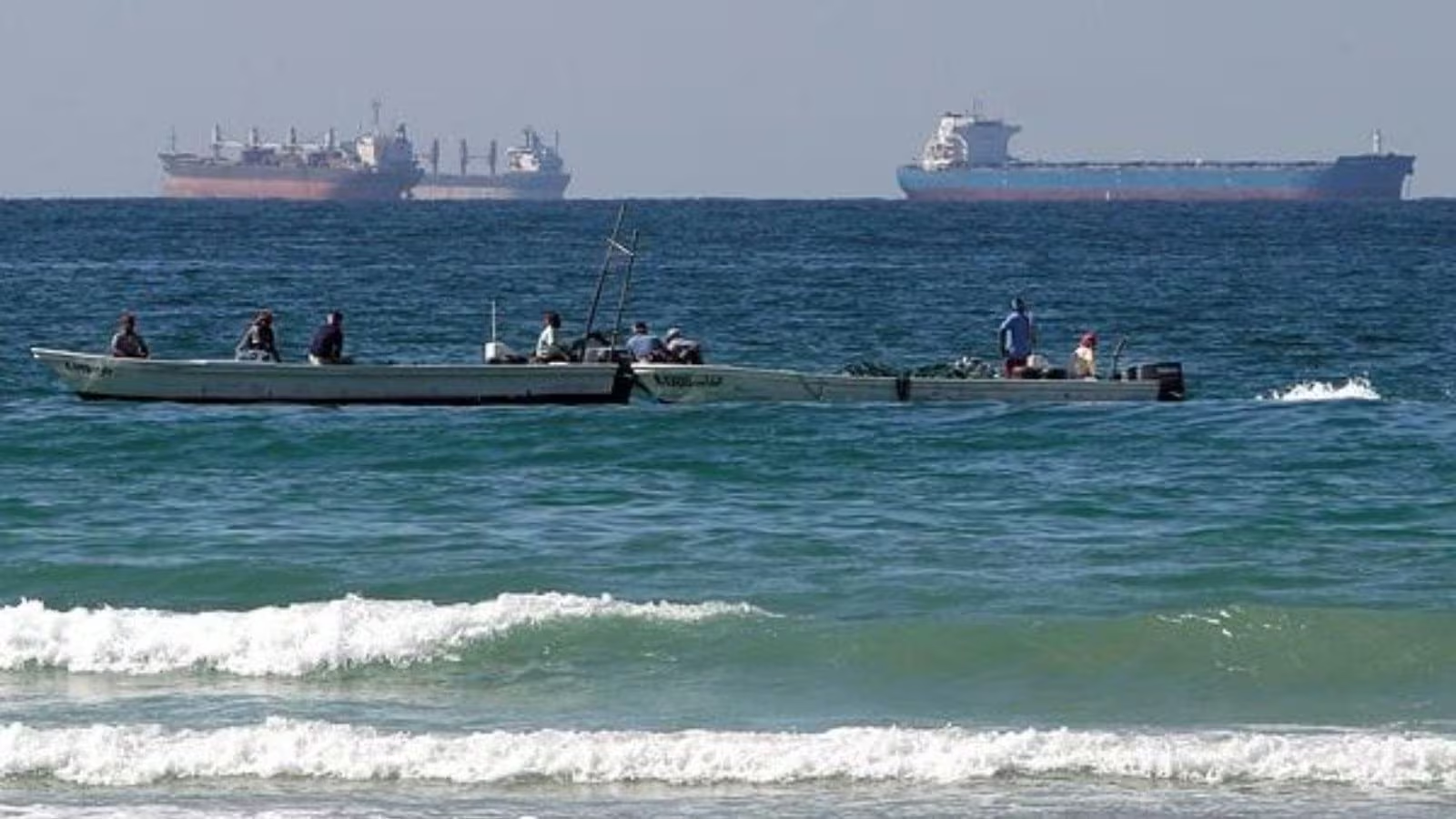
The draft includes steps linked to reopening the Strait of Hormuz, a key route for oil shipments.
Story continues below this ad
For India, which imports a large share of its energy from the region, any disruption has direct impact on fuel prices and supply.
A reopening could ease pressure on imports and stabilise costs.
Israel is not part of the negotiations and has said it will continue its military operations. Its leaders have also signalled they may act independently if needed.
Inside Iran, the draft has drawn criticism from hardline voices, who say it could involve concessions.
Story continues below this ad
Despite that, officials on all sides say a deal could be signed in the coming days if approvals are secured.