The conflict is also creating political and military challenges for the Trump administration. The war has drawn criticism from many Americans, unsettled global markets and comes just months before the US midterm elections in November. Continued hostilities have also resulted in more American casualties while increasing pressure on US stocks of advanced air defence missiles.
Saudi Arabia’s involvement has further changed the regional picture.
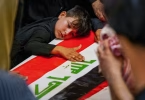
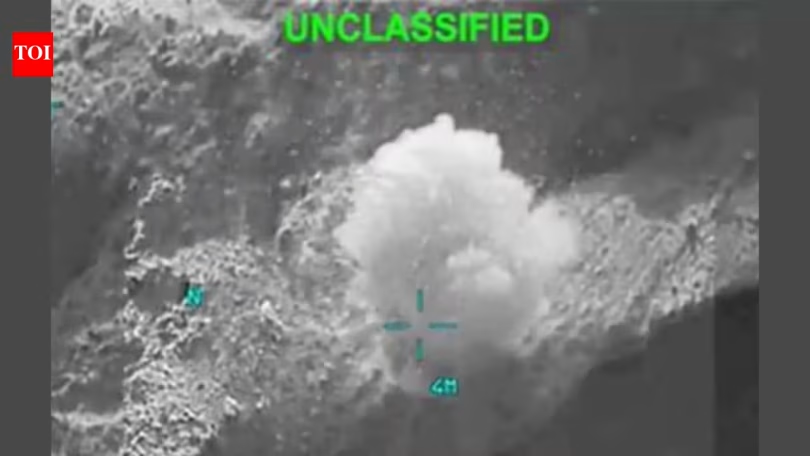
Riyadh joined US forces in strikes on logistics hubs and weapons facilities used by Iranian-backed militias in Iraq after drone attacks targeted the kingdom. A US official said the Saudi and Iraqi incidents were unrelated.
Saudi Defence Minister Khalid bin Salman visited the White House on Wednesday, where he held separate meetings with Trump and Vice President JD Vance, according to a person familiar with the discussions.
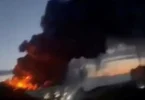
Elsewhere, drone attacks set two natural gas vessels ablaze at an Egyptian port. Egypt has largely stayed out of the conflict and has played a mediating role throughout the crisis. If Iran or its allies are confirmed to be responsible, it would represent another significant expansion of the war.
The latest developments came shortly after Israeli Prime Minister Benjamin Netanyahu met Trump at the White House. According to an Israeli official familiar with the discussions, Netanyahu told Trump that Washington was leading the strategy on Iran, not Israel.
Behind the scenes, however, Israeli officials are said to be increasingly concerned that Trump wants to keep the conflict limited rather than intensify military operations. They are also worried that rising oil prices caused by the effective closure of the Strait of Hormuz, along with declining US missile interceptor stocks, could influence future decisions.
A recent analysis by the Center for Strategic and International Studies said the conflict has significantly reduced US supplies of Patriot and THAAD missile interceptors, potentially weakening the protection available to American troops and allies if the fighting intensifies.
According to a US official, General Dan Caine, Chairman of the Joint Chiefs of Staff, has also briefed Trump that dwindling ammunition stockpiles could affect future military operations against Iran.
Despite the ongoing violence, there is little sign that diplomatic efforts will resume anytime soon.
A senior US official said the administration is not actively pursuing new negotiations with Iran, even though several mediators have tried to revive dialogue. The official added that current developments make direct talks unlikely in the near future.
Analysts say years of failed negotiations have left both governments deeply suspicious of one another. The collapse of an interim ceasefire proposal earlier this year has only widened that divide.
Ali Vaez, Iran Project Director at the International Crisis Group, said senior Iranian leaders had previously backed a memorandum of understanding with Washington but no longer believed Trump could be trusted to honour an agreement.
“But now none of them believe that Trump is a reliable negotiating partner,” he said. “The problem, I think, is that Trump also has now the same impression about the Iranians.”
The current deadlock reflects decades of difficult relations between the two countries.
Since Iran’s 1979 Islamic Revolution, negotiations have repeatedly broken down despite occasional breakthroughs. The 2015 nuclear agreement negotiated during Barack Obama’s presidency marked the first major deal between the two nations since the 1981 Algiers Accords, which helped end the US hostage crisis.
However, both sides repeatedly accused each other of violating their commitments. Relations deteriorated sharply after Trump withdrew the United States from the nuclear deal in 2018, reimposed sweeping sanctions under his “maximum pressure” campaign and ordered the killing of Iranian military commander Qassem Soleimani in 2020, pushing ties to one of their lowest points in decades.