WASHINGTON – The United States is set to impose new tariffs that could hit dozens of countries soon, trade envoy Jamieson Greer signalled on July 21, with President Donald Trump’s temporary global levies due to expire this week.
The Trump administration has prepared fresh tariffs targeting 60 trading partners over their alleged failures to act against forced labour, as officials push to rebuild the US leader’s trade agenda after legal setbacks.
“We expect to see some action soon,” Greer told CNBC, when asked if new duties were incoming. He did not specify a timeline.
While Trump imposed a 10 per cent global duty this year after a swathe of his tariffs were struck down by the Supreme Court in February, this levy expires on July 24.
Analysts expect that new tariffs over forced labour concerns – set between 10 per cent and 12.5 per cent – would replace these temporary duties.
They come as Trump makes a renewed push to use tariffs as leverage against US trading partners, sparking fears of retaliation and heightened tensions.
Washington announced a fresh 25 per cent duty on certain Brazilian goods last week, and on July 19 unveiled a 50 per cent levy on many Canadian products to take effect in 30 days.
Canadian Prime Minister Mark Carney said on July 20 that he was looking at “all options,” adding that he and Trump had agreed to “intensify discussions” in the coming weeks on a possible deal.
Forced labour concerns
Greer said on July 21 that new action on forced labour will cover the majority of US trade.
“The US has laws to prohibit trading goods with forced labour. Other countries, most don’t have a law, those that do don’t really enforce it,” he said.
But these moves could reignite trade tensions.
A 10 per cent tariff rate would hit US imports from partners including Canada, the European Union, Mexico, Taiwan and the United Kingdom. They were found to have taken steps against forced labour.
Goods from over 40 other major economies like China, India and Japan face a 12.5 per cent levy.
The EU previously said that it considers tariffs imposed on these grounds “unjustified”.
Canada pressure
Washington’s planned 50 per cent tariff on Canada also comes as US-Mexico talks over a North American free trade pact intensify.
Washington recently declined to extend the accord in its current form.
Greer is set to travel to Mexico from July 22 to 24 for discussions linked to a joint review of the US-Mexico-Canada Agreement (USMCA).
But negotiations with Canada have proceeded at a slower pace. Carney on July 21 did not suggest that he would head to Washington for talks.
Some lawyers see Trump’s use of an untested legal provision – Section 338 of the Tariff Act of 1930 – as a means to gain leverage over Canada in USMCA negotiations.
Trade lawyer Dave Townsend of Dorsey & Whitney added that higher tariffs “appear to be aimed at encouraging an agreement between Canada and the United States, or in retaliation for the failure to reach such agreement, or both.”
The question, he said, is whether both sides will start a “cycle of escalation and retaliation.”
Crucially, Trump’s latest salvo will not exempt affected Canadian products entering his country under the USMCA.
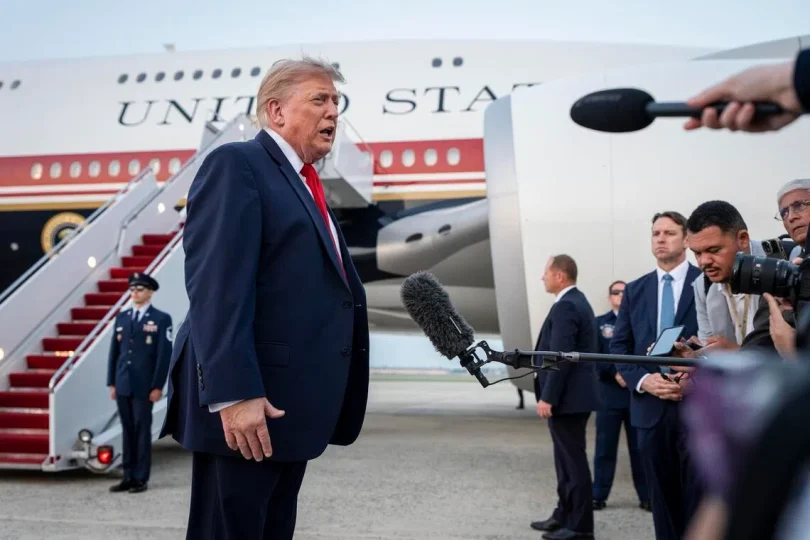
Trump told reporters on July 21 that the Canada tariffs were unrelated to his earlier threats over wildfire smoke that descended into the United States.
Brazil tensions
US plans for a 25 per cent tariff on Brazilian goods over accusations of unfair trade practices have separately drawn a sharp rebuke from the Latin American giant.
The levy is due to take effect on July 22, while shaping up as a major campaign flashpoint just months before Brazil’s presidential election.
A range of products like beef, coffee and certain aircraft parts will be exempted, as will some goods that the United States does not produce.
Still, the American Chamber of Commerce for Brazil recently warned that Washington’s measure places Brazil among countries “facing the most restrictive conditions for access to the US market,” affecting more than US$11 billion (S$14.2 billion) in exports. REUTERS